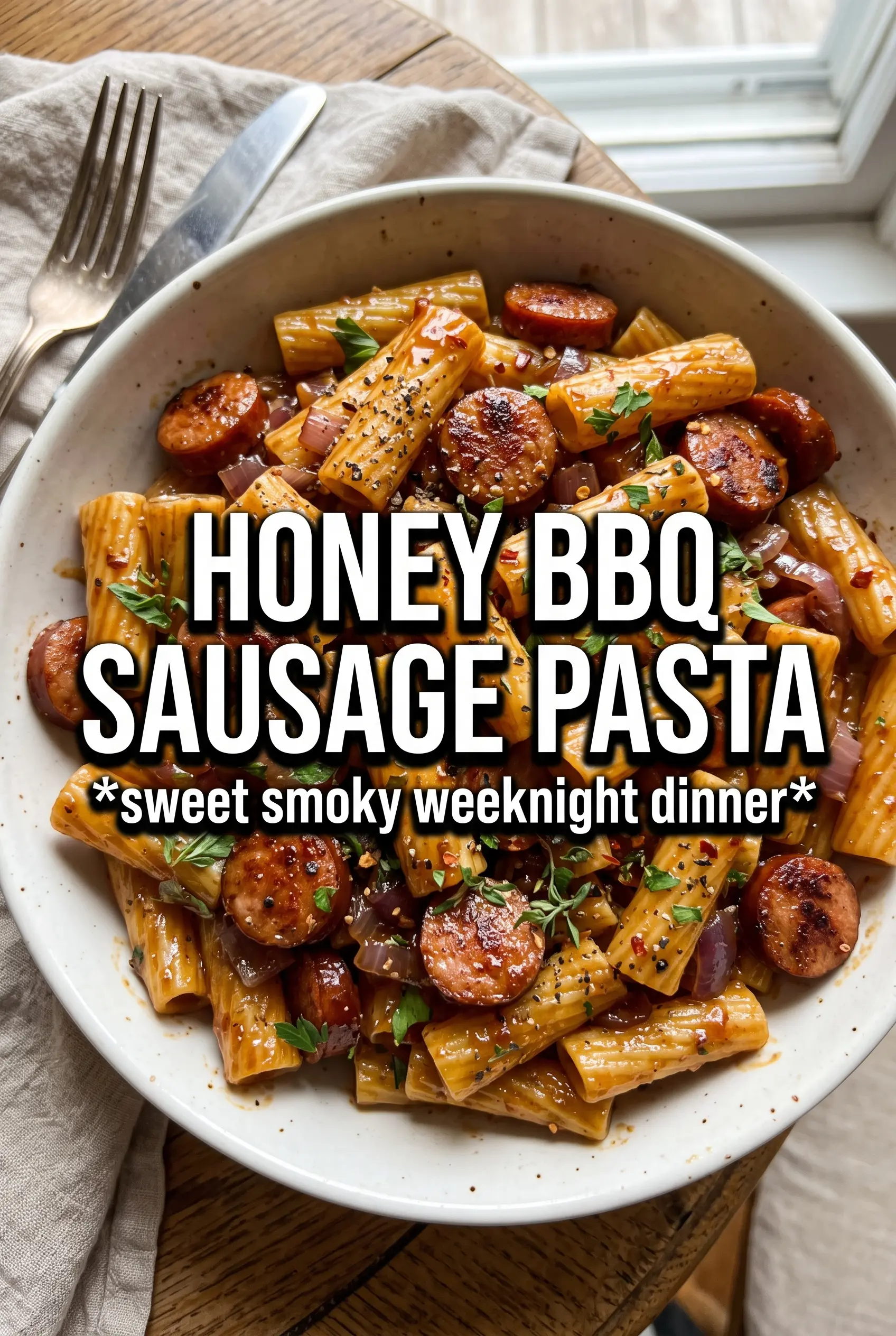
Honey BBQ sausage pasta lands on the table with glossy sauce clinging to every ridge of rigatoni, smoky sausage edges, and just enough sweetness to keep each bite moving. The cheese melts into the sauce instead of sitting on top of it, and the whole dish eats like something that took a lot longer than it did.
What makes this version work is the balance. The sausage gets browned first so you get those caramelized edges, then the sauce simmers long enough to lose the raw tang of barbecue sauce and pick up a deeper, stickier body. A little Dijon keeps the honey from tasting flat, and the reserved pasta water helps the sauce coat the pasta instead of turning gluey.
Below, I’m walking through the part that matters most: how to build the sauce so it stays glossy, not broken, plus the swaps that actually work if you need to adjust the sausage, cheese, or pasta shape.
The sauce turned out glossy and thick, and the rigatoni held onto it instead of letting it slide off. Browning the sausage first made a huge difference, and my husband went back for seconds before I even sat down.
Save this honey BBQ sausage pasta for nights when you want sticky sauce, caramelized sausage, and one skillet doing most of the work.
The Sauce Breaks When You Rush the Simmer
Barbecue sauce can taste harsh if it goes straight from the bottle to the pasta. The short simmer with broth and honey mellows that sharpness and gives the sauce a little body before the cheese goes in. That matters because cheddar behaves better in a warm, cohesive sauce than in a thin, aggressive one.
The other trap is adding the pasta too soon. If the sauce hasn’t reduced a bit, the noodles drink up the liquid and leave you with a loose, uneven coating. You want the sauce to look slightly glossy and thick enough to leave a trail when you drag a spoon through the pan.
What Each Ingredient Is Actually Doing in This Dish
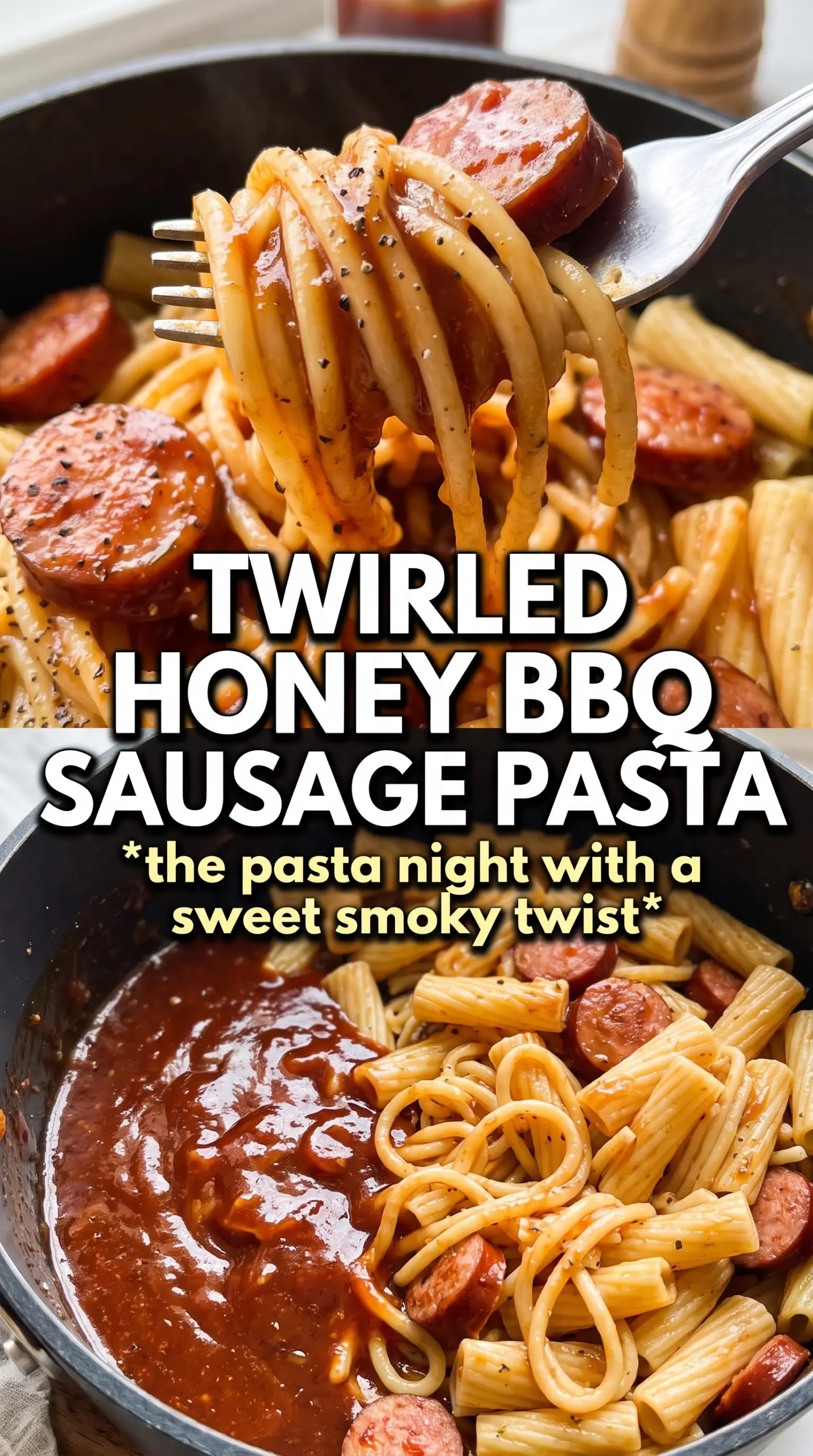
- Smoked sausage — This brings the smoky backbone and enough fat to brown properly. Kielbasa works well, and turkey sausage can work too, but you’ll lose some of the deep caramelized flavor unless you brown it well.
- Rigatoni — The ridges catch the sauce, and the tube shape gives you a better bite with the sausage. Penne is the closest swap if that’s what you have.
- BBQ sauce + honey — BBQ sauce gives you sweetness, tang, and smoke, while the honey smooths out the edges and helps the glaze cling. If your BBQ sauce is already very sweet, cut the honey back to 1 tablespoon.
- Dijon mustard — This keeps the sauce from tasting one-note. You won’t taste mustard in a sharp way; it just keeps the glaze lively.
- Cheddar — Shredded cheddar melts into the sauce and gives it that creamy finish. Grate it yourself if you can, because pre-shredded cheese can leave the sauce a little grainy.
- Pasta water — The starch in the water helps the sauce emulsify and coat the noodles. Don’t skip the reserve, even if the sauce looks thin before the cheese goes in.
Building the Glaze in the Pan, Not in a Separate Pot
Brown the sausage until the edges go deep gold
Start with a hot skillet and let the sausage sit long enough to pick up color before you stir it around. You’re looking for browned edges and little caramelized spots, not just warmed-through slices. Pull it out once it’s got real color; if you leave it in while the sauce simmers, it can turn rubbery.
Cook the vegetables until the onion softens, not caramelizes
The onion and bell pepper need just enough time to lose their raw crunch and release some moisture. Four minutes is enough in most skillets. If the pan looks dry, a small drizzle of oil helps the vegetables move without sticking, but don’t let them brown hard here or the sauce will taste muddy.
Simmer the sauce before the cheese goes in
Whisk the BBQ sauce, honey, broth, and Dijon together in the skillet and let it bubble gently for about five minutes. This is where the sauce tightens up and loses that thin, bottled edge. Keep the heat moderate; a hard boil can make the sauce reduce too fast and taste harsh.
Finish with pasta water and cheddar off the heat
Add the cooked rigatoni and a splash of pasta water, then stir until every tube looks coated. Return the sausage and add the cheddar after the pan comes off the heat or over very low heat. If the cheese goes in while the sauce is screaming hot, it can separate and turn grainy instead of turning silky.
Three Ways to Adjust This Without Losing the Good Parts
Swap in turkey sausage for a lighter pan
Turkey sausage works if you want a lighter dish, but it won’t give you quite as much fat for browning. Use a little oil in the skillet and don’t rush the caramelization, because that’s where the flavor lives.
Make it dairy-free without losing the sauce
Skip the cheddar and finish with a little extra pasta water to keep the sauce glossy. The dish will still be sticky and savory, just less creamy, so lean into a good smoky BBQ sauce for depth.
Use gluten-free pasta with one adjustment
Gluten-free rigatoni works, but it can break down faster if it sits too long in the sauce. Undercook it by a minute, then toss it in right before serving so it keeps its shape.
Turn up the heat without changing the method
A pinch of cayenne or a few dashes of hot sauce folds in cleanly after the BBQ mixture simmers. Add it slowly, because heat builds fast once the sauce starts coating the pasta.
Storage and Reheating
- Refrigerator: Store leftovers for up to 4 days. The pasta will absorb more sauce as it sits, so it gets thicker in the fridge.
- Freezer: It freezes okay, but the cheddar can change texture a bit after thawing. Freeze in airtight containers for up to 2 months if needed.
- Reheating: Reheat gently on the stove or in the microwave with a splash of broth or water. The common mistake is blasting it on high heat, which tightens the sauce and makes the pasta dry.