Pork tenderloin takes to a sticky glaze in a way that makes dinner look a lot harder than it is. The outside turns glossy and caramelized, the garlic gets mellow and sweet instead of sharp, and the center stays juicy if you pull it at the right temperature. That contrast is what keeps this one in regular rotation.
The trick is getting color on the pork before the glaze goes on. A quick sear gives you flavor and helps the honey cling, while the oven finishes the meat gently so it doesn’t dry out. The glaze is built with honey, soy sauce, Dijon, and vinegar, which gives you sweetness, salt, tang, and just enough bite to keep the whole thing from tasting flat.
Below you’ll find the timing that keeps tenderloin tender, a note on the glaze so it doesn’t burn, and a few simple swaps if you want to adjust the heat or sweetness.
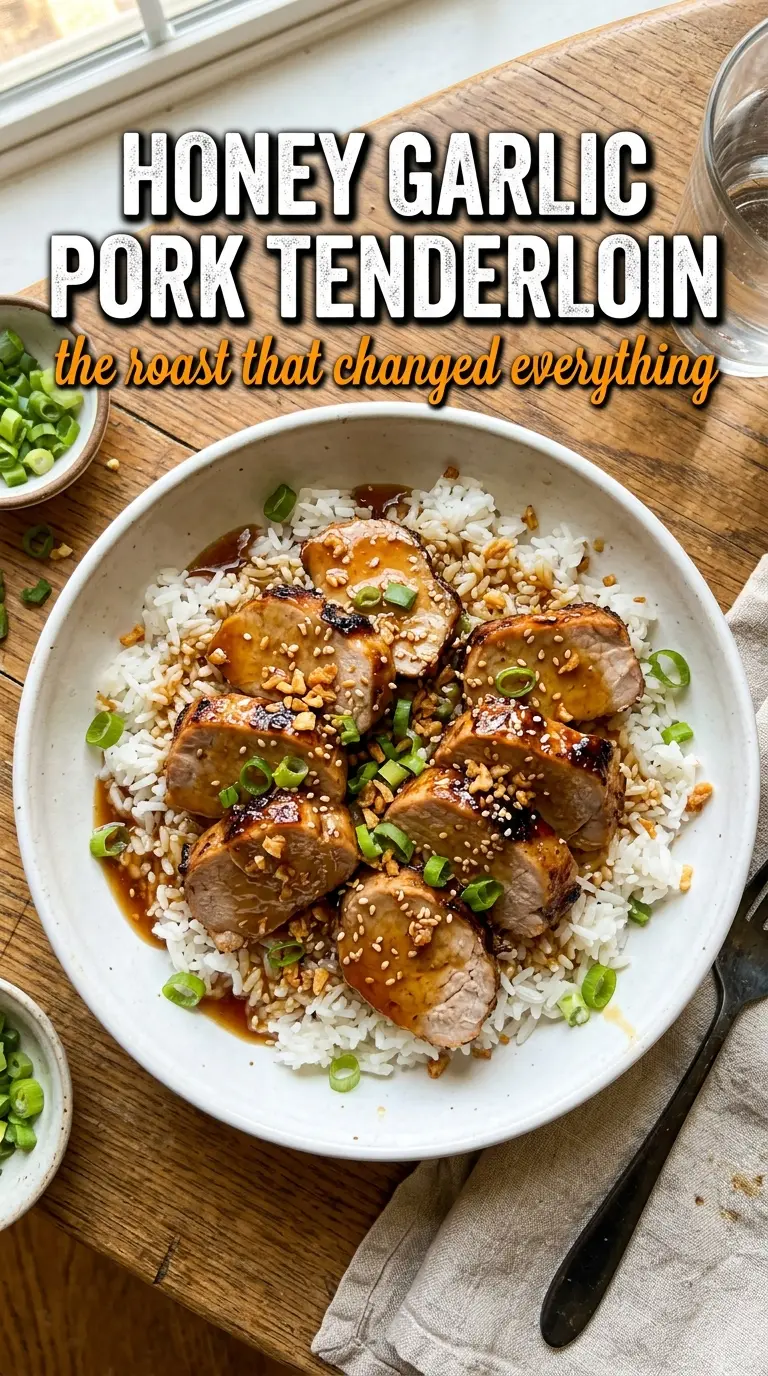
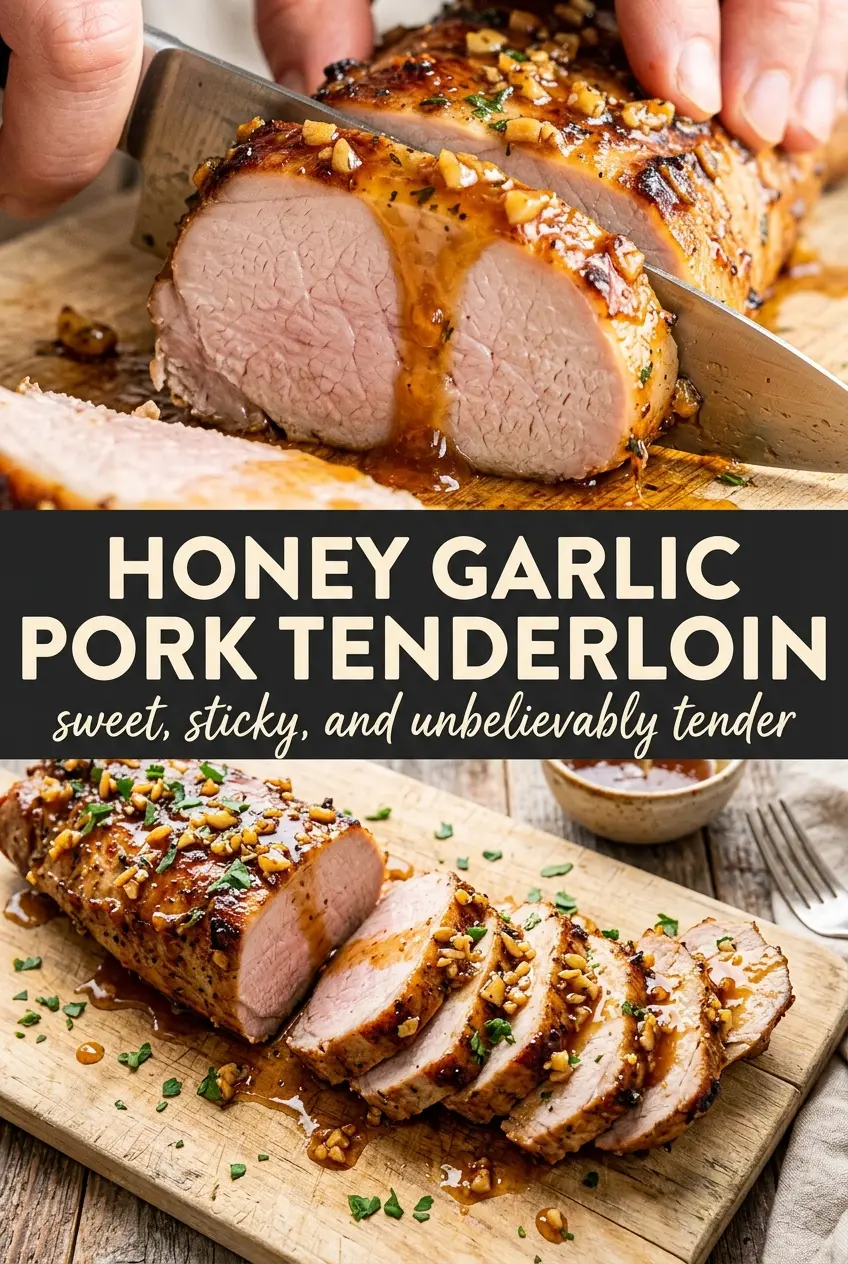
The glaze thickened up into this shiny coat in the oven, and the pork stayed so juicy even after slicing. My husband kept going back for “just one more piece.”
Honey Garlic Pork Tenderloin with that caramelized amber glaze is the kind of dinner that disappears fast.
The Reason Pork Tenderloin Stays Juicy Here Instead of Drying Out
Pork tenderloin is lean, which means it goes from perfect to overdone fast. The biggest mistake is treating it like a roast that needs a long oven stay. It doesn’t. A hot sear, a short roast, and a quick rest are what keep the slices blush-pink and tender instead of chalky.
The glaze is another place people go wrong. Honey burns if you leave it on high heat too long, so the pan goes into the oven after the first coat is brushed on and the rest gets added halfway through. That gives you caramelization without blackening the garlic or turning the sauce bitter.
- Searing first builds the crust and starts the flavor before the oven takes over.
- Brushing the glaze in two stages keeps the sugars from scorching.
- Pulling at 145°F gives you juicy pork after the rest, not dry pork on the plate.
What Each Ingredient Is Doing in This Honey Garlic Glaze
- Pork tenderloins are the right cut here because they cook quickly and slice cleanly. Don’t swap in pork loin without adjusting time; it’s thicker and needs longer in the oven.
- Honey gives the glaze its sticky sheen and helps it cling to the meat. There isn’t a real substitute for the same lacquered finish, though maple syrup can work in a pinch with a slightly darker, less floral result.
- Soy sauce and Dijon keep the glaze from tasting one-note sweet. If you need gluten-free, use tamari instead of soy sauce and the balance stays the same.
- Apple cider vinegar cuts through the sweetness and keeps the glaze lively. Without that little hit of acid, the sauce tastes heavy on the pork.
- Garlic needs to be minced finely so it softens into the glaze instead of staying raw and sharp. If your garlic is old or dry, it can taste bitter once it hits the heat, so use fresh cloves if you can.
- Red pepper flakes don’t make this spicy, they wake it up. Leave them out for a milder version or add a pinch more if you like a little back-end heat.
Getting the Sear and Roast Timing Right
Build the Color Before the Glaze
Heat the oil until it shimmers, then add the seasoned tenderloins and leave them alone long enough to brown. If you move the pork too early, it won’t sear; it’ll steam and stick. You’re looking for a deep golden crust on the outside, not a hard brown shell. Two minutes per side is enough because the oven finishes the job.
Brush, Roast, and Don’t Walk Away
Once the first coat of glaze goes on, transfer the skillet straight to the oven. Brush on the remaining glaze halfway through roasting so the surface has time to caramelize without burning. Start checking early, because tenderloin size varies and even a few extra minutes can push it past juicy. A thermometer is the cleanest answer here; 145°F in the thickest part is the target.
Rest Before You Slice
Let the pork sit for 5 minutes after it comes out. That pause keeps the juices in the meat instead of running across the cutting board the second you slice in. If you cut too soon, the glaze is still good, but the tenderloin loses the moisture that makes it worth serving. Slice across the grain for the most tender result.
Three Smart Ways to Change the Glaze Without Losing the Balance
Make It Gluten-Free With Tamari
Swap the soy sauce for tamari in the same amount. You keep the salty backbone and lose none of the glossy finish, so this is an easy change that doesn’t alter the texture or the way the glaze caramelizes.
Tone Down the Heat for Kids
Leave out the red pepper flakes and keep everything else the same. The glaze will still taste balanced because the vinegar and Dijon handle the lift, and the honey keeps it friendly without turning bland.
Use Pork Loin Instead of Tenderloin
Pork loin can work, but it needs more time and usually a slightly lower oven temperature so the outside doesn’t overcook before the center catches up. You’ll get larger slices and a meatier texture, but you’ll lose the quick-cooking tenderness that makes tenderloin so weeknight-friendly.
Storage and Reheating
- Refrigerator: Store slices in an airtight container for up to 4 days. The glaze stays tasty, though the pork will firm up a little once chilled.
- Freezer: It freezes well if you slice it first and wrap it tightly with any extra glaze. Thaw overnight in the refrigerator so the texture doesn’t turn watery.
- Reheating: Warm gently in a covered skillet over low heat with a splash of water or broth, or use the microwave at reduced power. High heat dries out tenderloin fast, so don’t blast it trying to re-caramelize the glaze.
Answers to the Questions Worth Asking
Honey Garlic Pork Tenderloin
Ingredients
Equipment
Method
- Preheat the oven to 400°F.
- Season the tenderloins with salt and pepper.
- Heat the olive oil in an oven-safe skillet over medium-high heat and sear the tenderloins 2 minutes per side until golden all over.
- Mix the glaze ingredients and brush half over the seared pork.
- Transfer the skillet to the oven and roast 18–22 minutes, brushing with the remaining glaze halfway through, until the internal temperature reaches 145°F.
- Rest the tenderloins 5 minutes before slicing.
- Garnish with sesame seeds and green onions.