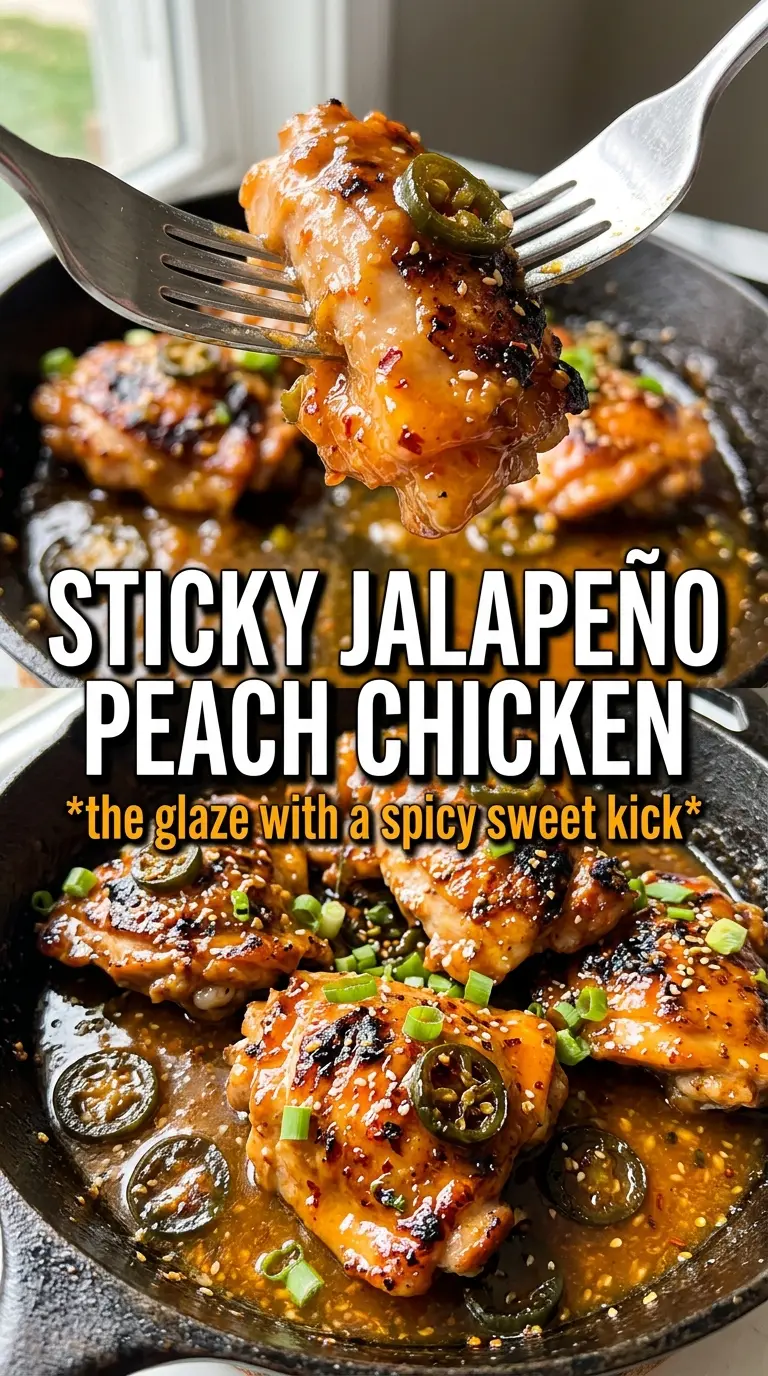
Golden seared chicken breasts in a sticky jalapeño peach glaze hit that sweet-heat balance that keeps this dish in the weeknight rotation. The sauce cooks down until the peaches soften into jammy pieces and the vinegar sharpens the sweetness just enough to keep every bite lively, not cloying.
What makes this version work is the order of operations. The chicken gets a hard sear first so it builds color before the glaze goes in, and the sauce simmers long enough for the peaches to break down without turning to mush. Jalapeños bring warmth instead of raw bite once they’re cooked with the garlic, and honey helps the glaze cling to the chicken instead of running off the pan.
Below you’ll find the little things that matter here: how to keep the chicken juicy, how spicy the peppers really make it, and what to change if your peaches are a little under-ripe.
The peaches broke down into the prettiest glossy sauce and the chicken stayed juicy even after simmering. I liked that the jalapeño flavor was there without taking over, and the whole skillet came together faster than I expected.
Save this jalapeño peach chicken for the nights when you want a sticky skillet glaze with sweet peaches and a little heat.
The Trick That Keeps the Glaze Sticky Instead of Watery
The biggest mistake with peach chicken is rushing the sauce and expecting fruit to behave like a jarred glaze. Fresh peaches release juice fast, and if the pan is too crowded or the sauce doesn’t simmer long enough, you end up with a thin, pale broth instead of something that coats the back of a spoon. The fix is simple: let the fruit cook down on its own before the chicken goes back in, and don’t crank the heat once the honey and vinegar are in the pan.
The other thing that matters is searing the chicken before the glaze starts. That browning gives the finished dish depth, and it keeps the chicken from tasting like it just got poached in sweet sauce. If your peaches are a little firm, they still work; they just need the full simmer time so they collapse into the glaze and stop tasting separate from the rest of the skillet.
What the Peaches, Jalapeños, and Honey Each Bring to the Pan
- Peaches — Use ripe peaches if you can. They break down into a glossy sauce and bring the soft fruitiness this dish needs. If yours are slightly under-ripe, dice them smaller and give the sauce a couple extra minutes so they melt into the glaze instead of staying firm.
- Jalapeños — Seeding them keeps the heat in the background, which is the right move here because the sauce already has honey. Leave a few seeds in if you want more bite, but don’t skip cooking them with the garlic; raw jalapeño can taste sharp and grassy in a dish like this.
- Honey — This isn’t just for sweetness. It helps the sauce turn shiny and cling to the chicken. If you swap in maple syrup, the flavor goes a little deeper and less floral, but the glaze still works.
- Chicken broth — The broth loosens the sauce just enough to simmer without scorching. Water will work in a pinch, but the glaze tastes flatter. Low-sodium broth is the safest choice because soy sauce brings enough salt on its own.
Building the Skillet Glaze in the Right Order
Seasoning and Searing the Chicken
Pat the chicken dry before it hits the skillet, then season it well with salt, pepper, garlic powder, and smoked paprika. A dry surface gives you better browning, and that browning is what keeps the finished dish tasting rich instead of one-note sweet. Sear the chicken in olive oil over medium-high heat until it releases easily from the pan and has a deep golden crust, about 5 to 6 minutes per side. If the chicken sticks, leave it alone a little longer; forcing it loose too early tears the crust.
Softening the Peppers and Garlic
Once the chicken comes out, use the same skillet. The browned bits left behind are part of the sauce, so don’t wipe them out. Cook the jalapeños and garlic just until the garlic smells fragrant and the peppers soften, about 2 minutes. If the garlic starts to darken, the pan is too hot and the sauce will pick up a bitter edge, so lower the heat before anything scorches.
Reducing the Peach Sauce
Add the peaches, honey, apple cider vinegar, soy sauce, and chicken broth, then let the mixture simmer until the peaches slump and the sauce turns glossy and slightly thick, about 8 to 10 minutes. You’re looking for slow bubbles and a texture that coats a spoon, not a hard boil. If it still looks thin, keep simmering; the sauce thickens as the fruit breaks down and some of the liquid cooks off.
Finishing in the Glaze
Slide the chicken back into the skillet and spoon the sauce over the top for a few minutes so the glaze clings and the chicken comes back up to serving temperature. This final simmer should be gentle. A rolling boil can toughen the chicken and make the peaches lose their shape completely. Finish with fresh thyme and red pepper flakes, then serve while the sauce is still silky and warm.
Ways to Bend This Recipe Without Losing the Point
Make It Spicier
Leave some jalapeño seeds in the pan or add a pinch of red pepper flakes with the sauce. That gives you a sharper, longer burn, but the peaches still keep it balanced. If you go too heavy on the heat, the fruit gets buried and the dish stops tasting like peach chicken.
Use Chicken Thighs Instead
Boneless skinless thighs work well here and stay even juicier through the final simmer. They need a few extra minutes on the first sear, but the sauce clings just as well. The flavor is a little richer and less lean than chicken breasts, which fits the glaze nicely.
Make It Gluten-Free
Swap the soy sauce for tamari or a certified gluten-free soy sauce. The glaze still gets that salty, savory backbone, and nothing else in the recipe needs to change. Check your broth too if you use store-bought.
Storage and Reheating
- Refrigerator: Store leftovers in an airtight container for up to 3 days. The glaze will thicken as it chills.
- Freezer: Freeze the chicken and sauce for up to 2 months, though the peaches will soften more after thawing. It still tastes good, but the texture is better from the fridge than the freezer.
- Reheating: Warm gently in a covered skillet over low heat with a splash of broth or water. High heat dries out the chicken and can make the glaze catch on the pan before it loosens.
Answers to the Questions Worth Asking
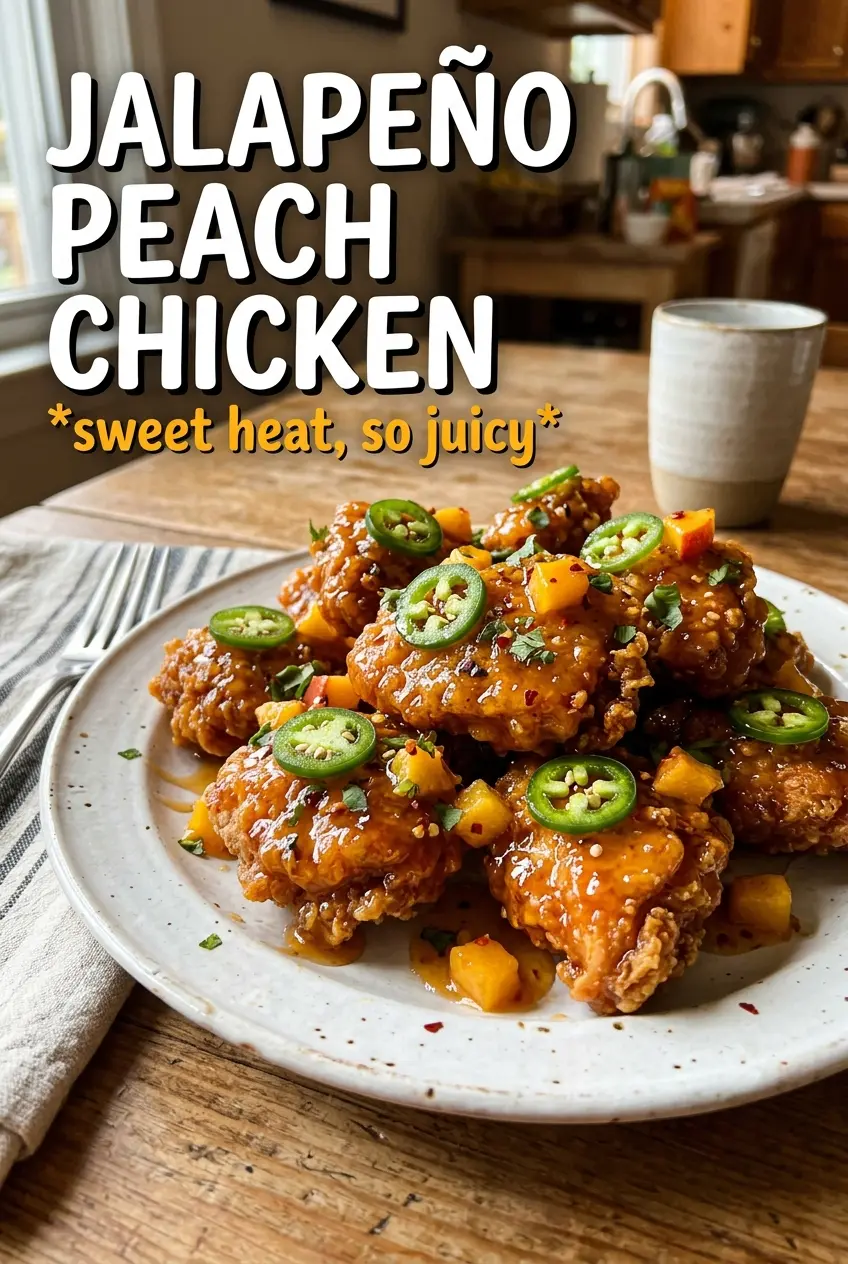
Jalapeño Peach Chicken
Ingredients
Equipment
Method
- Season the chicken breasts with salt, pepper, garlic powder, and smoked paprika to taste.
- Heat olive oil in a large cast iron skillet over medium-high heat and sear chicken for 5-6 minutes per side until golden and cooked through to 165°F; remove to a plate.
- In the same skillet, cook jalapeños and garlic over medium heat for 2 minutes.
- Add peaches, honey, apple cider vinegar, soy sauce, and chicken broth, then stir to combine.
- Simmer for 8-10 minutes until the sauce thickens and the peaches soften into a glossy glaze.
- Return chicken to the skillet and spoon the jalapeño peach glaze over each breast.
- Garnish with fresh thyme and red pepper flakes and serve.