Creamy Korean potato salad lands somewhere between a picnic side and a comforting banchan, with soft mashed potato, pops of sweet corn, crisp cucumber, and just enough tang to keep every bite moving. The texture is the part that keeps you going back: fluffy but still substantial, with chopped egg and vegetables folded through instead of buried in a heavy, gluey mash.
What makes this version work is the balance. Russet potatoes break down easily and soak up the dressing without turning waxy. A little sugar is important here; it doesn’t make the salad taste like dessert, it rounds out the vinegar and gives the salad that familiar Korean-style sweetness that makes gamja salad stand apart from standard potato salad. The cucumber and carrot bring freshness and crunch, but both need a little prep so they don’t water the bowl down later.
Below you’ll find the small details that matter most: how rough to mash the potatoes, why the salad needs time to chill, and what to change if you want a smoother or more egg-forward version.
I loved how the potatoes stayed chunky instead of turning into paste, and the little bit of sugar made the vinegar taste rounded instead of sharp. After chilling, the salad held together beautifully and was even better the next day.
Like this creamy Korean potato salad? Save it to Pinterest for the days when you want a sweet-salty side with eggs, vegetables, and a fluffy mashed texture.
The Trick to Keeping Korean Potato Salad Fluffy, Not Gluey
The biggest mistake with potato salad is overworking the potatoes after they’re cooked. For this style, you want them tender enough to mash easily, but still a little textured so the dressing has something to cling to. If you beat them until perfectly smooth, the salad turns dense and a little pasty once it chills.
Let the potatoes steam off for a minute after draining, then mash them while they’re still warm. Warm potatoes absorb the mayo mixture better than cold ones, which helps the salad taste seasoned all the way through instead of coated on the outside. The chill time isn’t just for temperature; it lets the sugar, vinegar, and salt settle into the potatoes and pull the whole bowl together.
What Each Ingredient Is Actually Doing in This Bowl
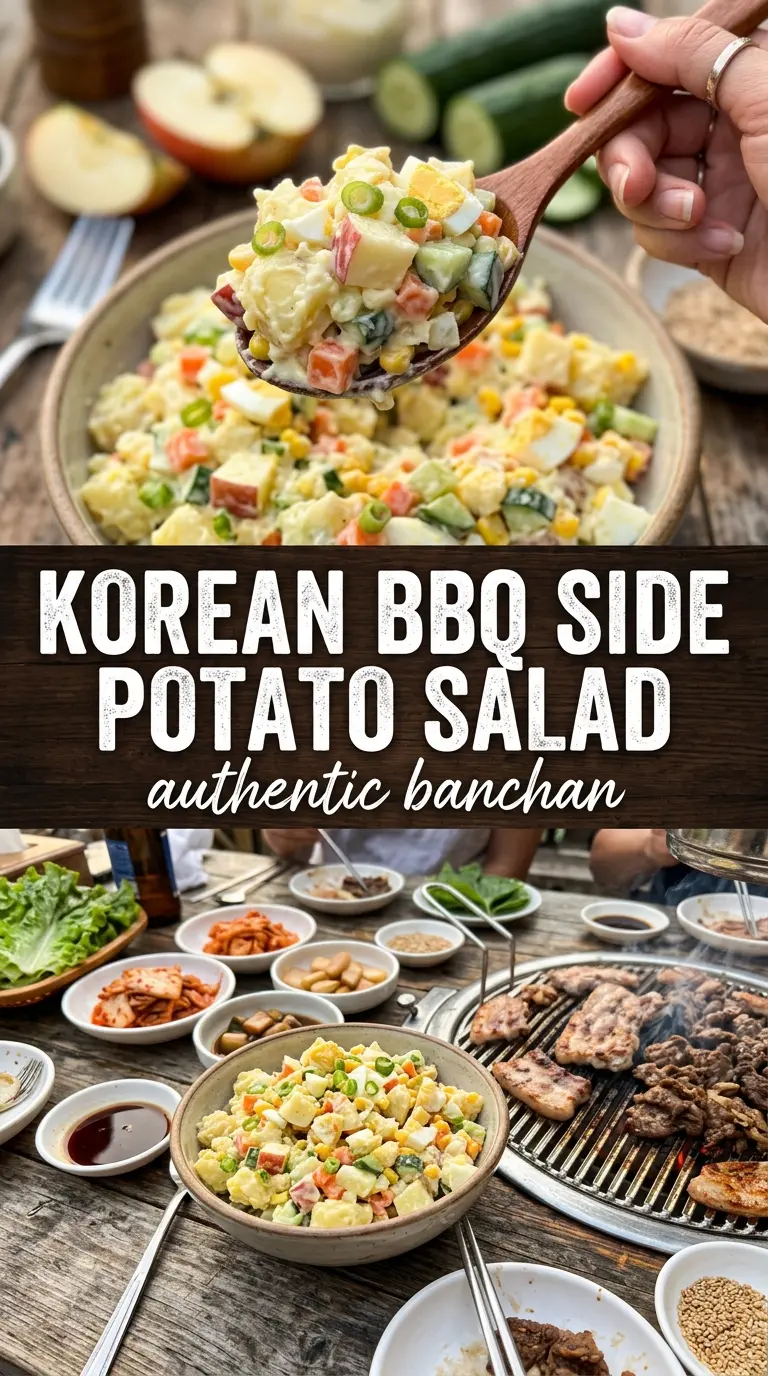
- Russet potatoes — These are the best choice because they mash up fluffy and absorb the dressing without staying firm or waxy. Yukon Golds work in a pinch, but the salad will be creamier and less airy.
- Mayonnaise — This is the body of the dressing, so use one you actually like the taste of. A full-fat mayo gives the cleanest, richest result; light mayo can work, but the salad may taste thinner after chilling.
- Sugar and rice vinegar — These two create the signature sweet-tangy Korean potato salad balance. The sugar softens the vinegar’s edge, and rice vinegar keeps the salad bright without making it harsh.
- Cucumber — Seed it before dicing or it will leak water into the bowl and loosen the salad. If you want extra crunch, salt the diced cucumber lightly, let it sit for 10 minutes, then blot it dry.
- Carrots and corn — Carrots add color and a little bite, while corn brings sweetness that plays nicely with the dressing. Blanching the carrots briefly keeps them from tasting raw and keeps the texture tender-crisp instead of hard.
- Hard-boiled eggs — The eggs make the salad richer and give it that classic Korean deli-style feel. Chop them fairly coarse so you get little pockets of yolk and white throughout the bowl.
Building the Bowl So the Texture Stays Balanced
Cooking the Potatoes Until They Collapse Cleanly
Start the potatoes in cold water, then bring them up to a boil so the cubes cook evenly from the center out. Drain them when a fork slides through with no resistance and the edges are beginning to break down. If they stay undercooked, the salad ends up lumpy in the wrong way and won’t absorb the dressing well.
Keeping the Vegetables Fresh Instead of Watery
Blanch the carrots just until they lose their raw crunch, then drain them well. The cucumber needs the most attention because it carries extra moisture; seed it before dicing so the dressing doesn’t get diluted. If you skip that step, the salad can turn loose after a few hours in the fridge.
Mixing the Dressing Before It Hits the Potatoes
Stir the mayonnaise, sugar, vinegar, salt, and pepper together first so the seasoning is even. This matters because sugar doesn’t distribute well once it hits cold ingredients, and no one wants one sweet bite and one flat bite. Fold the dressing into the potato mixture gently, using a spatula or spoon, until the potatoes are coated and the salad looks creamy but still rustic.
Letting the Chill Time Do Its Job
Cover the bowl and refrigerate it for at least 2 hours before serving. That pause lets the potatoes firm up slightly and the flavors settle into something cohesive. If you serve it right away, it tastes thinner and the seasoning can feel uneven, especially after the salad cools down.
Three Ways to Adjust This Korean Potato Salad Without Losing the Point
Make it dairy-free without changing the texture
This recipe is naturally dairy-free as written, so there’s nothing to work around. If you want to keep it that way and still get a creamy finish, use a full-bodied mayo rather than a thinner dressing base. The result stays rich and fluffy without needing milk or yogurt.
Swap in Yukon Golds for a smoother salad
Yukon Gold potatoes give you a silkier, more buttery salad with less rough texture. They don’t absorb the dressing quite as aggressively as russets, so the bowl will feel softer and a little more cohesive. Use the same method, but stop mashing as soon as the potatoes break into small pieces so they don’t turn heavy.
Turn it into a sweeter deli-style side
Add an extra teaspoon of sugar and a few more kernels of corn if you want a sweeter, more classic Korean deli feel. That pushes the salad toward the soft, lightly sweet version served in many Korean bakeries and lunch counters. Don’t add more vinegar unless you taste it after chilling, because the acid reads sharper once the salad is cold.
Make it ahead for a picnic or potluck
This salad holds up well overnight, which makes it a strong make-ahead side. If you’re serving it the next day, give it a quick stir before plating and check the seasoning after it’s fully chilled, since cold mutes salt and vinegar a little. A spoonful of mayo can refresh it if it looks dry after sitting.
Storage and Reheating
- Refrigerator: Store covered for up to 3 days. The cucumber will soften a bit, but the flavor stays good.
- Freezer: Don’t freeze this salad. The potatoes turn grainy and the mayo splits after thawing.
- Reheating: This salad is meant to be served cold. If it’s been in the fridge too long, let it sit at room temperature for 10 to 15 minutes and stir gently before serving instead of trying to warm it.
Answers to the Questions Worth Asking
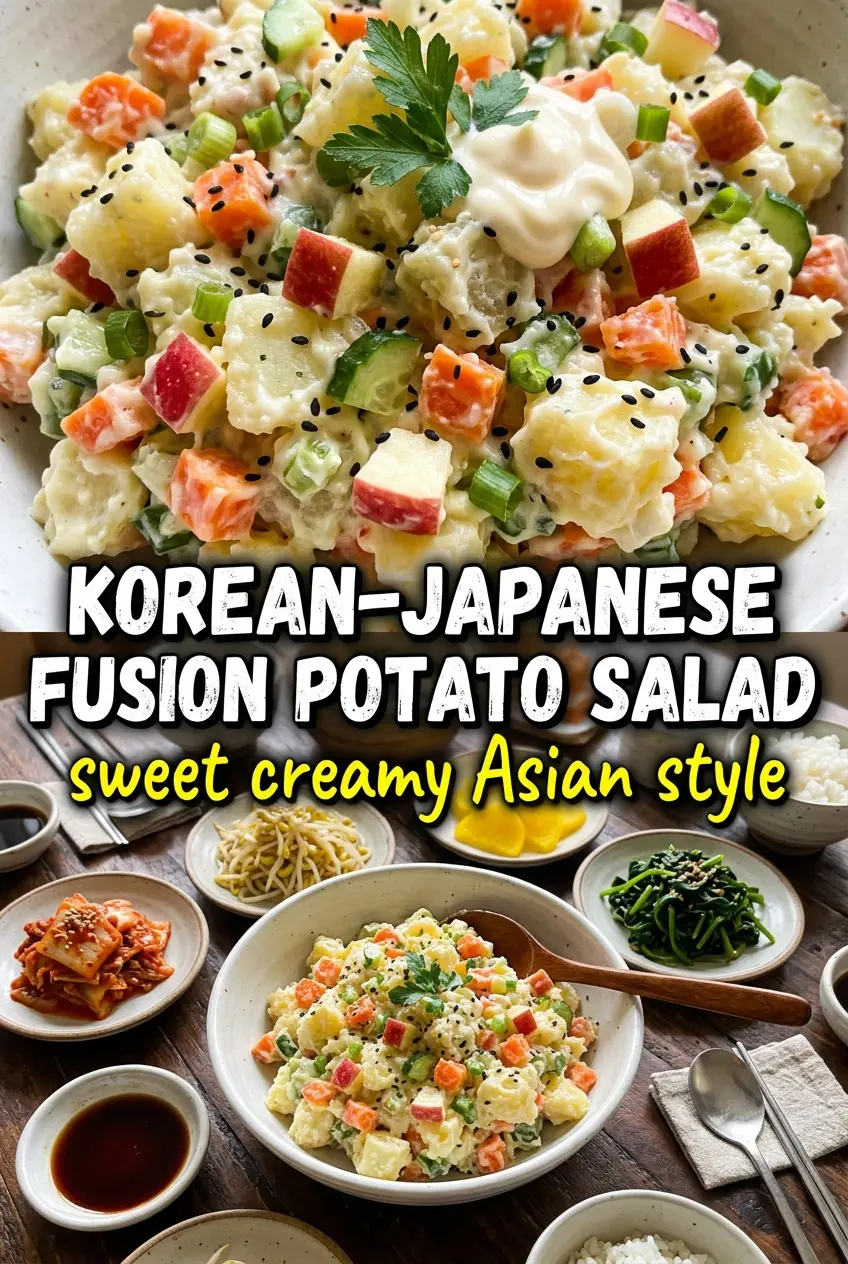
Korean Potato Salad
Ingredients
Equipment
Method
- Bring a Dutch oven of water to a boil, add peeled and cubed russet potatoes, and boil until very tender, about 15–20 minutes.
- Drain the potatoes and mash them roughly while still warm so the salad stays textured (not completely smooth).
- Add diced carrots to boiling water and blanch for 2 minutes, then drain well.
- In a large bowl, combine mashed potatoes, blanched carrots, diced cucumber, corn kernels, and chopped hard-boiled eggs.
- Whisk mayonnaise, sugar, rice vinegar, salt, and pepper until smooth.
- Fold the dressing into the potato mixture until evenly coated and glossy, with vegetables and egg distributed throughout.
- Cover and refrigerate for at least 2 hours before serving so the flavors meld and the salad thickens.