Pork chops with a sticky maple glaze can go wrong fast if the heat is too high or the sauce is too thin, but when they’re handled right, you get a glossy, caramelized finish that clings to every bite. The edges stay browned and savory while the glaze turns amber and just tacky enough to coat the meat instead of sliding off the skillet.
This version leans on a quick sear first, then a short simmer in the same pan so the glaze picks up the browned bits left behind by the pork. Pure maple syrup gives the sweetness, Dijon brings sharpness and body, and soy sauce keeps the whole thing from tasting one-note. The garlic and rosemary don’t need long cooking here; they just need enough time to perfume the glaze without turning harsh.
Below, you’ll find the exact cue for when the glaze is ready, plus a couple of smart swaps if you want to adjust the sweetness or work around what’s in your pantry.
The glaze reduced in just a couple of minutes and turned shiny instead of syrupy. I spooned it over the chops like you said, and the edges came out caramelized without getting sticky-burned.
Like this sticky maple glaze? Save these pork chops for the nights when you want a fast skillet dinner with a glossy, savory-sweet finish.
The Sear Is What Keeps the Glaze from Turning Flat
If you start building the sauce before the pork has real color, the whole dish tastes one-dimensional. The first four minutes per side do two jobs at once: they cook the chops and leave browned bits in the pan that the maple glaze can pick up. That is where the depth comes from.
Boneless chops work well here as long as they’re cut thick enough to stay juicy. Thin chops overcook before the glaze has time to reduce, and then you end up with dry meat and a sauce that tastes cooked too long. Pull them when they hit 145°F in the center; the carryover heat finishes the job while the glaze stays glossy.
What Each Ingredient Is Actually Doing in the Pan

- Pure maple syrup — This is the backbone of the glaze, and the real thing matters. Pancake syrup won’t reduce the same way and can taste artificial or thin. Use pure maple syrup for a sauce that turns lacquered instead of sticky in a candy-sweet way.
- Dijon mustard — Dijon gives the glaze its bite and helps it cling to the meat. It also keeps the sweetness in check. Yellow mustard can work in a pinch, but it tastes sharper and less rounded.
- Soy sauce — A small amount is enough to add salt and that savory edge that makes maple taste more interesting. If you need a gluten-free swap, use tamari in the same amount. The glaze won’t taste different in any meaningful way.
- Fresh rosemary — Fresh rosemary gives the glaze a woodsy finish that plays well with pork. Dried rosemary can taste rough here unless it’s crushed very fine. If you only have dried, use half the amount and let it sit in the glaze for a minute before cooking.
- Boneless pork chops — Thick chops give you enough time to sear, glaze, and finish without drying out. If yours are thinner than 1 inch, shorten the final simmering stage so they don’t get tough while the glaze reduces.
How to Get a Glossy Glaze Without Overcooking the Pork
Seasoning and Searing
Pat the pork chops dry, then season them well with salt and pepper before they hit the skillet. Oil should shimmer, not smoke aggressively, when the chops go in. You want a deep golden crust after about 4 minutes per side, and if they’re sticking, they’re not ready to turn yet. A pale chop gives you a pale sauce, so don’t rush this part.
Building the Maple Glaze
Mix the maple syrup, Dijon, soy sauce, garlic, rosemary, and black pepper before you pour anything into the pan. Once the chops are out, the glaze goes straight into the same skillet so it can gather the browned bits. Keep the heat at medium and simmer just until it looks slightly thickened and shiny, about 1 to 2 minutes. If it boils hard, the syrup can go from glossy to bitter fast.
Finishing in the Sauce
Return the pork chops to the pan and spoon the glaze over them constantly. This is where the coating turns from thin and runny to lacquered and clingy. Watch the thermometer, not the clock, and pull the chops at 145°F. If you wait for the glaze to look fully thick before returning the pork, the sauce usually reduces too far and turns sticky instead of silky.
How to Adapt These Pork Chops Without Losing the Sticky Finish
Use bone-in chops for a deeper pork flavor
Bone-in chops work well if you add a couple of extra minutes to the sear and finish. They hold moisture better and taste a little richer, but they take longer to cook through, so the thermometer matters even more. The glaze behaves the same way.
Make it gluten-free with one swap
Use tamari instead of soy sauce and keep everything else the same. The glaze still gets its savory backbone, and you won’t lose the balance that keeps the maple from tasting flat.
Dial back the sweetness
Cut the maple syrup to 3 tablespoons and add 1 extra teaspoon of Dijon. You’ll get a sharper glaze with less sweetness and a little more punch, which works especially well if you’re serving the chops with mashed potatoes or roasted vegetables.
Swap the rosemary for thyme
Thyme gives a softer, more delicate herbal note if rosemary feels too piney for your table. Use the same amount and add it with the glaze so it can warm through without getting bitter. The final dish tastes a little gentler and more rounded.
Storage and Reheating
- Refrigerator: Store leftovers in an airtight container for up to 3 days. The glaze will thicken as it chills, and the pork will hold onto the sauce better the next day.
- Freezer: Freeze cooked chops for up to 2 months, though the glaze may lose a little shine after thawing. Wrap them well and freeze with a little extra sauce if you can.
- Reheating: Warm gently in a skillet over low heat with a splash of water to loosen the glaze. High heat is the mistake here; it can dry out the pork and make the sauce turn tacky instead of glossy.
Answers to the Questions Worth Asking
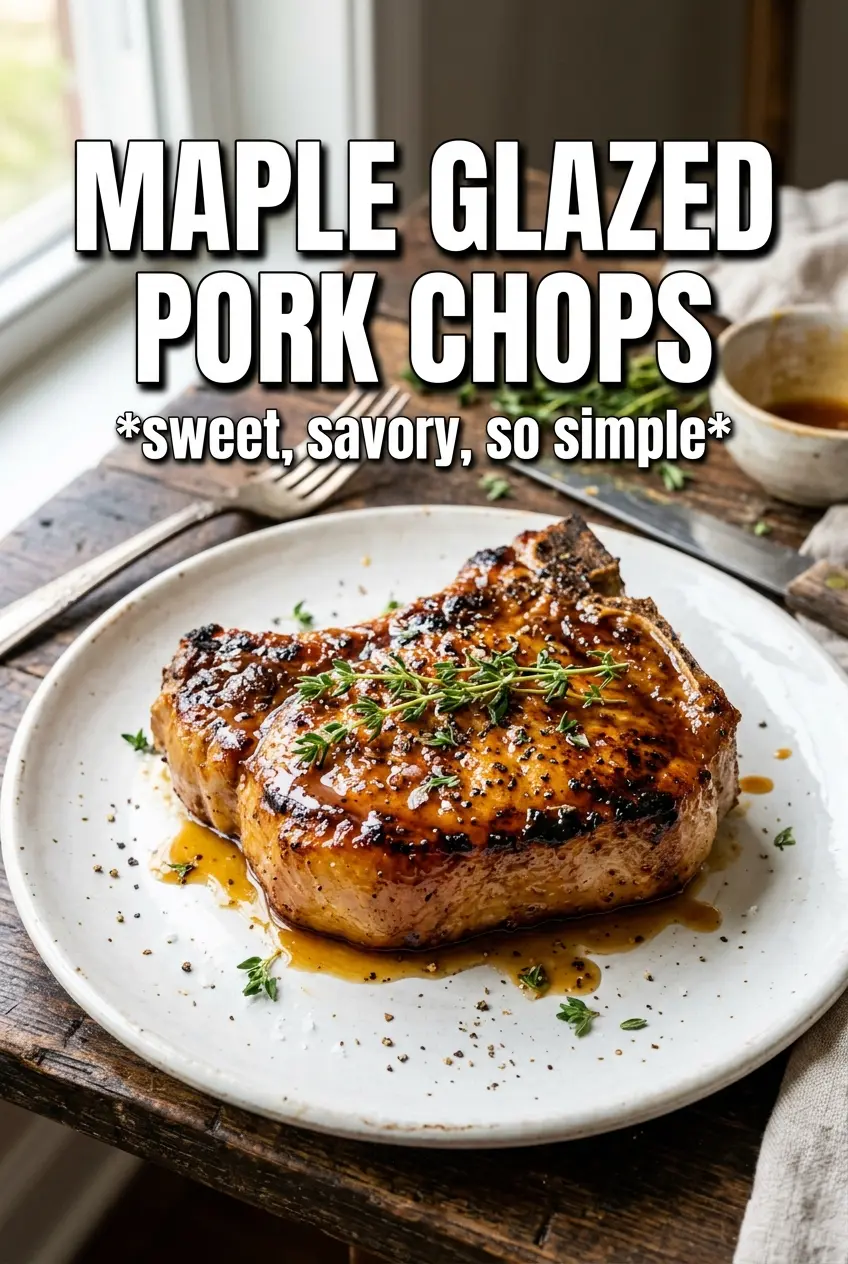
Maple Glazed Pork Chops
Ingredients
Equipment
Method
- Season the pork chops all over with salt and pepper.
- Heat the olive oil in a skillet over medium-high heat, then sear the pork chops for 4 minutes per side until golden; set aside.
- In a bowl, mix the maple syrup, Dijon mustard, soy sauce, minced garlic, minced rosemary, and black pepper until smooth.
- Pour the glaze into the same pan over medium heat and simmer 1–2 minutes, stirring, until slightly thickened and glossy.
- Return the pork chops to the pan and cook 2–3 minutes over medium heat, spooning glaze over constantly, until lacquered and the internal temperature reaches 145°F.
- Garnish with fresh rosemary and serve immediately.