Golden, crisp tortillas and a molten center of feta and mozzarella make these Mediterranean quesadillas the kind of lunch-or-dinner shortcut that earns a permanent spot in the rotation. The edges shatter a little when you cut in, and the filling tastes bright, briny, and rich at the same time. It’s a smart way to get all the things people love in a Greek-style salad and tuck them into a handheld meal that eats more like comfort food than compromise.
What makes this version work is the balance. Mozzarella gives you the stretch, but feta is what carries the salty punch, so you don’t need a heavy sauce or a long list of seasonings. Sun-dried tomatoes and Kalamata olives bring concentrated flavor without making the filling watery, and the spinach wilts just enough inside the tortilla instead of steaming the whole thing soft. A light brush of olive oil on the outside helps the tortilla brown evenly while the cheese melts underneath.
Below, I’ll walk through the order that keeps the quesadillas crisp instead of soggy, plus a few smart swaps for making them dairy-free or using what’s already in your fridge. The little details matter here, especially when it comes to heat and how much filling you pile in.
The feta melted into the mozzarella just enough, and the tortillas got perfectly crisp without going greasy. I used the tzatziki on the side like suggested and my teens asked if I could make these again the next night.
Crisp Mediterranean quesadillas with feta, mozzarella, and tzatziki are the kind of fast dinner worth keeping close.
The Crispness Problem: Why These Quesadillas Don’t Turn Soggy
The main mistake with stuffed quesadillas is overloading them with wet fillings, then cooking them long enough for the tortilla to get limp before the cheese has a chance to seal everything together. Spinach, tomatoes, and olives all bring moisture, so the trick is to keep the layers thin and let the cheese act like glue. Mozzarella melts into a soft net, and feta stays crumbly but salty enough to season every bite.
Heat matters here more than finesse. Medium heat gives the tortilla time to brown while the filling warms through; high heat burns the outside before the center is ready, and low heat makes the tortilla absorb oil and turn chewy. If your pan is hot enough, you’ll hear a steady, gentle sizzle as soon as the quesadilla hits the skillet. That sound tells you the surface is crisping instead of steaming.
- Cook one at a time if your pan is small — crowding drops the heat and softens the tortilla.
- Brush the outside lightly with oil — too much oil makes the shell greasy instead of crisp.
- Don’t pile the filling to the edge — leave a border so the cheese can melt and seal the fold.
What Each Ingredient Is Actually Doing in This Dish
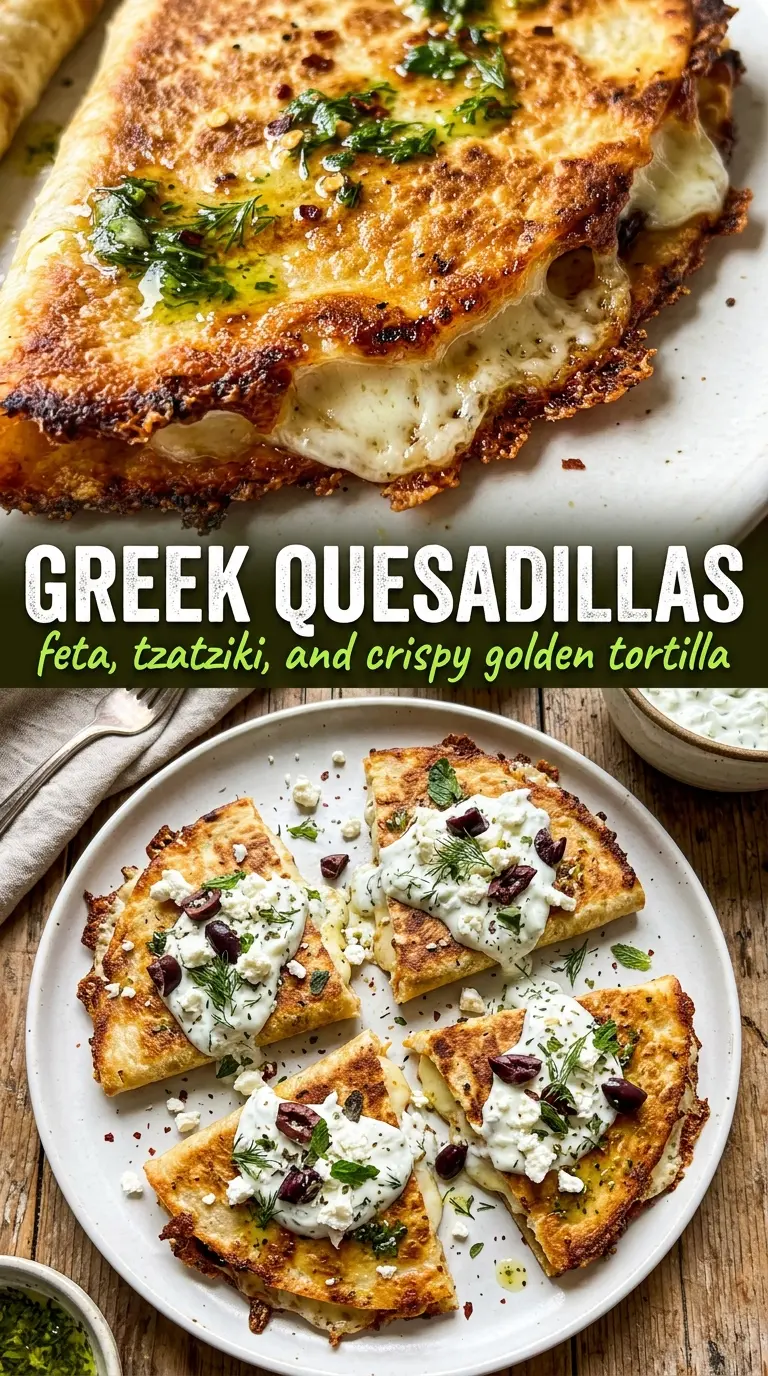
- Flour tortillas — Large tortillas hold the filling without splitting and brown into that shattering, crisp exterior. Smaller tortillas work only if you reduce the filling, or they’ll leak before the center melts.
- Mozzarella — This is the cheese that gives you the pull. Shredded mozzarella melts more evenly than slices, and it cushions the feta so the filling feels creamy instead of dry.
- Feta — Use a good crumbly feta here if you can. It doesn’t melt smooth like mozzarella, but that’s the point; it brings the briny, tangy backbone that makes the quesadilla taste Mediterranean instead of just cheesy.
- Sun-dried tomatoes in oil — Drain them well, then chop them small so they distribute instead of sliding out when you cut the wedges. Dry-packed sun-dried tomatoes can work, but they’re firmer and need a little extra olive oil to soften.
- Kalamata olives — They add salt and that deep, fruity bite that wakes up the whole filling. Slice them thin so you don’t end up with big pockets of olive brine in one bite.
- Baby spinach — Fresh spinach wilts fast inside the tortilla and gives body without needing a separate sauté. If your leaves are damp, pat them dry first or they’ll release steam into the quesadilla.
- Tzatziki — This isn’t just a garnish. The cool yogurt sauce gives the crispy quesadilla a sharp, creamy contrast and keeps the filling from tasting one-note.
Building the Layers So the Filling Stays Put
Warming the Pan First
Set the skillet over medium heat and let it actually come up to temperature before the quesadilla goes in. If the pan is still cold, the tortilla absorbs oil before it starts crisping, which leaves you with a soft, blotchy surface. You’re looking for a steady sizzle the moment the tortilla lands.
Stacking the Cheese and Vegetables
Spread the mozzarella and feta over one half of each tortilla first, then scatter the spinach, tomatoes, olives, onion, basil, and oregano on top. Putting cheese both under and around the vegetables helps anchor everything in place as it melts. Keep the filling closer to the center than the edge so the fold seals without spilling.
Getting the First Side Deeply Golden
Fold the tortilla, brush the outside with olive oil, and lay it in the skillet. Press it gently with a spatula for the first 20 seconds so the bottom makes full contact with the pan. When the edges turn a deep gold and the cheese starts to soften at the seam, it’s ready to flip; if you move it too early, the filling slips and the tortilla can tear.
Finishing Without Burning
Cook the second side until it matches the first and the cheese is fully melted. If the tortilla is browning too quickly before the center loosens, lower the heat by a notch and give it another minute. Slice on a cutting board right away so the steam doesn’t soften the crust in the pan.
Three Smart Ways to Work This Into Your Own Kitchen
Make it dairy-free with a melty plant-based cheese
Use a dairy-free shred that actually melts, not a hard block-style substitute. You’ll lose the tang of feta, so add a pinch of extra salt and a little lemon zest to bring back some brightness. The texture will be slightly less creamy, but the crisp tortilla still carries the dish.
Turn it gluten-free with the right tortilla
Use a sturdy gluten-free flour tortilla that can bend without cracking. Many GF tortillas brown faster than wheat tortillas, so keep the heat at medium-low and watch the first side closely. The flavor stays the same, but the texture can be a little more delicate.
Swap in what you already have in the fridge
Roasted red peppers can stand in for the sun-dried tomatoes, and black olives work if Kalamatas aren’t around. The quesadilla will taste a little softer and less briny, so a touch more oregano helps keep the flavor sharp. This is the most forgiving route if you’re cleaning out the vegetable drawer.
Storage and Reheating
- Refrigerator: Store leftovers in an airtight container for up to 3 days. The tortilla softens a little, but the flavor holds up well.
- Freezer: Freeze only if you’re okay with a softer texture after reheating. Wrap wedges tightly and freeze for up to 1 month, then thaw in the fridge before reheating.
- Reheating: Reheat in a dry skillet over medium-low heat until the outside crisps again and the center is hot. The microwave will make the tortilla limp, which is the quickest way to lose what makes this good.
Answers to the Questions Worth Asking
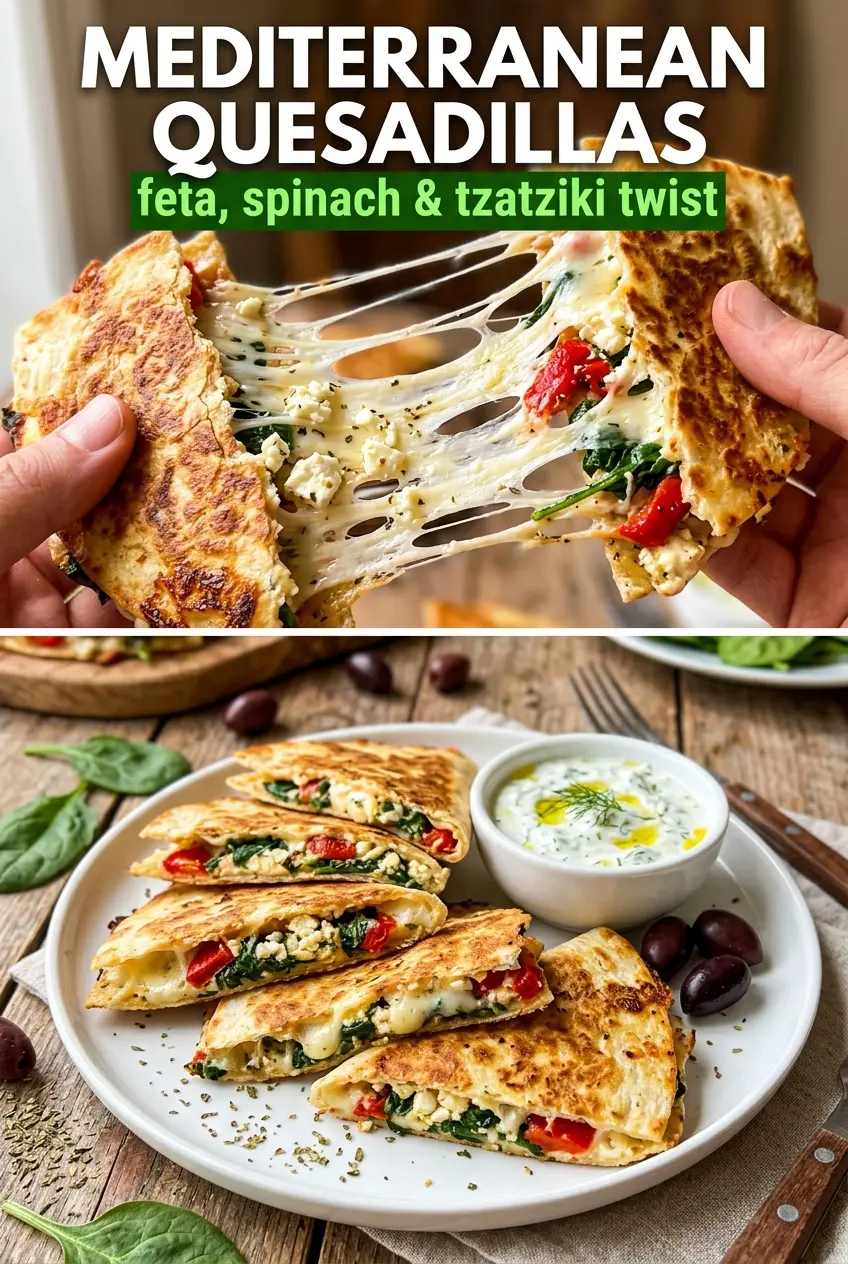
Mediterranean Quesadillas
Ingredients
Equipment
Method
- Heat a large skillet over medium heat until hot enough to sizzle lightly when a tortilla touches it.
- Spread mozzarella and feta over half of each tortilla, creating an even layer over the surface.
- Layer spinach, sun-dried tomatoes, olives, red onion, and basil over the cheese, then sprinkle dried oregano over the filling.
- Fold each tortilla in half to enclose the filling.
- Brush the outside lightly with olive oil so the tortillas brown and crisp.
- Cook the quesadillas one at a time for 3-4 minutes per side, flipping when the first side is golden and crisp.
- Cook until the cheese is fully melted and the second side is golden with crisp edges.
- Slice each quesadilla into wedges for serving.
- Serve immediately with tzatziki for dipping.