Golden, crisp tortillas and a molten center of mozzarella, feta, spinach, and roasted red peppers make these Mediterranean quesadillas one of those meals that disappears fast. The edges crackle when you cut into them, and the filling lands somewhere between briny, creamy, and lightly herby in a way that keeps every bite interesting.
The trick is balancing moisture and melt. Mozzarella gives you the stretch, feta brings the salty punch, and the roasted red peppers need to be well-drained so they don’t steam the tortilla from the inside. A little oregano is enough to tie everything together without burying the fillings, and serving these with tzatziki and hummus gives you cool, creamy dips that work with the whole Mediterranean-American idea instead of fighting it.
Below you’ll find the exact layering order that helps the quesadillas hold together, plus a few smart swaps if you want to make them vegetarian or adjust the cheese and filling to what you’ve got on hand.
The feta got nice and creamy without leaking everywhere, and the tortillas stayed crisp even after I sliced them. The tzatziki on the side made them taste like something from a café.
Keep these Mediterranean quesadillas in mind for a fast dinner with crispy tortillas and that feta-mozzarella melt.
The mistake that makes quesadillas soggy instead of crisp
The fastest way to ruin a quesadilla like this is to overload it with wet fillings and rush the pan heat. Roasted red peppers, spinach, and olives all carry moisture, which is great for flavor but rough on a tortilla if you don’t balance them with enough cheese and enough time over medium heat. The cheese isn’t just the filling here; it acts like glue, helping the whole thing set before the tortilla burns.
Medium heat matters more than people think. Too hot, and the tortilla browns before the cheese melts. Too low, and you get limp bread with a warm center. You want the outside to turn deeply golden and the cheese to melt all the way to the edges so the quesadilla seals when you fold and press it.
- Mozzarella — This gives the stretch and holds the filling together. Use low-moisture mozzarella if you can; fresh mozzarella brings too much water for a crisp skillet quesadilla.
- Feta — Feta brings the salty, tangy bite that makes these taste distinctly Mediterranean. Crumble it by hand so you get pockets of flavor instead of a paste.
- Roasted red peppers — Drain them well and blot them dry. If they’re dripping, they’ll steam the tortilla and make the middle slippery.
- Spinach — Baby spinach wilts fast and adds color without bulk. If you use frozen spinach, squeeze it dry until it feels almost crumbly.
- Chickpeas or chicken — Chicken makes this more filling, while chickpeas keep it vegetarian and give a soft, hearty bite. If you use chickpeas, pat them dry first so they don’t mash into the cheese.
What each layer is doing in these Mediterranean quesadillas
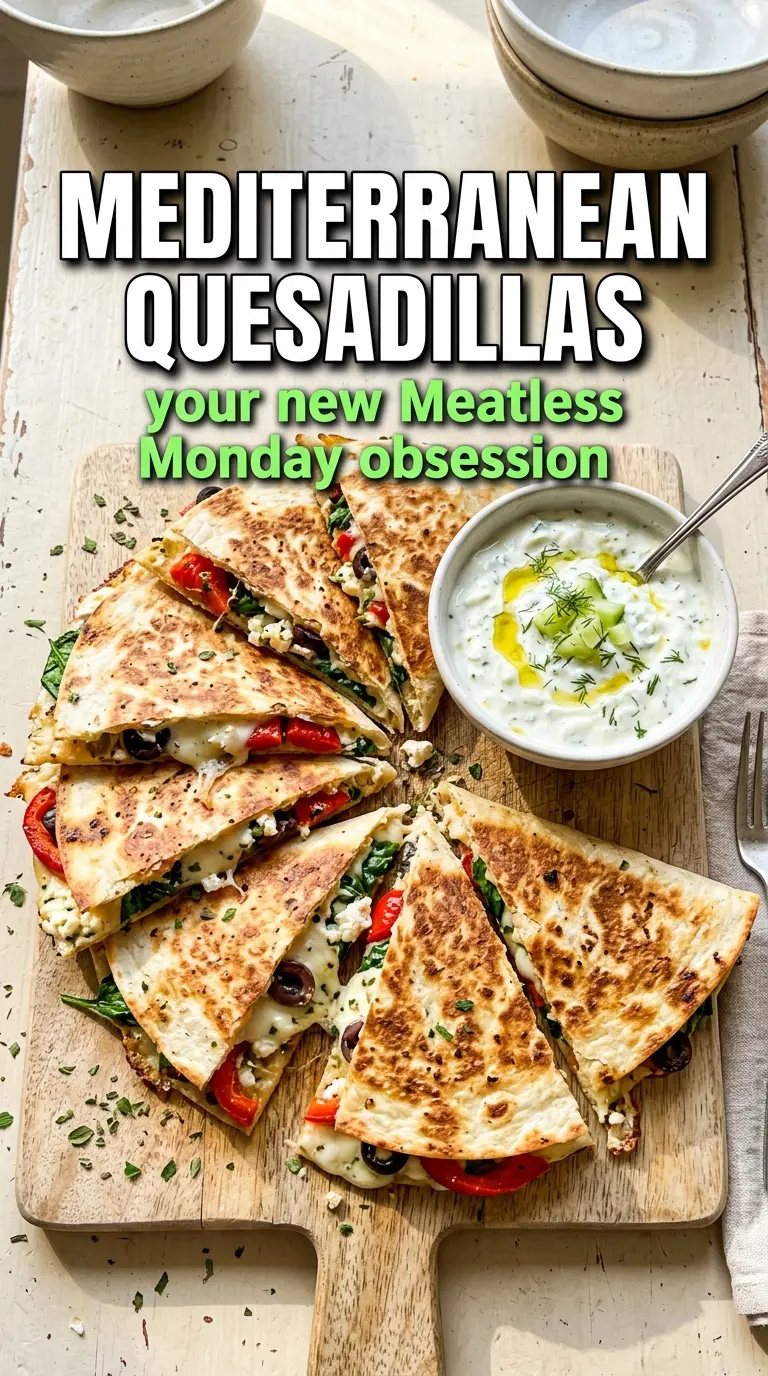
The tortilla is the structure, so use the large flour kind that can fold without tearing. Smaller tortillas tend to split once the cheese starts melting and the filling shifts.
The olive oil on the skillet does two jobs: it prevents sticking and helps the exterior fry into that crisp, speckled finish. Use just enough to coat the pan lightly. Too much oil makes the quesadilla greasy instead of crisp.
Tzatziki and hummus aren’t just serving extras. The cool yogurt sauce cuts through the salt from the feta and olives, while hummus adds a thicker, nuttier dip that makes the plate feel complete without needing more filling inside the tortilla.
Building the fill so the tortilla stays intact
Warm the pan first
Set a large skillet over medium heat and let it come up fully before the quesadilla goes in. If the pan is still cool, the tortilla absorbs oil and softens before it ever gets a chance to crisp. You want a gentle sizzle the second the folded tortilla hits the surface, not a loud sputter.
Layer cheese against the tortilla
Start with mozzarella on the tortilla itself, then add the chicken or chickpeas, spinach, peppers, olives, feta, and oregano. That first layer of mozzarella melts and seals the fillings in place, which helps keep the loose pieces from sliding out. Don’t pile the filling high in the center; a thin, even layer folds and browns much better.
Cook until the cheese actually melts through
Let each quesadilla cook for 3 to 4 minutes on the first side, then flip carefully and cook the second side until both sides are deeply golden. If the tortilla is browning too fast, lower the heat and give the cheese time to catch up. Cut too early and the filling spills; wait until the cheese is fully melted and the folded edge feels set when you lift it with a spatula.
How to adapt these quesadillas without losing the good part
Make it vegetarian with chickpeas
Swap the chicken for chickpeas and pat them dry before adding them to the tortilla. They bring a hearty bite and hold the seasoning well, though you’ll lose the shred-and-pull texture that chicken gives. Lightly crushing a few chickpeas helps the filling cling together.
Use dairy-free cheese for a lighter melt
A good dairy-free mozzarella-style shreds can work here, but it won’t melt as smoothly as the real thing. Keep the filling a little thinner and use extra skillet time on lower heat so the tortilla doesn’t overbrown before the center softens.
Add more protein without changing the flavor
Use the full cup of shredded chicken and keep the feta amount the same. That’s the easiest way to make this dinner more filling without pushing it away from the bright, briny balance that makes it work.
Storage and Reheating
- Refrigerator: Store leftovers in an airtight container for up to 3 days. The tortilla softens a bit in the fridge, but the flavor holds up well.
- Freezer: These freeze better before cooking than after. Assemble, wrap tightly, and freeze flat; cook from thawed for the best texture.
- Reheating: Reheat in a skillet over medium-low heat so the tortilla crisps back up. The microwave will soften the tortilla and make the cheese rubbery.
Answers to the questions worth asking

Mediterranean Quesadillas
Ingredients
Equipment
Method
- Heat a large skillet over medium heat and brush lightly with olive oil until it looks glossy but not smoking.
- On one half of each tortilla, layer mozzarella, chicken or chickpeas, baby spinach, roasted red peppers, kalamata olives, feta, and oregano in an even band.
- Fold the empty half of the tortilla over the filled half to form a half-moon and press gently so the edges contact.
- Cook each quesadilla for 3–4 minutes per side, flipping once, until golden and crispy with cheese fully melted (visual cue: browned exterior and melted cheese at the seams).
- Slice into wedges and serve warm with tzatziki and hummus for dipping.