Pillowy gnocchi, golden chicken, and a lemon cream sauce all in one skillet is the kind of dinner that disappears fast and somehow still feels calm to make. The gnocchi cooks right in the sauce, so it absorbs flavor instead of just getting coated on the outside, and the chicken goes back in at the end with every bit of its browned flavor intact. A handful of spinach softens into the sauce without turning it heavy, and the lemon keeps the whole pan bright instead of flat.
The part that makes this work is the order. The chicken gets seared first so the pan starts with real flavor, then the garlic and wine lift all those browned bits before the cream goes in. Adding the gnocchi straight to the simmering sauce is what gives you that tender, almost dumpling-like texture without boiling a separate pot of water. If you’ve ever had skillet gnocchi turn gluey or a cream sauce taste dull, the fix is usually heat control and timing, and both matter here.
Below you’ll find exactly when to add the lemon so the sauce stays smooth, how to keep the gnocchi from overcooking, and a few smart swaps for nights when you need to use what you already have.
The gnocchi turned out tender but not mushy, and the sauce thickened up beautifully once I added the Parmesan. My husband went back for seconds and asked if I could put this in the regular rotation.
Creamy lemon chicken gnocchi with golden chicken, pillowy gnocchi, and one-skillet comfort
The Reason the Gnocchi Goes Straight Into the Sauce
The biggest mistake with skillet gnocchi is treating it like pasta and cooking it separately. Shelf-stable gnocchi can go from tender to bloated fast, and once it’s overcooked it loses that soft, almost cloudlike center. Cooking it in the sauce keeps the texture intact and lets the starch from the gnocchi help thicken the cream naturally.
The other thing that matters is not rushing the simmer. If the sauce is boiling hard when the gnocchi goes in, the cream can split and the outside of the gnocchi can break down before the middle is done. A gentle simmer gives you gnocchi that holds its shape, a sauce that clings, and chicken that stays juicy instead of dry out of habit.
- Searing the chicken first builds flavor in the pan and gives you browned bits that turn into the base of the sauce.
- Simmering instead of boiling keeps the cream stable and the gnocchi tender.
- Adding Parmesan at the end thickens the sauce without making it grainy.
- Lemon goes in last so the sauce stays bright and doesn’t turn harsh.
What Each Ingredient Is Actually Doing in This Dish
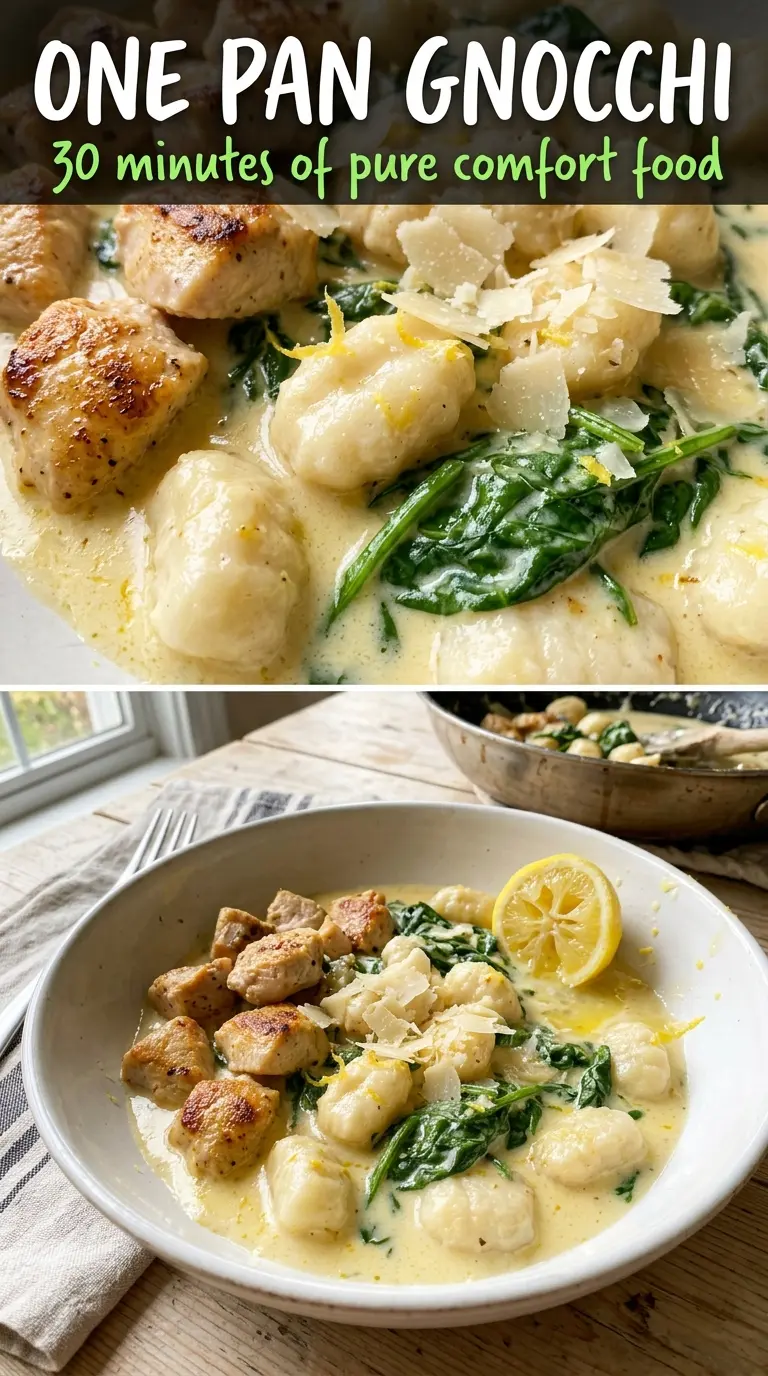
Chicken breasts cook quickly and stay lean enough to let the sauce shine. Cut them into bite-sized pieces so they sear fast and return to the pan at the end without needing a long simmer. Chicken thighs work too if you want a richer result and don’t mind a little extra fat in the pan.
Heavy cream is what gives you that lush, clingy sauce. Half-and-half will work in a pinch, but the sauce will be thinner and a little more fragile when the lemon goes in. If you swap it, keep the heat lower and add the lemon gradually.
Dry white wine adds depth and acidity before the cream enters the skillet. If you don’t cook with wine, chicken broth works, but the sauce will taste a touch flatter, so the lemon becomes even more important. Use a broth you’d actually drink, since it’s carrying more of the flavor here.
Shelf-stable gnocchi is the right choice for this method because it holds up in the skillet. Fresh gnocchi can work, but it softens faster and needs a shorter cook time. If you use fresh, start checking it a minute or two early so it doesn’t turn past tender.
Parmesan thickens the sauce and adds the salty finish that keeps the lemon from tasting thin. Grate it finely so it melts smoothly; pre-shredded cheese often contains anti-caking agents that can make the sauce a little sandy. Stir it in off a strong boil for the smoothest result.
Building the Skillet So the Sauce Stays Smooth
Searing the Chicken First
Season the chicken before it hits the pan, then cook it in hot olive oil until the edges are deeply golden and the centers are just cooked through. That color matters; pale chicken gives you a pale sauce. Pull it out once it reaches 165°F, because it’ll go back in later and warm through again.
Waking Up the Garlic and Wine
Melt the butter in the same skillet and add the garlic for about 30 seconds, just until it smells fragrant. If the garlic browns, it turns bitter fast and the whole sauce gets sharp in the wrong way. Pour in the wine and scrape the bottom of the pan while it bubbles so the browned bits dissolve into the sauce instead of staying stuck.
Letting the Gnocchi Cook in the Cream
Add the cream and broth, then bring the liquid to a gentle simmer before the gnocchi goes in. Stir occasionally so nothing sticks to the bottom, but don’t keep agitating it or the gnocchi can break apart. When the sauce starts coating the spoon and the gnocchi feels tender when pressed, it’s ready for the final ingredients.
Finishing With Lemon, Parmesan, and Spinach
Stir in the Parmesan first so it melts into the sauce, then add the lemon juice, zest, and spinach. The spinach should wilt in under a minute, and the sauce should look glossy, not greasy. Return the chicken and toss just long enough to warm everything through, then serve right away while the sauce is still silky.
How to Adapt This for Different Nights and Different Fridges
Dairy-Free Version
Use full-fat canned coconut milk in place of the cream and skip the Parmesan, then add a little extra salt and lemon zest at the end. The sauce will be lighter and a little less rich, but still creamy enough to coat the gnocchi. Keep the simmer gentle because coconut milk can separate if it boils hard.
Gluten-Free Check
Use a gluten-free shelf-stable gnocchi if that’s what you need, and double-check that your broth is certified gluten-free. The cooking method stays the same, but some gluten-free gnocchi soften faster, so start tasting a minute early. You want tender, not bloated.
Make It With Chicken Thighs
Boneless skinless thighs bring a little more richness and stay forgiving if you get distracted for a minute. They release more flavor into the pan, which gives the sauce a deeper finish. Cut them the same size as the breasts so they cook evenly and don’t hold the skillet hostage.
Storage and Reheating
- Refrigerator: Store leftovers in an airtight container for up to 3 days. The gnocchi will absorb more sauce as it sits, so the dish gets thicker.
- Freezer: I don’t recommend freezing this one. The cream sauce can separate and the gnocchi texture turns soft after thawing.
- Reheating: Warm it gently in a skillet over low heat with a splash of broth or cream. High heat is the mistake that breaks the sauce and tightens the chicken.
Answers to the Questions Worth Asking
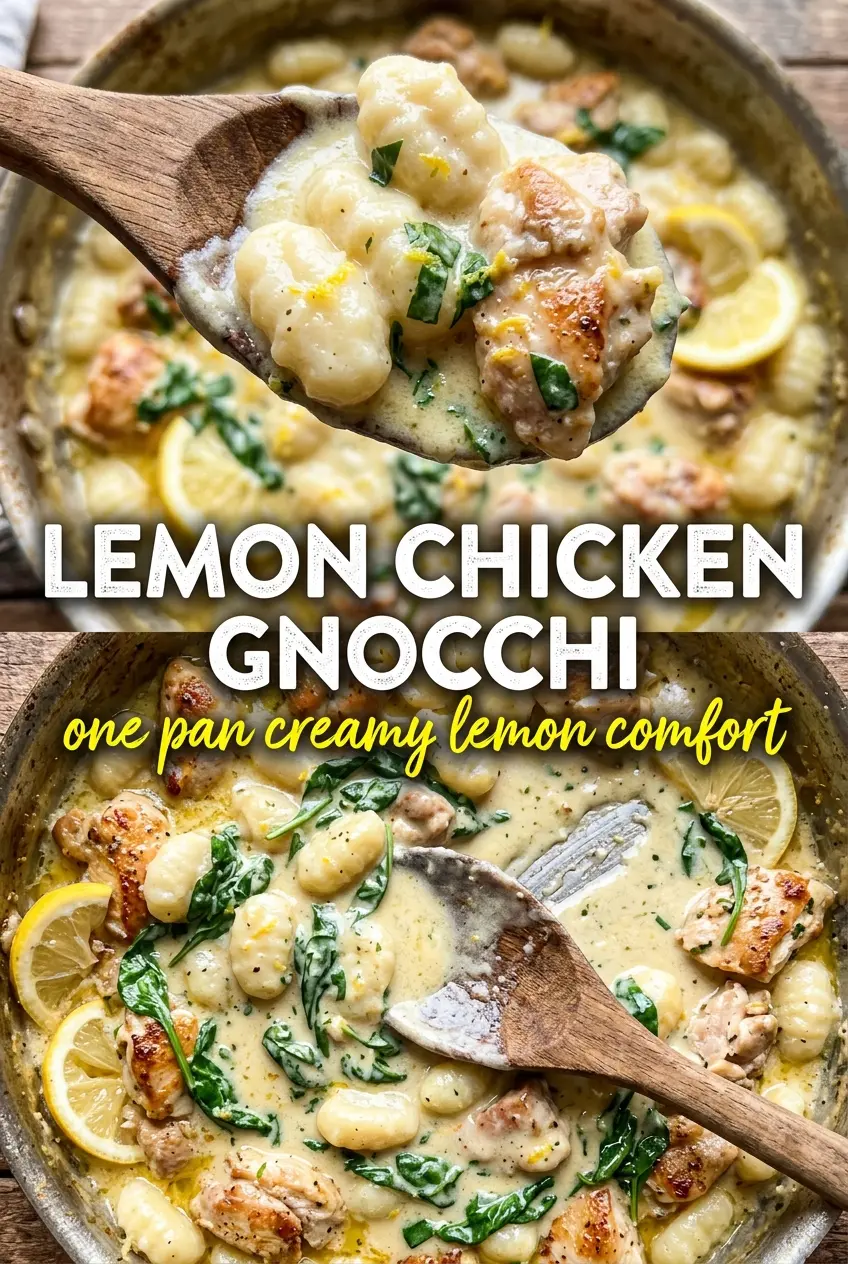
One Pan Lemon Chicken Gnocchi
Ingredients
Equipment
Method
- Season the chicken with salt, pepper, and garlic powder. Heat the olive oil in a large skillet over medium-high heat and cook the chicken for 5-6 minutes, stirring once or twice, until golden and cooked through to 165°F; remove to a plate.
- Melt the butter in the same skillet over medium heat and add the minced garlic, cooking for 30 seconds. Pour in the white wine and cook for 2 minutes, scraping up any browned bits, until the liquid is slightly reduced and fragrant.
- Add the heavy cream and chicken broth, then bring to a simmer. Add the shelf-stable gnocchi directly to the sauce and cook for 5-6 minutes, stirring gently, until the gnocchi are tender and the sauce thickens to a creamy coat.
- Stir in the Parmesan, lemon juice, and lemon zest until the sauce looks smooth and glossy. Add the baby spinach and stir until it wilts, then return the chicken and toss to combine so everything is evenly coated.
- Garnish with fresh parsley and extra lemon, then serve immediately.