Oven baked pork chops with a dry rub are the kind of dinner that looks like you worked harder than you did. The crust turns deep red and lightly caramelized in the oven, while the center stays juicy instead of drying out into the chalky chop people remember from bad weeknight dinners. The best part is how much flavor you get from a short ingredient list when the spice mix is handled the right way.
The trick is starting with dry pork and enough oil to help the rub cling, then baking at a high enough temperature to set the seasoning into a real crust. Brown sugar and smoked paprika do most of the heavy lifting here: one gives you that bronzed edge, the other brings the BBQ-style depth that makes these taste like more than just salted pork. If you’ve ever had a dry rub slide off in the pan or burn before the meat was done, this version avoids both problems.
Below you’ll find the timing that keeps thick pork chops tender, plus a few smart swaps if you need to work with a different cut or change up the spice mix.
The rub formed that deep, almost lacquered crust and the chops stayed juicy right to the bone. I used 1-inch chops and they were done right on time with no drying out at all.
Love that golden-red crust? Save these oven baked pork chops with dry rub for the nights when you want big flavor and almost no cleanup.
The Crust Starts Before the Oven Does
The biggest mistake with baked pork chops is treating the rub like decoration instead of part of the cooking process. If the chops are wet, the seasoning turns muddy and slides around instead of clinging. If the oven is too low, the sugar in the rub can’t caramelize before the meat dries out. The goal here is a dry surface, a generous coating, and a hot oven that sets the crust fast.
Bone-in chops help too. They cook a little more evenly than thin boneless chops and stay juicier through the center. If yours are different in thickness, rely on the thermometer instead of the clock. Pork is done when it hits 145°F in the thickest part, not when it looks the way you expect it to look.
- Bone-in pork chops — These hold onto moisture better than thin boneless chops and give you a little more forgiveness in the oven. If you only have boneless, reduce the bake time and start checking early because they go from juicy to dry fast.
- Brown sugar — This is what helps the rub turn into that deep, slightly sticky crust. Light or dark brown sugar both work, but dark brown sugar gives a deeper molasses note.
- Smoked paprika — It adds color and that BBQ-style smoke without needing a grill. Regular paprika works in a pinch, but you’ll lose some of the depth.
- Olive oil — Just enough oil helps the rub adhere and browns the surface more evenly. Don’t drown the chops in it or the seasoning can slip off during baking.
- Salt in the rub — The salt seasons the meat all the way through, not just the surface. If you use a seasoned salt blend instead, cut back carefully so the chops don’t end up too salty.
What Each Ingredient Is Actually Doing in This Pork Dish

- Pork (cut properly for method) — Pat dry so it browns instead of steams. Even thickness ensures uniform cooking.
- Oil or butter (the browning medium) — High-heat oil essential for proper searing. Creates pan flavor.
- Seasonings (salt, pepper, spices) — Build flavor boldly. Pork carries the entire profile.
- Aromatics (garlic, onion, herbs) — Cook with fat to bloom flavors. Become the foundation.
- Sauce or braising liquid (if using) — This keeps lean pork from drying. Balance richness with acid.
- Vegetables (if using) — Layer by cooking time. Hard vegetables first so everything finishes together.
- Acid (vinegar, wine, or citrus) — This brightens sauce and prevents heavy flavor. Add near end.
- Proper doneness (145°F with slight pink center) — Pork is safe here and stays juicy. Higher temps dry it out.
How to Get a Deep Red Crust Without Drying Out the Pork
Dry the Surface First
Pat the pork chops completely dry before anything else. Moisture on the surface keeps the rub from sticking and creates steam in the oven, which works against browning. A paper towel and a minute of care here matters more than an extra tablespoon of seasoning later.
Build the Rub Into a Paste-Like Coat
Mix the spices first, then brush the chops with oil and press the rub on firmly with your hands. You want an even coating that looks bold, not a dusty layer sitting on top of the meat. If the rub looks patchy, press again instead of adding more oil, which can make it slide.
Bake Hot and Stop at 145°F
Lay the chops on a foil-lined sheet and bake at 400°F until the internal temperature reaches 145°F, usually 18 to 22 minutes for 1-inch chops. The surface should look browned and set, with the edges slightly darker. If the chops are thicker than 1 inch, they’ll need a few more minutes; if they’re thinner, start checking early so you don’t overshoot the temperature.
Rest Briefly Before Serving
Let the chops rest for 3 minutes after they come out of the oven. That short rest keeps the juices from running out the second you cut into them. If you skip it, even a perfectly cooked chop can seem drier than it is.
Three Smart Ways to Adjust This Dry Rub Pork Chop Recipe
Make It Gluten-Free Without Losing the Crust
This recipe is naturally gluten-free as written, so there’s nothing complicated to change. Just check your spices if they come from a blend, since some seasoning mixes sneak in fillers or anti-caking agents that include gluten. The texture and browning stay the same.
Swap the Heat Level Up or Down
For a milder chop, leave out the chili powder and keep the smoked paprika. For more heat, add a pinch of cayenne or increase the chili powder slightly. The key is to change one spice at a time so you don’t bury the smoky-sweet balance of the rub.
Use Boneless Chops When That’s What You Have
Boneless chops work, but they dry out faster and usually cook sooner. Start checking around the 14-minute mark and pull them as soon as they reach 145°F. You’ll still get good flavor from the rub, just with a little less built-in moisture than bone-in chops.
Storage and Reheating
- Refrigerator: Store leftover pork chops in an airtight container for up to 4 days. The crust softens a bit, but the seasoning stays flavorful.
- Freezer: These freeze well for up to 2 months. Wrap each chop tightly and thaw overnight in the fridge before reheating so the meat heats evenly.
- Reheating: Warm gently in a 300°F oven, covered loosely with foil, until just heated through. High heat dries pork out fast, so skip the microwave if you want to keep the texture close to the original.
Questions I Get Asked About This Recipe
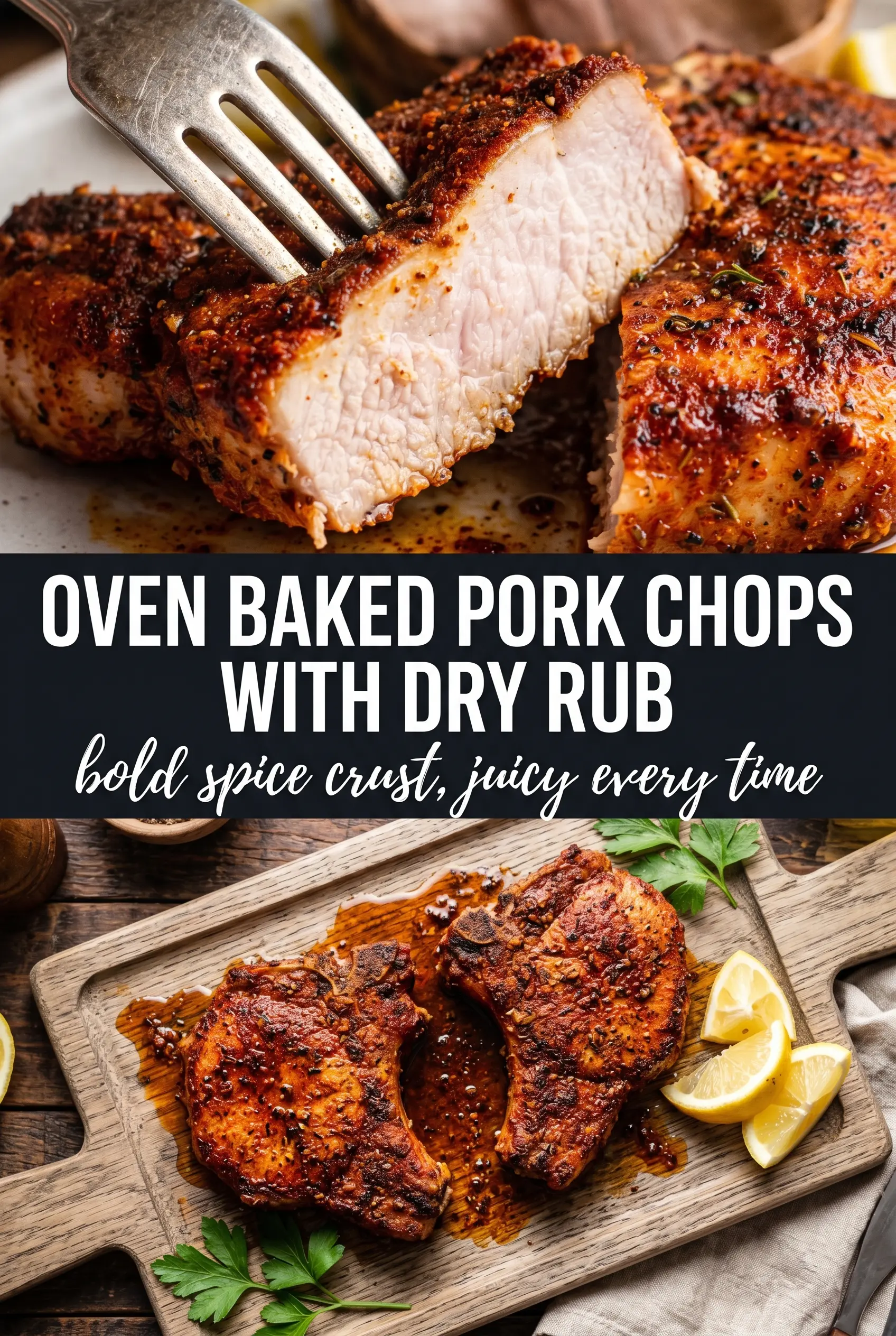
Oven Baked Pork Chops with Dry Rub
Ingredients
Equipment
Method
- Preheat the oven to 400°F and line a baking sheet with foil.
- Mix all dry rub ingredients together until evenly combined.
- Pat the pork chops completely dry and brush with olive oil.
- Coat both sides generously with the dry rub, pressing firmly into the meat so it adheres.
- Bake for 18–22 minutes at 400°F until the internal temperature reaches 145°F and the rub forms a golden crust with deep red tones.
- Rest the pork chops for 3 minutes before serving.