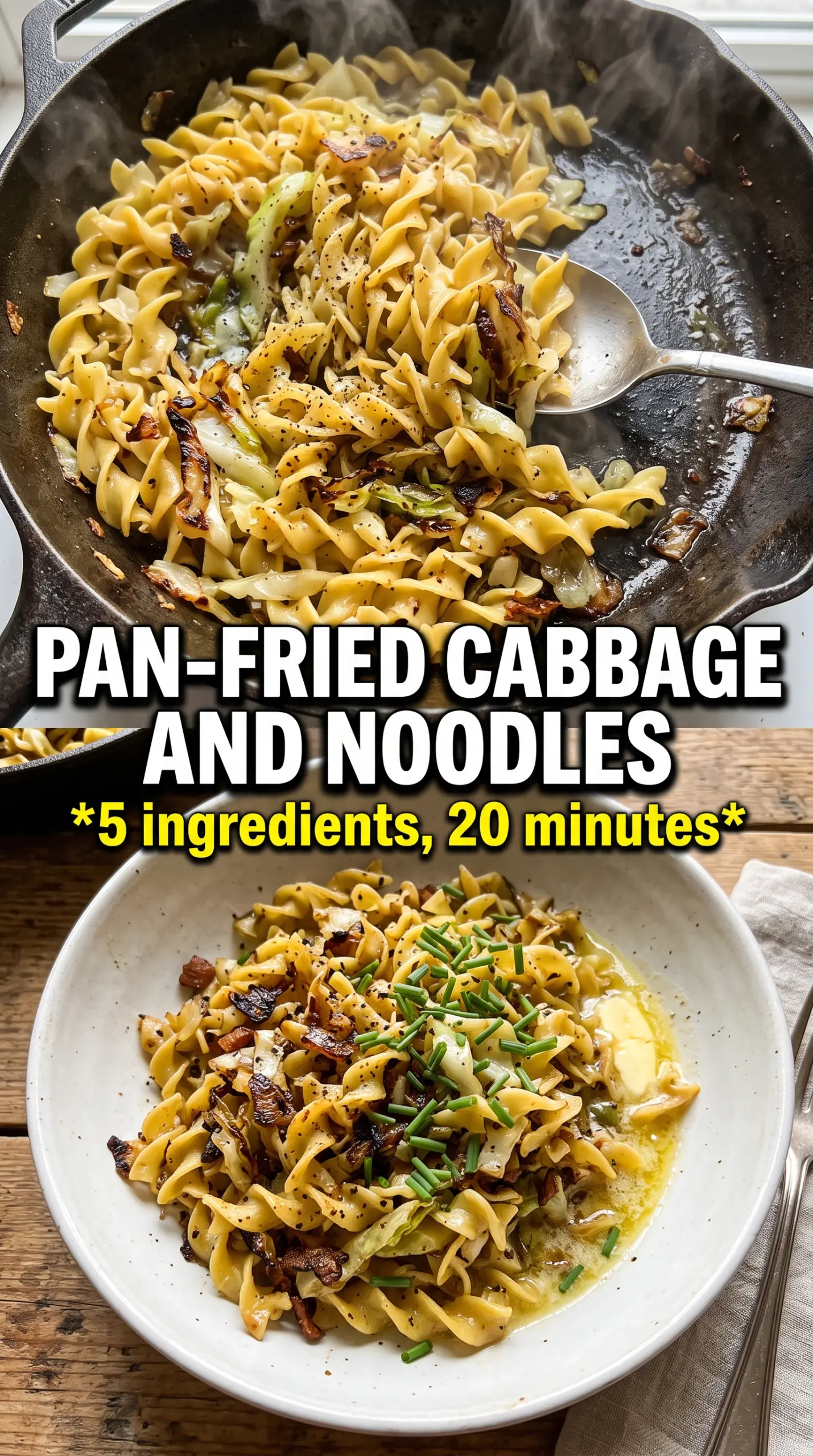
Pan-fried cabbage and noodles hits that sweet spot between humble and memorable: soft egg noodles, sweet caramelized cabbage, and onions that turn deep gold in browned butter. When it’s cooked right, every bite tastes savory, a little buttery, and just rich enough to feel like a full meal without needing much else on the table.
The key is patience at the skillet. Cabbage needs enough time to lose its raw edge and pick up color, and the onions need to go in first so they can start softening before the cabbage crowds the pan. If you rush that part, you get pale, watery noodles instead of the nutty, silky result that makes this dish worth repeating.
Below, I’ve included the little details that matter most: how dark to let the cabbage get, why the noodles go in at the end, and the one garnish that turns a good pan of cabbage and noodles into something you’ll want to make again.
The cabbage got beautifully caramelized and the noodles soaked up all that buttery onion flavor. I used the caraway seeds and it tasted just like the haluski my grandmother used to make.
Save these caramelized pan-fried cabbage and noodles for a buttery, budget-friendly dinner that turns golden and savory in one skillet.
The Reason the Cabbage Needs Time Before the Noodles Go In
The biggest mistake with cabbage and noodles is treating the cabbage like a quick sauté. It isn’t. The flavor comes from letting the onion and cabbage cook long enough to collapse, sweeten, and pick up real color in the butter. That deep gold finish is what keeps the dish from tasting flat.
Once the noodles go in, the pan shifts from building flavor to coating everything evenly. If you add them too early, they steam and turn soft before the cabbage has a chance to caramelize. Keep the heat at medium and let the vegetables do their job first.
- Onions first: They need the full 10 minutes to soften and start browning before the cabbage joins in.
- Medium heat: Hot enough to brown, not so hot that the butter scorches before the vegetables turn sweet.
- Patience with color: The cabbage should look deeply golden in spots, not just wilted and pale.
What the Butter, Caraway, and Sour Cream Are Doing Here
- Butter: This is the main flavor, so don’t swap it out unless you have to. It helps the cabbage brown and gives the noodles that glossy finish. If you need to cut it back, use olive oil for part of it, but the dish will taste less rich.
- Wide egg noodles: Their soft, sturdy texture holds onto the cabbage and butter better than thinner noodles. Cook them just to tender, then drain well so they don’t water down the skillet.
- Caraway seeds: Optional, but they add the classic haluski note that makes the dish taste more traditional. Crush them lightly between your fingers before adding if you want the flavor to bloom more clearly.
- Sour cream and dill: These are the finish, not just garnish. The tang cuts through the butter, and the dill gives the whole pan a fresh lift at the end.
Getting the Golden Edges Without Turning the Pan Watery
Softening the Onion
Melt four tablespoons of butter in a large skillet and add the sliced onion with a pinch of salt. The salt helps pull out moisture so the onion softens instead of frying dry on the surface. Cook it until the edges start to take on color and the onion smells sweet, not sharp.
Caramelizing the Cabbage
Add the cabbage and give it space in the pan. If your skillet is crowded, the cabbage steams and stays pale, so use your largest pan and stir only occasionally. You’re looking for soft ribbons with browned edges and a little toastiness at the bottom of the skillet.
Finishing with Noodles
Stir in the garlic and caraway seeds for just a minute so the garlic stays fragrant and doesn’t burn. Then add the remaining butter and the cooked noodles, tossing until every strand is coated and hot. If the pan looks dry, add a small knob of butter rather than splashing in water; extra liquid loosens the sauce and washes away the flavor.
How to Adapt This Pan-Fried Cabbage and Noodles for Different Tables
Make it dairy-free without losing the skillet flavor
Use olive oil or a dairy-free butter substitute in place of the butter. You’ll lose some of the nutty browned-butter taste, so let the onions and cabbage take on a little extra color to build more savory depth.
Skip the caraway for a milder cabbage-and-noodles pan
Leave it out if you want a simpler, sweeter cabbage flavor. The dish still works because the onions, butter, and browned cabbage carry the main flavor, but it will taste less like classic haluski.
Add smoked kielbasa for a heartier main dish
Brown sliced kielbasa in the skillet first, then cook the onions in the rendered fat and continue with the recipe. The sausage adds salt, smoke, and protein, but it also makes the dish heavier, so you may not need as much butter at the end.
Storage and Reheating
- Refrigerator: Store leftovers in an airtight container for up to 4 days. The noodles soften a bit as they sit, but the flavor stays strong.
- Freezer: It freezes, but the cabbage and noodles both get softer after thawing. Freeze only if needed, and expect a looser texture when it comes back.
- Reheating: Rewarm in a skillet over medium-low with a small pat of butter. The common mistake is blasting it in the microwave, which dries out the noodles and makes the cabbage rubbery.
Questions I Get Asked About This Recipe
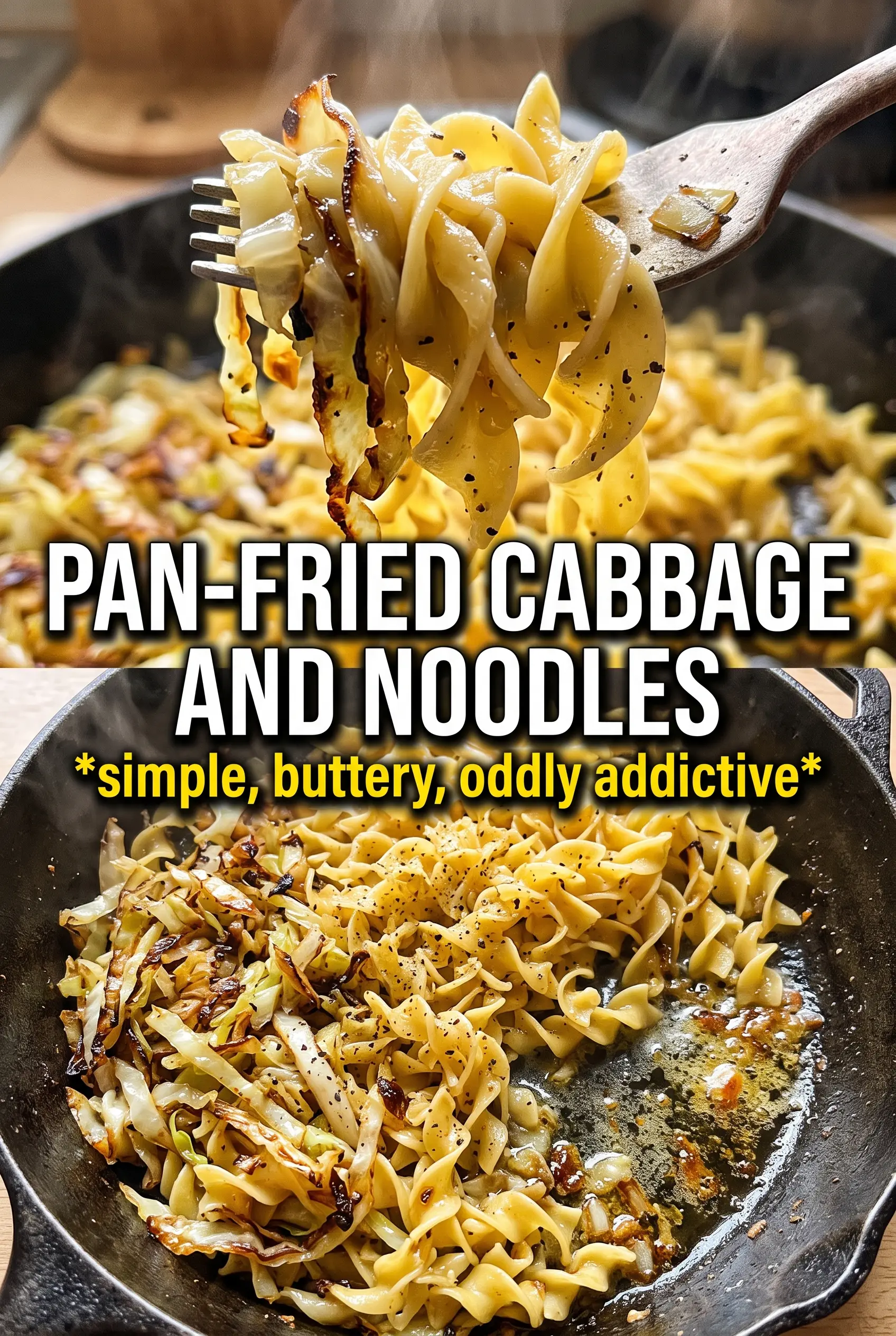
Pan-Fried Cabbage and Noodles (Haluski)
Ingredients
Equipment
Method
- Melt 4 tablespoons butter in a large skillet over medium heat, then add the onion and a pinch of salt. Cook for 10 minutes, stirring occasionally, until the onion is starting to caramelize and turn golden.
- Add the sliced cabbage and continue cooking over medium heat for 10–12 minutes, stirring occasionally. Cook until the cabbage is deeply golden and tender, with browned edges visible.
- Add the minced garlic and caraway seeds (if using) and cook for 1 minute. Stir so the garlic smells fragrant and doesn’t darken too quickly.
- Add the remaining butter and the cooked egg noodles to the skillet. Toss over medium heat until everything is coated and the noodles are heated through.
- Season generously with salt and cracked black pepper. Toss again briefly so the seasoning is evenly distributed.
- Serve immediately, topped with a dollop of sour cream and fresh dill. Add extra dill over the surface so it’s visible on top.