Thick pork steaks earn their keep when they come off the pan with a dark, crisp crust and a juicy center that still has a little spring to it. The whole trick is getting aggressive heat on the outside before the meat has time to dry out. Done right, pork blade steak turns into a fast, no-fuss dinner with real character, not a pale skillet chop that tastes like it gave up halfway through.
This version leans on a hard sear, a simple spice rub, and a quick butter baste to carry the flavor. Smoked paprika gives the crust depth, while Worcestershire adds a little savory backbone at the end without drowning the pork. I’ve tested this in a cast iron skillet, and the biggest difference between good and great is patience at the start: dry meat, hot pan, and no early flipping.
Below, I’m walking through the exact moments that matter, plus a few swaps and fixes for when your pork steaks are thicker, thinner, or headed for the grill instead of the stove.
The crust got deeply browned without sticking, and the butter baste left the pork juicy all the way through. I served it with roasted potatoes and my husband asked if I could make it again next week.
Save these pan seared pork steaks for the night you want a golden crust, a juicy center, and dinner in under 30 minutes.
The Mistake That Keeps Pork Steak Gray Instead of Crisp
Pork steak goes wrong when the pan isn’t hot enough or the meat goes in damp. That’s how you end up steaming the outside before it ever has a chance to brown. The fix is plain but non-negotiable: pat the steaks completely dry, season them heavily, and wait until the oil is smoking before the meat touches the skillet.
Blade steak has enough marbling to stay juicy, but it still needs a real sear to build flavor. If you move it around early, the crust tears and sticks; if you leave it alone, the surface browns cleanly and releases on its own. That crust is carrying most of the flavor here, so the first few minutes matter more than anything else in the pan.
What the Seasoning and Baste Are Doing for the Pork
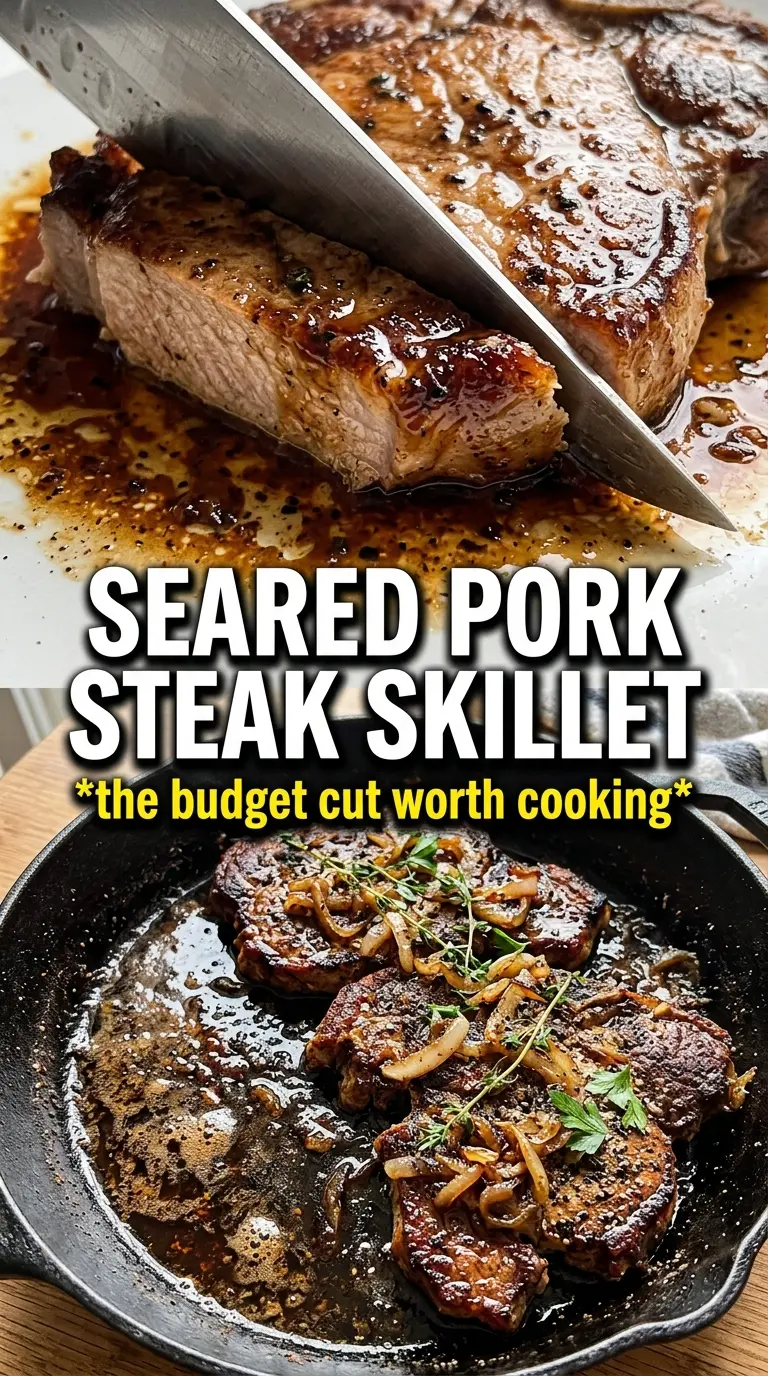
- Pork blade steaks — This cut has enough fat and connective tissue to stay flavorful under high heat. Thinner loin chops won’t give you the same juicy, beefier bite, and they cook much faster.
- Smoked paprika — This does more than add color. It brings a warm, smoky depth that makes the crust taste like it spent longer on the heat than it actually did.
- Vegetable oil — Use a neutral oil with a high smoke point so the skillet can get hot enough for real browning. Butter goes in later, because it would burn long before the pork finished searing.
- Butter, garlic, and thyme — This is the finish that makes the pork taste rounded and savory. The butter bastes the top of the steaks and carries the garlic and herbs over every surface without overpowering the meat.
- Worcestershire sauce — A small splash adds salt, tang, and a little fermented depth at the end. It tastes more like a pan sauce than a seasoning, which is exactly why it works here.
- Lemon wedges — The acid wakes up the rich pork and butter right before serving. A squeeze at the table keeps the finish bright instead of heavy.
Getting the Sear, Baste, and Rest Right
Dry Surface, Hard Heat
Pat the pork steaks dry until the surface feels tacky instead of slick. Season them generously on both sides with salt, pepper, garlic powder, and smoked paprika. Heat the oil in a cast iron skillet over high heat until it just starts to smoke; if the oil is only shimmering, the pork won’t brown fast enough. Lay the steaks in the pan and don’t touch them.
Let the Crust Set Before You Flip
Give the first side 4 to 5 minutes, then lift an edge and check for a deep golden-brown crust. If it sticks, it needs another minute; if it releases cleanly, it’s ready. Flip once and sear the second side for 3 to 4 minutes. Moving them around early is the fastest way to tear the crust and leak the juices.
Butter Basting at the End
Drop in the butter, smashed garlic, and thyme after the second side is browned. Tilt the pan slightly and spoon the foaming butter over the pork for 1 to 2 minutes. Keep the heat high enough to keep the butter moving, but not so high that the garlic goes bitter. When you splash in the Worcestershire sauce, it should sizzle and glaze the pan, not evaporate instantly.
The Rest That Keeps the Juices Inside
Take the pork steaks out and let them rest for 5 minutes before cutting. That short rest gives the juices time to settle back into the meat instead of running onto the cutting board. Slice too soon and the center looks dry even when you cooked it perfectly.
How to Adapt These Pork Steaks for the Pan, the Grill, or a Different Diet
Smothered Pork Steak
After searing, take the pork out and build a quick onion gravy in the same skillet with a little broth, flour, and a splash of cream or milk. The browned bits left behind turn into the base of the sauce, and the pork finishes tender in the gravy instead of staying crusty. This is the move if you want a softer, Southern-style dinner.
Grilled Pork Steak
Use the same seasoning, then grill over medium-high heat and keep the lid closed between flips. You’ll lose the butter baste, but the smoke from the grill gives you a different kind of depth. Pull the steaks when the center is just cooked through and let them rest before serving with the lemon wedges.
Dairy-Free Version
Skip the butter and finish with an extra spoonful of oil plus the Worcestershire sauce. You won’t get the same creamy pan coating, but the crust will still be strong and the garlic-thyme finish will stay sharp and savory. This version keeps the recipe completely dairy-free without changing the cooking method.
What to Do with Thinner Pork Chops
If your pork is thinner than 3/4 inch, cut the sear time back by a minute or two per side and add the butter only at the very end. Thin chops overcook fast, and the difference between juicy and dry is small. A fast, hard sear gives you color without turning the middle chalky.
Storage and Reheating
- Refrigerator: Store leftovers in an airtight container for up to 3 days. The crust softens, but the pork stays usable for lunches or quick dinners.
- Freezer: Freeze cooked pork steaks for up to 2 months, wrapped tightly and stored flat. Thaw overnight in the fridge before reheating so the edges don’t dry out.
- Reheating: Warm gently in a covered skillet over low heat with a splash of water or broth. High heat will push the pork from juicy to tough fast, especially once it’s already cooked.
Questions I Get Asked About This Recipe
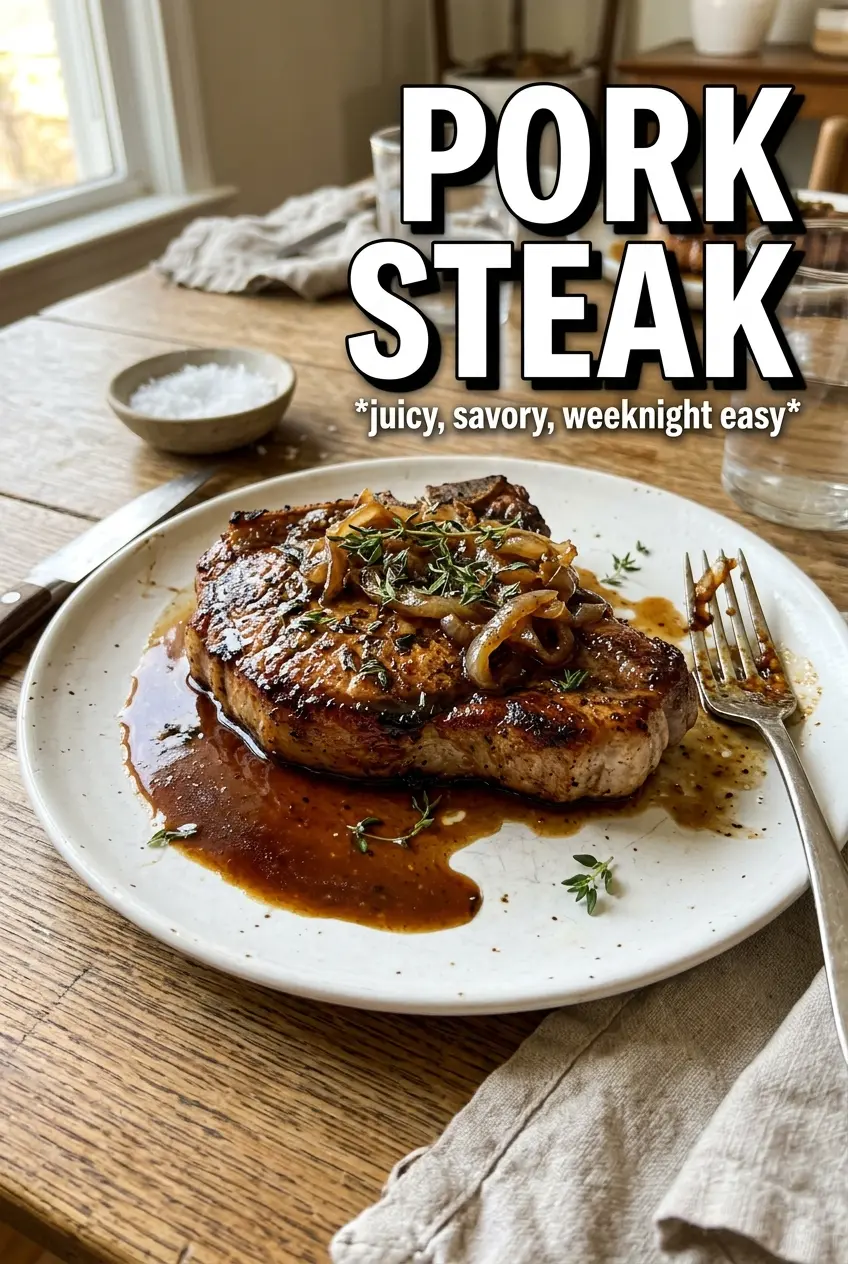
Pork Steak
Ingredients
Equipment
Method
- Pat the pork steaks completely dry, then season generously with salt, coarse black pepper, garlic powder, and smoked paprika.
- Keep the steaks at room temperature while you heat the skillet.
- Heat the vegetable oil in a cast iron skillet over high heat until smoking.
- Sear the steaks 4–5 minutes without moving until the undersides are deeply browned.
- Flip and sear 3–4 minutes more until both sides have a thick golden-brown crust.
- Add butter, smashed garlic, and thyme to the skillet, then baste continuously for 1–2 minutes until the butter is foamy and fragrant.
- Splash Worcestershire sauce over the steaks and cook 1 more minute.
- Rest the pork steaks 5 minutes so juices settle, then serve with lemon wedges.