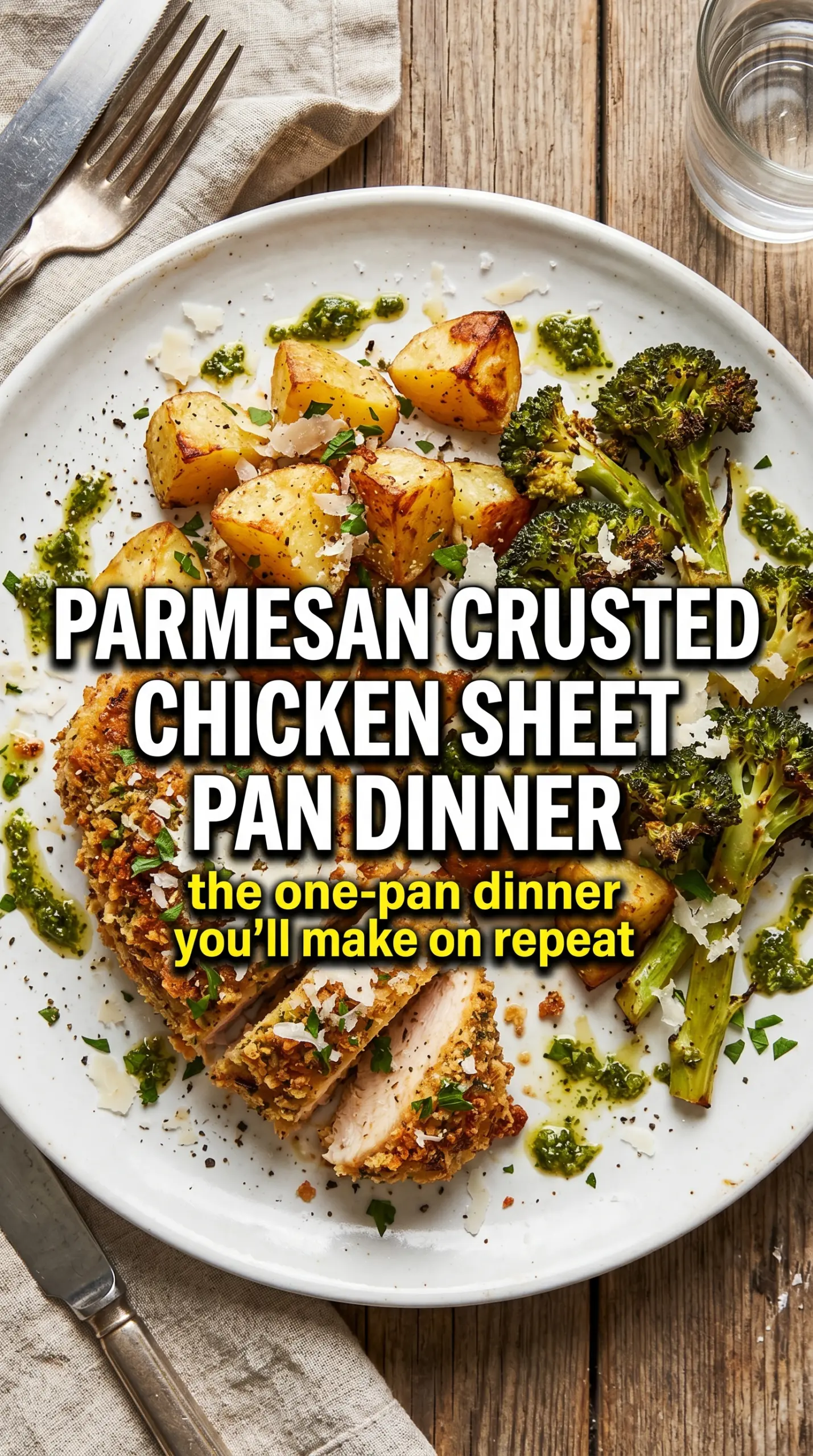
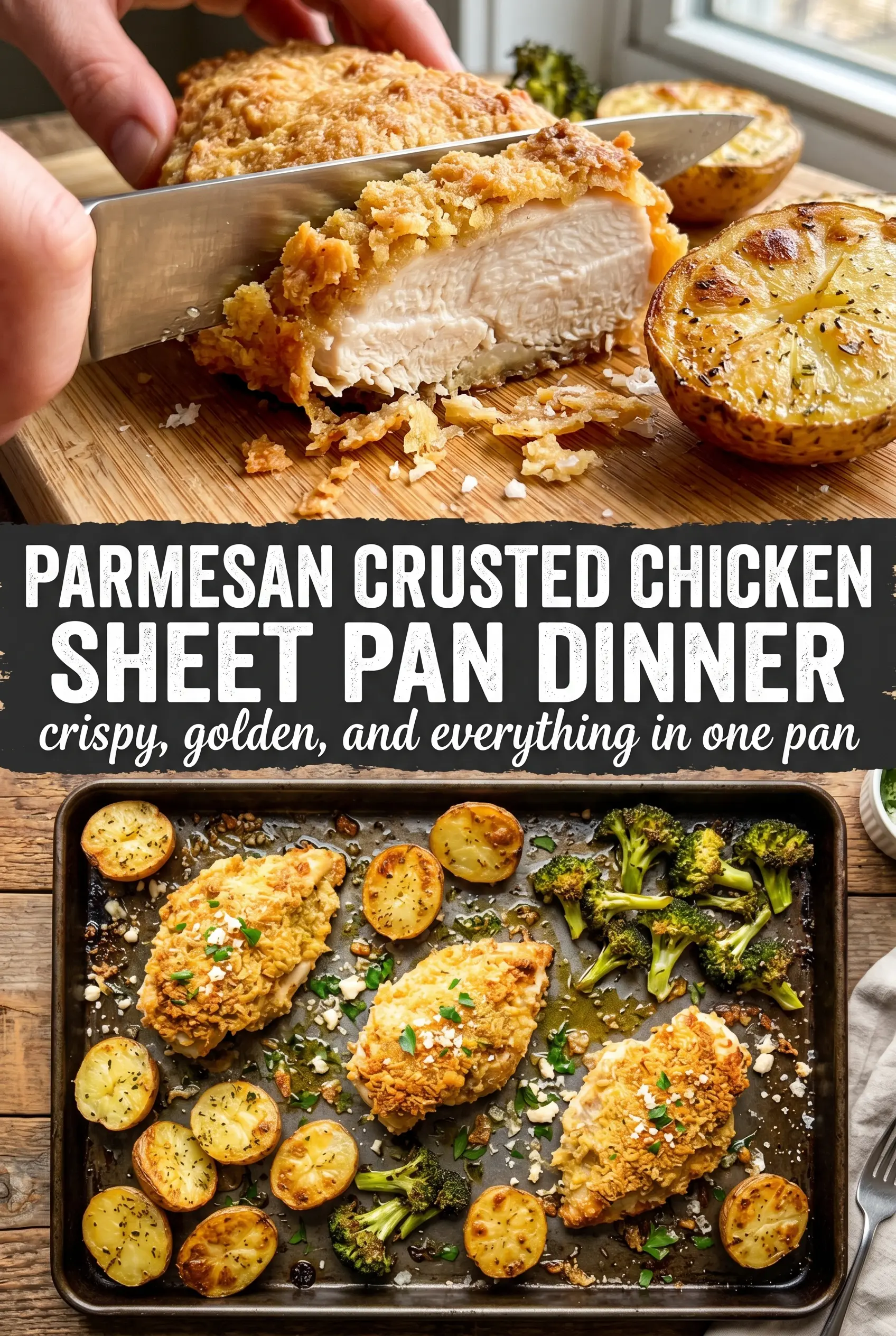
Golden, crackling parmesan crust on chicken breasts is the kind of dinner that gets people to the table fast. The chicken stays juicy under that crisp topping, while the asparagus roasts in the same pan and the tomatoes collapse into little bursts of sweetness around the edges. It feels complete without asking for a second skillet or a long cleanup afterward.
This version works because the coating isn’t just cheese. The panko lightens the parmesan so it can brown instead of turning dense, and the Dijon-mayo mixture gives the crust something sticky to grab onto while also protecting the chicken from drying out. Pressing the topping firmly onto the top side only keeps the crust where you want it and lets the vegetables roast directly in the pan.
Below, I’ve included the small details that matter most here: how to keep the crust crisp, how to tell when the chicken is done without overcooking it, and what to swap if you want to change up the vegetables or make the dish dairy-free.
The parmesan crust stayed crunchy even with the tomatoes in the pan, and the chicken was still juicy after 25 minutes. My husband kept picking at the asparagus straight off the sheet pan before dinner was even served.
Love this parmesan crusted chicken sheet pan dinner? Save it to Pinterest for the nights when you want crisp chicken, roasted vegetables, and one-pan cleanup.
The Crust Needs Heat, Not Just Time
The biggest mistake with parmesan-crusted chicken is treating the topping like a blanket instead of a browning surface. If the coating is too thick, or if the oven runs cool, the cheese steams before it crisps and you end up with a pale layer that clings instead of crackles. A hot oven and a thin, even press give you that deep golden crust that actually stays attached when you slice into the chicken.
The vegetables matter here too. Asparagus and cherry tomatoes roast fast enough to finish in the same window as the chicken, but only if you keep them in a single layer and give them a little space. Crowding the pan traps moisture, and moisture is what turns a crisp crust soft from the bottom up.
- Parmesan — Grated parmesan browns better than shredded or finely shaved cheese because it melts into the panko and forms a tighter crust. Use the shelf-stable stuff only if it’s the grated style; the powdery version won’t give the same texture.
- Panko — This is what keeps the coating light. Regular breadcrumbs work in a pinch, but the crust will be denser and less shattery.
- Dijon mustard — It adds sharpness and helps the coating stick. If you skip it, the crust can slide off the chicken before it sets in the oven.
- Mayonnaise — It sounds unusual, but it’s the reason the chicken stays moist under the crust. Greek yogurt can stand in, though the flavor is tangier and the crust won’t brown quite as evenly.
- Asparagus and cherry tomatoes — These give the sheet pan its balance. Trim the asparagus so the spears finish tender, and leave the tomatoes whole so they burst at the end instead of disappearing into sauce.
What Each Ingredient Is Actually Doing in This Chicken Dish
- Chicken (pat dry for browning) — Room temperature cooks more evenly. Even thickness ensures uniform cooking.
- Oil or butter (the browning medium) — High-heat oil essential. Creates pan flavor through browning.
- Seasonings (salt, pepper, spices) — Apply generously. Chicken carries the entire flavor profile.
- Aromatics (garlic, ginger, or herbs) — Cook with fat to bloom flavors. Become the foundation.
- Sauce or braising liquid (if using) — This keeps chicken moist. Balance richness with acid.
- Vegetables (if using) — Layer by cooking time. Hard vegetables first, soft vegetables last.
- Acid (vinegar, wine, lime, or pineapple) — This brightens and prevents one-dimensional flavor.
- Proper doneness (165°F internal temperature) — Use thermometer for accuracy. Overcooked is dry and flavorless.
Pressing the Coating So It Bakes, Not Falls Off
Mix the crust before touching the chicken
Stir the parmesan, panko, garlic powder, and Italian seasoning together first so the coating is evenly seasoned all the way through. If the cheese clumps in one spot, you’ll get patchy browning and a salty bite in one place, bland crumbs in another. A fork works fine here, and it keeps the parmesan from packing down too tightly.
Brush the chicken, then press hard
Spread the Dijon-mayo mixture over the top of each chicken breast and press the coated side straight into the breadcrumb mixture. Don’t just sprinkle the topping over the chicken; it needs firm contact to hold through baking. If the chicken breasts are very thick, pound them to an even thickness first so they cook at the same pace as the crust browns.
Roast until the top is deep gold
Arrange the chicken and vegetables on the sheet pan with a little room between pieces, then bake at 425°F until the crust is deeply golden and the chicken is cooked through. The top should look crisp and toasted, not just lightly colored. If the crust is perfect but the thickest part of the chicken still needs time, tent loosely with foil for the last few minutes so the topping doesn’t burn.
Make It Gluten-Free With Crushed Almonds
Swap the panko for finely crushed almonds or gluten-free breadcrumbs. Almonds bring a slightly richer, nuttier crust that browns beautifully, while gluten-free crumbs keep the same familiar texture with a lighter flavor.
Dairy-Free Version Without Losing the Crunch
Use a dairy-free parmesan-style topping that melts and browns well, then keep the panko in place for structure. The flavor will be less sharp than true parmesan, so add an extra pinch of garlic powder and a little salt to bring it back into balance.
Swap the Vegetables Based on What’s in the Fridge
Broccoli florets, zucchini, or green beans all work if you keep the pieces fairly even in size. Choose vegetables that roast in the same time window as the chicken, and cut anything denser so it doesn’t finish raw while the crust is already done.
Storage and Reheating
- Refrigerator: Store leftovers in an airtight container for up to 3 days. The crust softens a bit, but the chicken stays flavorful.
- Freezer: This freezes, but the crust won’t stay crisp. Freeze the chicken separately from the vegetables, wrapped well, for up to 2 months if you need to save it.
- Reheating: Reheat on a sheet pan in a 375°F oven until hot, about 10 to 15 minutes. The microwave will turn the coating soggy, which is the fastest way to lose the best part of the dish.
Answers to the Questions Worth Asking
Parmesan Crusted Chicken Sheet Pan Dinner
Ingredients
Equipment
Method
- Preheat oven to 425°F and line a large sheet pan with foil.
- In a bowl, mix parmesan, panko, garlic powder, and Italian seasoning together.
- Brush chicken breasts with a mixture of Dijon and mayonnaise, then press firmly into the parmesan mixture to coat the top.
- Place coated chicken on the sheet pan.
- Toss asparagus and cherry tomatoes with olive oil, salt, and pepper and arrange around the chicken.
- Bake for 22–25 minutes, until the crust is deeply golden and chicken is cooked through, then serve with lemon wedges.