Penne coated in a provolone cream sauce with shaved steak, caramelized onions, peppers, and mushrooms has a way of disappearing faster than a regular pasta bake ever could. You get the savory, beefy bite of a cheesesteak, but the sauce clings to every ridge of the pasta and turns the whole skillet into dinner that feels hearty without being fussy.
What makes this version work is timing. The steak gets a quick hard sear, then comes out of the pan before it overcooks. The vegetables stay in the same skillet long enough to pick up color and sweetness, and the sauce builds on those browned bits instead of starting from scratch. Provolone can go grainy if it gets blasted with heat, so it melts in after the broth and cream have already settled into a gentle simmer.
Below, I’ll walk you through the small details that keep the sauce smooth and the steak tender. There’s also a short section on substitutions, because this is one of those dinners that still works when you need to swap a pepper, a pasta shape, or the cut of beef.
The provolone sauce turned out silky and coated every piece of pasta, and the steak stayed tender because I pulled it out while I cooked the vegetables. My husband went back for seconds before I even sat down.
Philly Cheesesteak Pasta with silky provolone sauce and tender steak is the kind of skillet dinner worth keeping close.
The Reason the Steak Stays Tender While the Pasta Gets Its Sauce
The biggest mistake with a dish like this is treating the steak and the sauce like they need the same amount of time. They don’t. Shaved steak cooks in a few minutes, and if it stays in the pan while the vegetables soften and the cream reduces, it turns chewy before the pasta even gets involved.
The other thing that matters is the order of the sauce. Browning the onions, peppers, and mushrooms first gives you sweetness and depth. Then the broth loosens all those browned bits before the cream goes in. That sequence keeps the sauce savory instead of flat, and it gives the provolone a better base to melt into.
- Shaved steak or thin sirloin — Thin cuts give you fast browning and a tender bite. If you only have sirloin, slice it as thinly as you can across the grain. Thick strips need longer heat and won’t give you the same soft texture.
- Provolone — This is the flavor that makes the dish read like a cheesesteak instead of just beef pasta. Shred it yourself if you can, because pre-shredded cheese often melts less smoothly.
- Beef broth — It sharpens the sauce and keeps the cream from tasting heavy. A regular boxed broth works fine here, but use a lower-sodium version if your Worcestershire is salty.
- Mushrooms — Optional in a classic sandwich, but they earn their place here by adding more savory depth and helping the skillet feel fuller. Slice them thick enough that they brown instead of collapsing into water.
Building the Sauce in the Same Skillet as the Steak
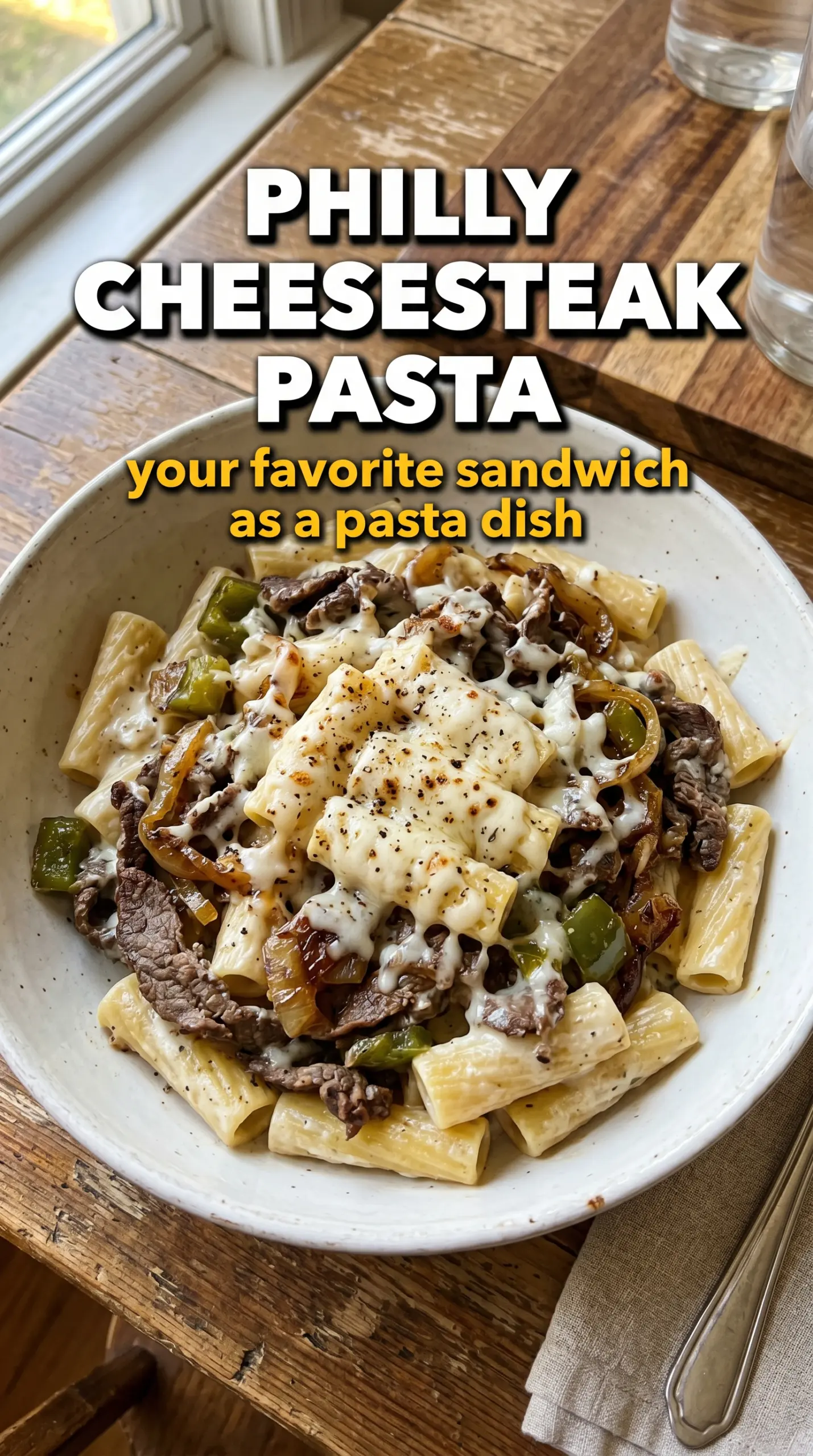
Cook the pasta first and keep a little of the water. That starchy water is the easiest way to loosen the sauce at the end without thinning the flavor. Drain the pasta when it still has a firm bite, because it will keep softening once it hits the hot skillet.
Sear the steak fast and get it out. A hot pan and a little butter are enough. If the pan looks crowded, cook the beef in two batches so it browns instead of steaming. You want color on the outside and tenderness inside, not gray slices swimming in liquid.
Cook the vegetables until the edges darken. This is where the depth comes from. Onions should go translucent, then golden, and the peppers and mushrooms should pick up browned spots before the garlic goes in. Garlic burns fast, so it only needs a short minute at the end.
Finish the sauce gently. Once the broth and cream simmer together, drop the heat before adding the provolone. If the sauce is too hot when the cheese goes in, it can turn stringy or grainy. Stir until smooth, then add the pasta and steak back in just long enough to coat everything.
Make it without mushrooms
Leave them out and add a little extra onion and pepper so the skillet still has enough vegetables to balance the cream sauce. You lose some earthy depth, but the dish stays true to the cheesesteak feel.
Use gluten-free pasta
A sturdy gluten-free penne or rigatoni works well here. Cook it just to al dente and handle it gently, since some gluten-free pastas can break down faster once they sit in sauce.
Make it a little lighter
Swap half-and-half for the heavy cream if you want a thinner sauce and a little less richness. It won’t cling quite as thickly, but the provolone and pasta water will still bring it together.
Stretch it for a bigger crowd
Add an extra half pound of pasta and another splash of broth if you need to feed more people. The sauce will seem a little loose at first, then tighten as the pasta absorbs it.
Storage and Reheating
- Refrigerator: Store leftovers in an airtight container for up to 4 days. The sauce will thicken as it chills.
- Freezer: It freezes, but the cream sauce can separate a little on thawing. If you freeze it, expect a softer texture and reheat it only once.
- Reheating: Warm it on low heat with a splash of broth, milk, or water. High heat is the fastest way to make the cheese tighten up and the steak turn tough.
Answers to the Questions Worth Asking
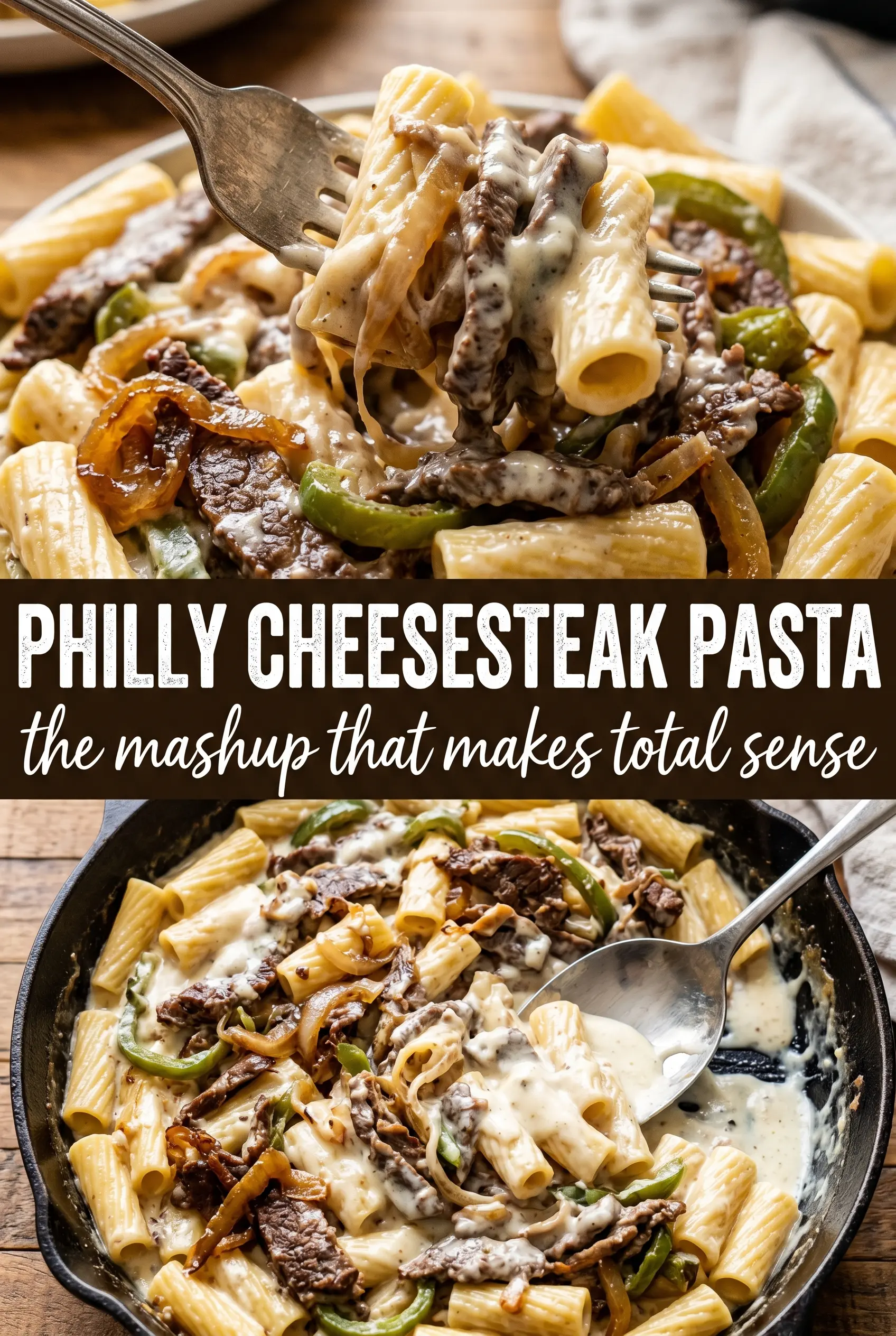
Philly Cheesesteak Pasta
Ingredients
Equipment
Method
- Bring a large pot of salted water to a boil and cook penne or rigatoni until al dente, about 8–11 minutes. Reserve 1/2 cup pasta water and then drain the pasta.
- Season the shaved steak with salt and black pepper. In a hot skillet with 1 tablespoon butter, sear the steak for 2–3 minutes until browned, then set aside.
- Melt the remaining butter in the same skillet over medium-high heat. Cook the onion, green bell pepper, red bell pepper, and mushrooms for 6–8 minutes until caramelized, then stir in the minced garlic and Worcestershire.
- Pour in the beef broth and heavy cream, bring to a simmer, and cook for 3–4 minutes until slightly reduced. Stir in the provolone cheese until melted and smooth.
- Add the drained pasta and the reserved steak to the skillet and toss to coat. If needed, add reserved pasta water a splash at a time to loosen, then serve immediately with extra provolone on top.