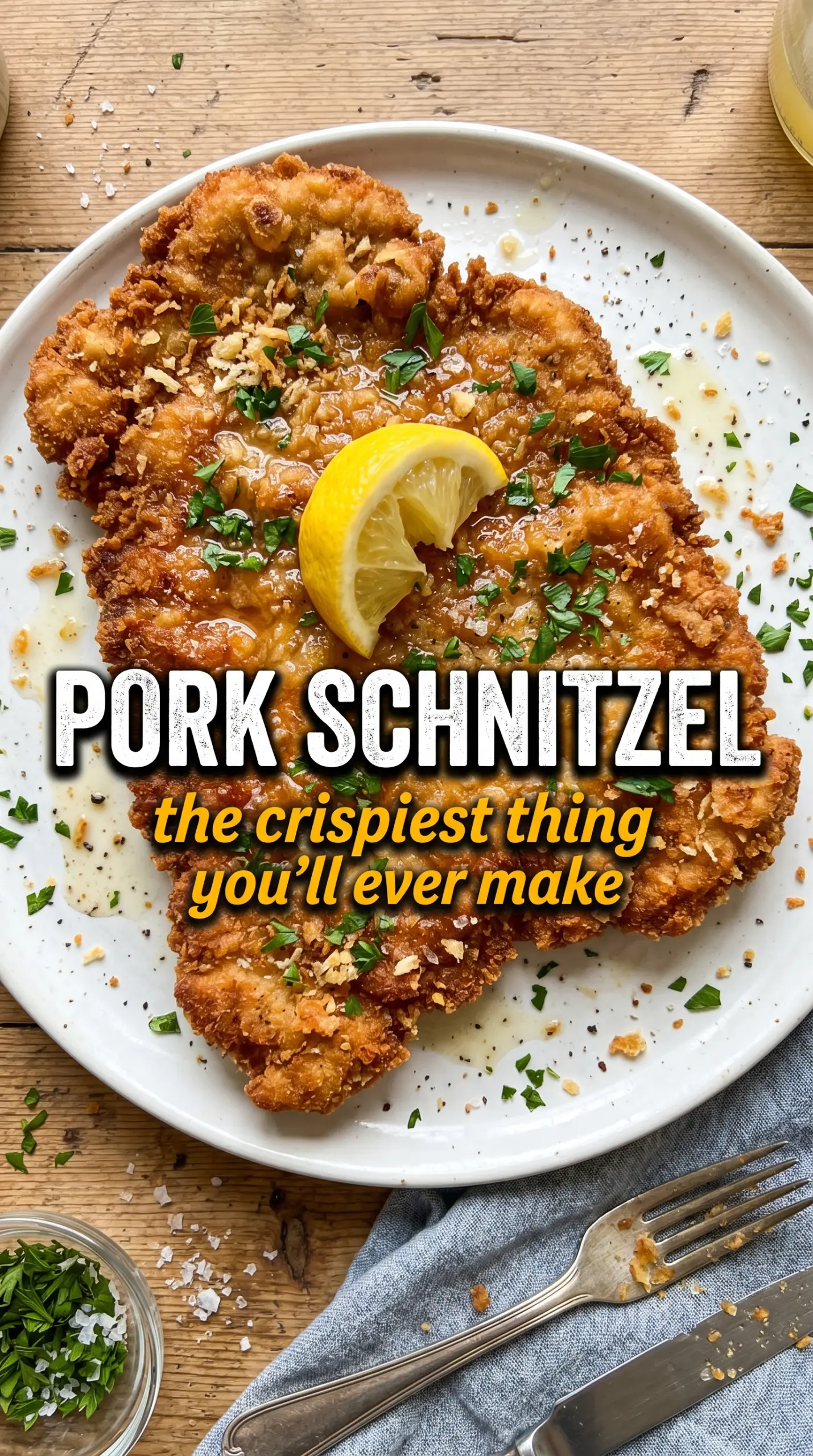
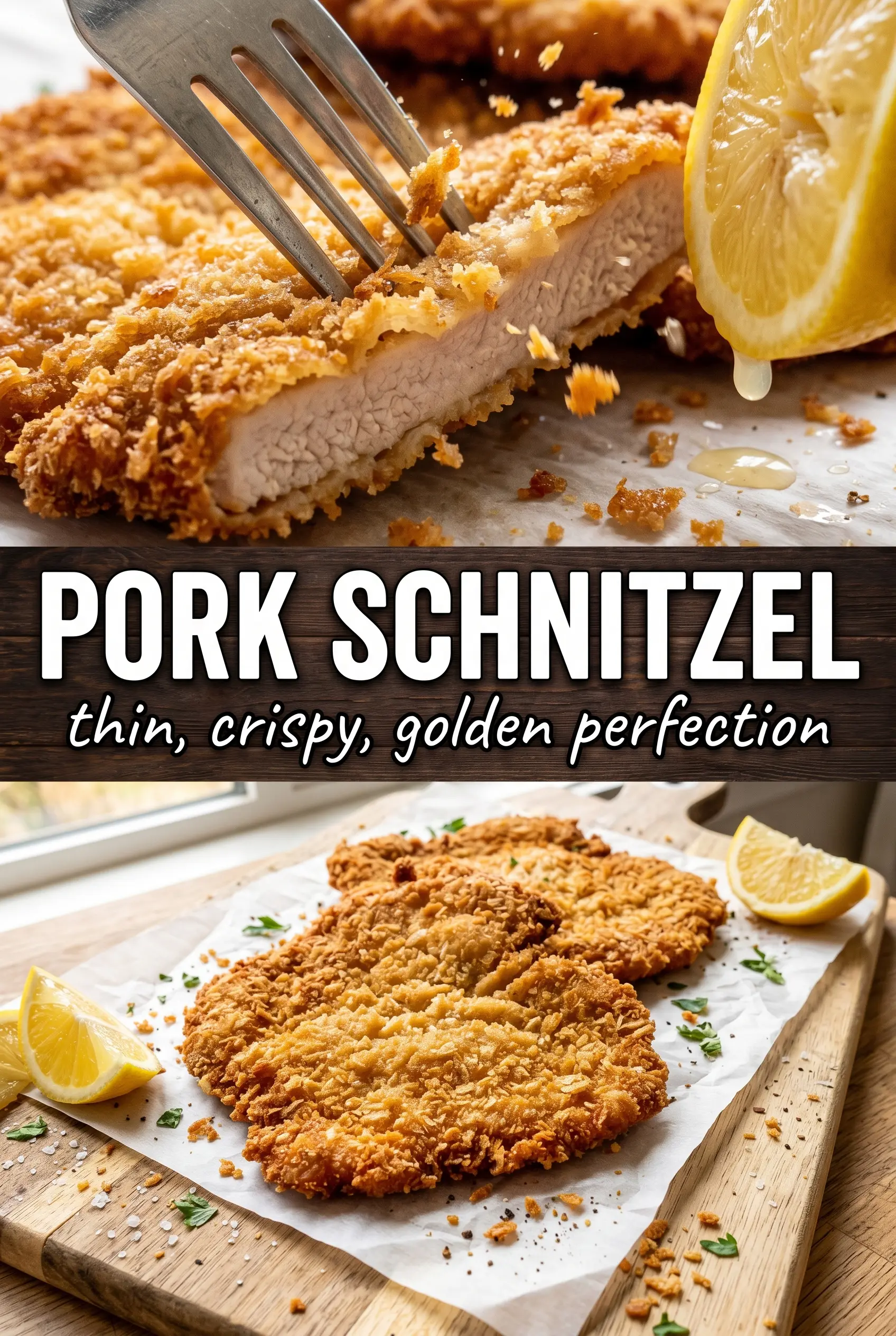
Golden pork schnitzel has a way of disappearing fast because the crust stays light, crisp, and shatteringly fragile instead of heavy or greasy. The pork cooks in minutes once it’s pounded thin, and that thin cut is what gives you tender meat under all that crunch. A squeeze of lemon at the end wakes up the whole plate and keeps every bite tasting clean.
The difference between good schnitzel and soggy schnitzel comes down to three things: thin, even pounding; a dry first dredge; and oil that’s hot enough to set the coating before it absorbs too much fat. I season the breadcrumbs too, not just the meat, so the crust tastes complete on its own. Garlic powder is subtle here, but it gives the breading a little depth without taking over the classic German style.
Below, I’ve included the exact frying cues that keep the coating crisp, plus a few swaps for different breadcrumbs and a smart way to reheat leftovers without losing the crunch.
The breading stayed crisp even after we squeezed lemon over it, and the pork was tender in the middle from pounding it thin. I’ve made schnitzel before, but this was the first time every piece came out evenly golden in just a few minutes.
Save this crispy pork schnitzel for the nights when you want a fast breaded cutlet with a crackly crust and bright lemon finish.
The Reason Schnitzel Stays Crisp Instead of Going Flat
Schnitzel gets ruined most often by one of two things: too much moisture on the meat or oil that isn’t hot enough. If the pork goes into the flour damp, the breading turns paste-like and can slide off in the pan. If the oil is lukewarm, the crumbs soak it up before they set, which gives you a heavy crust instead of a crisp one.
The other mistake is overcrowding. Schnitzel needs space in the pan so the oil temperature doesn’t crash the moment the meat hits it. You’re looking for a coating that turns deep golden and sounds faintly snappy when you lift it with tongs.
What Each Ingredient Is Actually Doing in This Dish
- Pork loin chops — Boneless loin chops are lean, mild, and easy to pound into thin cutlets without shredding. If yours are thick, slice them horizontally first, then pound to a steady 1/4 inch so they cook at the same pace and stay tender.
- Flour — This is the dry base that helps the egg stick. Don’t skip it, because breadcrumb coating alone tends to patchy spots and can fall off in the pan.
- Egg and milk — The egg binds the breadcrumbs; the milk loosens it just enough to coat in a thin, even layer. If you only use egg, the coating can get too thick and bready.
- Fine breadcrumbs — Fine crumbs give you that classic schnitzel shell. Panko works too, but it makes a more jagged, extra-craggy crust; I like it when I want a louder crunch.
- Garlic powder — Just enough to season the crumbs without turning the schnitzel into garlic chicken by accident. It’s optional in the strictest sense, but it adds a little backbone to a simple breading.
- Neutral oil — Vegetable or canola oil lets the pork and crumbs speak for themselves. Use enough for shallow frying, because skimpy oil leads to uneven browning and spots that steam instead of fry.
Building the Crust in the Pan, Not in the Bowl
Seasoning and Pounding the Pork
Season the pork after it’s pounded thin so the salt sits on the surface instead of getting lost in the meat. Pound to an even 1/4 inch and stop when the cutlet looks uniform from end to end; thick spots will lag behind and thin spots will dry out. If the pork tears a little at the edges, that’s fine. It still fries beautifully as long as the center is even.
Setting Up the Dredging Line
Keep one hand for dry ingredients and one hand for wet so you don’t end up with breadcrumb armor on your fingers. Coat the pork in flour first, then egg and milk, then breadcrumbs, pressing the crumbs on so they actually cling. The coating should look complete but not bulky. If it looks like a thick shell, shake off the excess before frying.
Frying to a Deep Golden Finish
Heat about 1/4 inch of oil until it shimmers and a breadcrumb dropped in starts to sizzle right away. Fry in batches for 2 to 3 minutes per side, just until the crust turns deep golden and the pork is cooked through. If the schnitzel browns too fast, the oil is too hot. If it looks pale and greasy, let the oil come back up before the next batch.
Serving While the Crust Is Loud
Drain the schnitzel briefly on paper towels, then serve it right away with lemon wedges and parsley. The crust is at its best in the first few minutes, when it’s still crisp enough to crack under a fork. A squeeze of lemon cuts through the fried coating and keeps the whole plate from feeling heavy.
Three Ways to Work With What You Have
Use panko for a rougher, crunchier crust
Panko gives schnitzel a bigger, more dramatic crunch than fine breadcrumbs. The crust won’t be as smooth or traditional, but it browns beautifully and stays crisp if you fry it hot and don’t crowd the pan.
Make it gluten-free with a one-for-one swap
Use a gluten-free flour blend for the first dredge and gluten-free breadcrumbs in place of the standard crumbs. The coating will still crisp up, though it may be a touch more delicate, so let the breading set fully before flipping.
Make it with chicken or veal instead of pork
Thin chicken cutlets or veal work the same way and take about the same cook time if they’re pounded evenly. Chicken tastes milder and a little juicier; veal gives you a more classic schnitzel feel with a softer bite.
Storage and Reheating
- Refrigerator: Store leftovers up to 3 days. The crust softens in the fridge, but the pork stays usable for a quick lunch or second dinner.
- Freezer: It freezes fairly well after cooling completely. Wrap each piece separately and freeze up to 2 months, though the crust won’t be as crisp after thawing.
- Reheating: Reheat on a wire rack in a 400°F oven or air fryer until hot and re-crisped. Skip the microwave if you care about the crust, because it turns the coating soft and steamy fast.
Answers to the Questions Worth Asking
Pork Schnitzel
Ingredients
Equipment
Method
- Season the pounded pork cutlets generously with salt and pepper.
- Set up three shallow dishes: flour, beaten egg mixed with milk, and breadcrumbs seasoned with garlic powder and salt.
- Dredge each cutlet in flour, shaking off excess.
- Dip the floured cutlet into the egg mixture, letting excess drip off.
- Press the cutlet firmly into the breadcrumbs until evenly coated on all sides.
- Heat 1/4 inch of oil in a large skillet over medium-high heat until shimmering.
- Fry the schnitzels 2–3 minutes per side until deep golden brown, working in batches and not crowding the pan.
- Drain briefly on paper towels.
- Serve immediately with lemon wedges and fresh parsley.