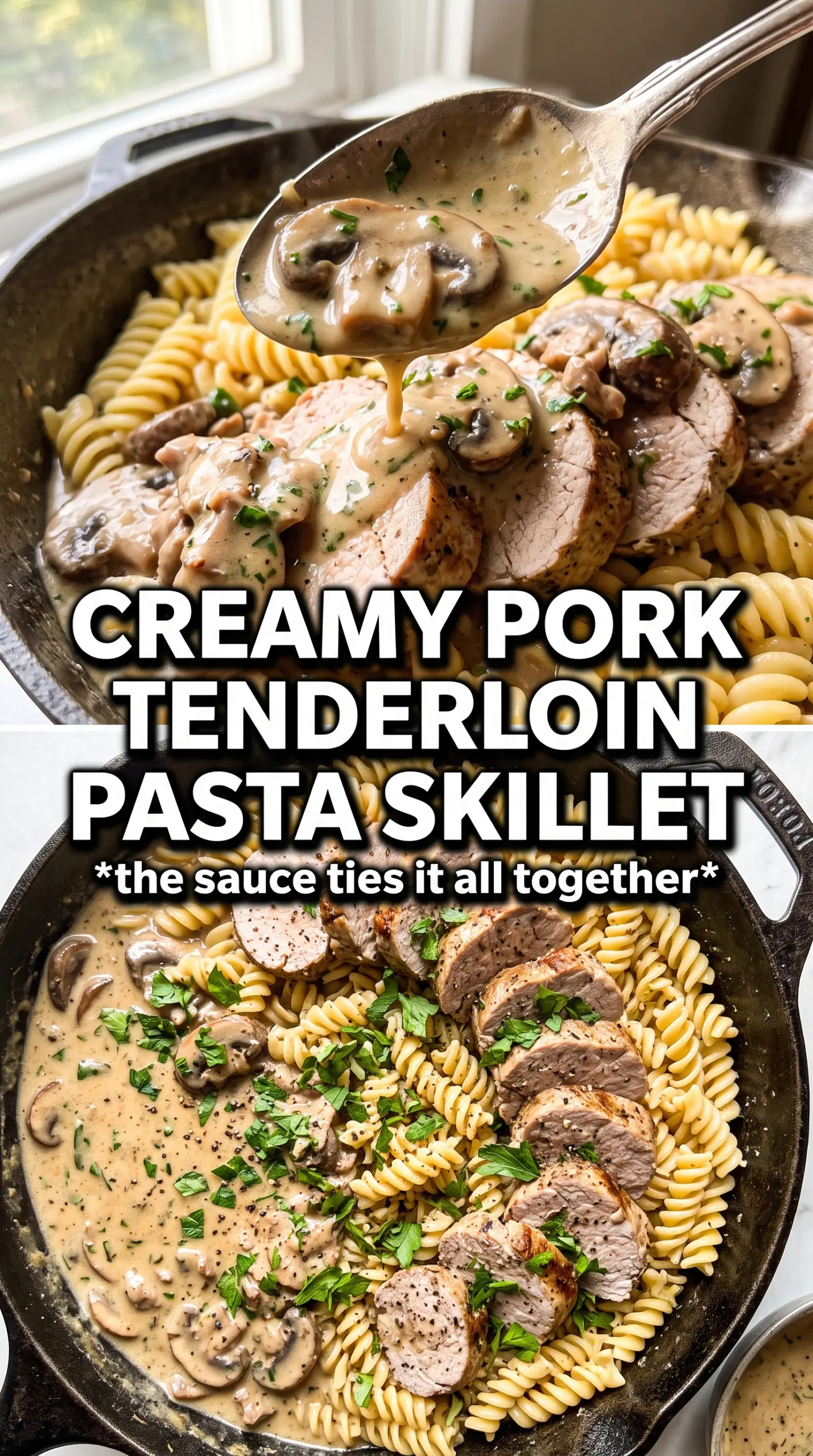
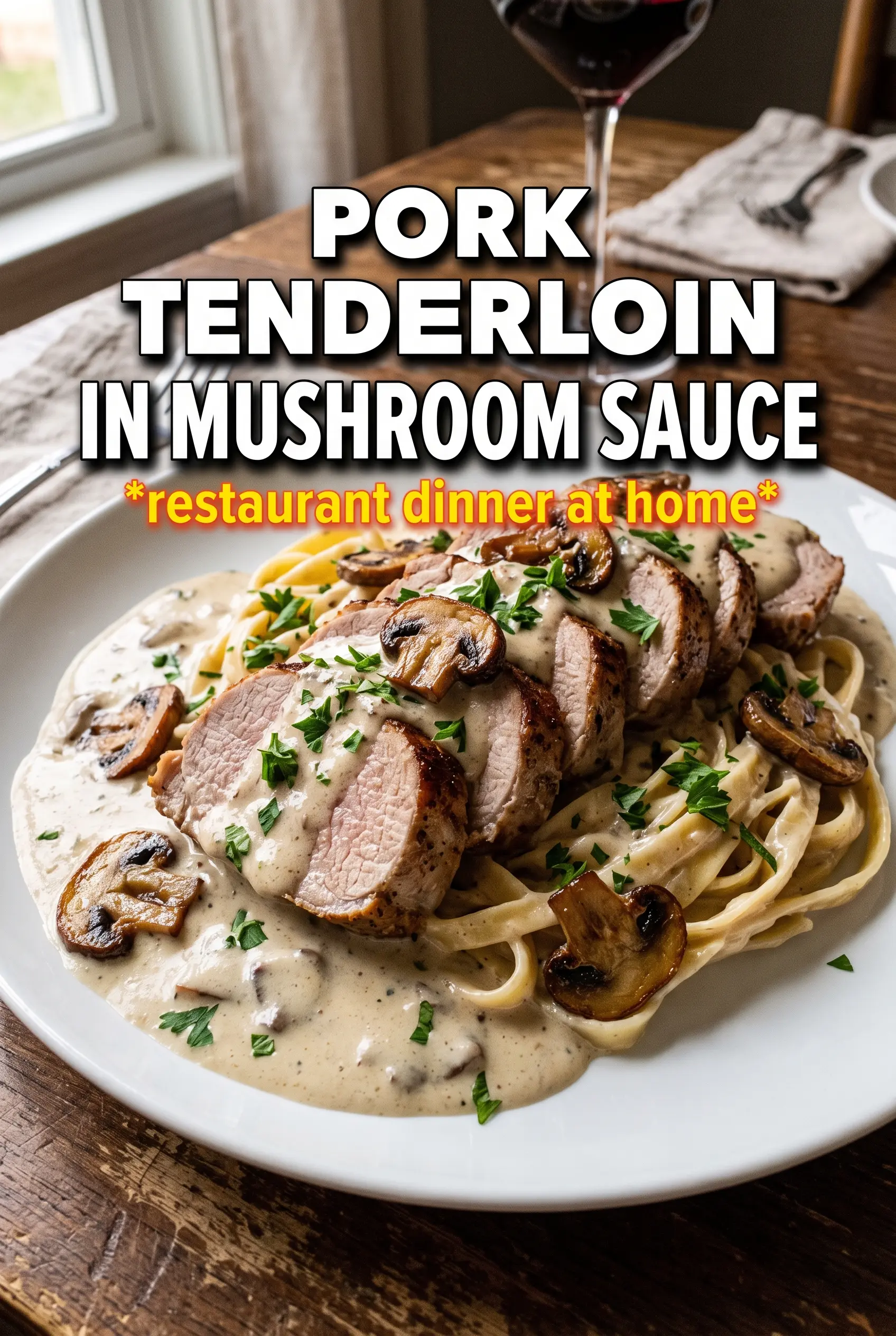
Sliced pork tenderloin medallions tucked into a mushroom cream sauce hit that sweet spot between comforting and polished. The pork stays tender, the sauce clings to every ribbon of pasta, and the browned mushrooms bring enough depth to keep the dish from tasting flat or one-note. It eats like a restaurant dinner, but the whole thing comes together in one pan with a short ingredient list and no complicated prep.
The trick is giving the mushrooms real color before the cream goes in. If they stay pale, the sauce tastes bland no matter how much parmesan you add. The other piece that matters is gentle heat once the dairy is in; cream and parmesan want a low simmer, not a hard boil, or the sauce can turn grainy instead of silky.
Below, I’ll walk through the best way to sear the pork, build the sauce without breaking it, and handle the pasta so it doesn’t soak up too much of that cream sauce before serving.
The sauce turned out silky and thickened just enough to coat the pappardelle, and the pork stayed juicy even after simmering at the end. My husband said it tasted like something from a nice Italian restaurant.
Save this pork tenderloin in creamy mushroom sauce with pasta for the nights when you want a rich, one-pan dinner that feels a little special.
The Trick to Keeping the Pork Tenderloin Tender in Cream Sauce
Pork tenderloin is lean and cooks fast, which is exactly why it can go dry if it spends too long in the pan or sits too long in simmering sauce. The best move is to sear it hard and fast, then pull it out while you build the sauce. It finishes gently at the end, just long enough to warm through. That second heat is short on purpose, because the pork only needs a few minutes in the sauce before it loses that juicy texture.
The mushrooms matter here too. They’re not just filler; they’re the backbone of the sauce. If you crowd them or rush them, they steam instead of browning, and you miss the deep savory flavor that makes the cream taste layered instead of heavy.
- Pork tenderloin — Slice it into even medallions so it sears quickly and finishes at the same pace. Pork loin can work in a pinch, but it needs more time and won’t stay quite as tender.
- Cremini mushrooms — These bring the best balance of earthiness and moisture for the sauce. White button mushrooms will work, but the sauce will taste a little lighter.
- Dry white wine — This loosens the browned bits in the pan and adds acidity so the cream doesn’t taste flat. If you skip wine, use extra broth plus a small squeeze of lemon at the end.
- Heavy cream — This is what gives the sauce body without breaking under gentle simmering. Half-and-half is thinner and more likely to turn grainy if you boil it.
What Each Ingredient Is Doing in the Pan
- Butter and olive oil — The oil helps the pork and mushrooms brown without burning, while the butter brings flavor to the sauce base. Using only butter makes the heat control more delicate.
- Garlic and thyme — These go in after the mushrooms have browned so they don’t scorch. Garlic turns bitter fast in a hot pan, so 30 seconds is enough.
- Chicken broth — It thins the sauce and adds a savory base before the cream and parmesan go in. Homemade or boxed both work; just use one that tastes good on its own.
- Parmesan — Freshly grated parmesan melts smoothly and gives the sauce its salty finish. Pre-shredded cheese often contains anti-caking agents and can leave the sauce a little sandy.
- Pappardelle or fettuccine — Wide pasta holds the sauce best, which is why this dish eats so well. If you use a thinner pasta, reserve a splash of pasta water so the sauce can cling instead of sliding off.
Building the Sauce Without Breaking It
Searing the Pork First
Season the pork medallions well and get them into a hot pan with the oil. You want a deep golden crust on each side, not a pale grey surface. Two minutes per side is usually enough if the medallions are about an inch thick. Pull them out as soon as they’re browned; if they cook through now, they’ll be overdone by the time the sauce is finished.
Brown the Mushrooms, Then Add the Aromatics
Melt the butter in the same pan and let the mushrooms sit undisturbed long enough to take on color. They’ll release moisture first, then start to squeak and darken as the pan dries out again. That’s the point where the garlic and thyme go in. If you add them too early, the mushrooms steam and the garlic burns before the sauce has any depth.
Let the Cream Simmer, Not Boil
Pour in the wine and let it reduce for a couple of minutes so the alcohol cooks off and the sharp edge softens. Add the cream and broth, then keep the heat low enough that the sauce barely bubbles. A hard boil can make dairy split, and that’s the easiest way to ruin the texture at this stage. Once the sauce coats a spoon and the parmesan melts in smoothly, it’s ready.
Finish With the Pasta and Pork
Return the pork to the pan and let it warm gently in the sauce for a few minutes. Add the cooked pasta last and toss until every ribbon is coated. If the sauce tightens up too much, loosen it with a splash of pasta water or broth. Serve right away while the sauce is glossy and the pork is still tender.
Three Ways to Adapt This Pork and Mushroom Pasta
Gluten-Free Pasta Swap
Use a sturdy gluten-free pasta shape that can hold up under stirring, and cook it just shy of fully tender. Gluten-free pasta can soften quickly once it hits the sauce, so undercooking by a minute or two keeps the final texture from turning mushy.
Dairy-Free Version
Swap the butter for more olive oil and use an unsweetened, plain oat cream or cashew cream in place of heavy cream. The sauce won’t be quite as lush, but it still gets creamy if you keep the heat low and finish with a dairy-free parmesan-style cheese or a little extra seasoning.
No Wine on Hand
Replace the wine with extra chicken broth plus 1 to 2 teaspoons of lemon juice or white wine vinegar at the end. You’ll lose a little of the rounded acidity that wine brings, but the dish still tastes balanced instead of heavy.
Make It a Little Lighter
Cut the cream by a third and replace that amount with extra broth. The sauce won’t be as rich, but it still clings to the pasta and keeps the mushroom flavor front and center instead of weighing the dish down.
Storage and Reheating
- Refrigerator: Store leftovers in an airtight container for up to 3 days. The pasta will absorb some sauce, so it thickens as it sits.
- Freezer: I don’t recommend freezing this one. Cream sauces can separate after thawing, and the pasta turns soft.
- Reheating: Warm gently on the stove over low heat with a splash of broth or cream. High heat can make the sauce break and can toughen the pork.
Questions I Get Asked About This Recipe
Pork Tenderloin in Creamy Mushroom Sauce with Pasta
Ingredients
Equipment
Method
- Season pork medallions with salt and pepper and sear in olive oil over high heat for 2 minutes per side until golden; transfer to a plate and set aside.
- Keep the browned bits in the pan for flavor and continue with the mushrooms without rinsing.
- Melt butter in the same pan, then cook sliced cremini mushrooms until golden, stirring occasionally.
- Add minced garlic and fresh thyme and cook for 30 seconds, just until fragrant with no browning.
- Pour in dry white wine to deglaze, then simmer for 2 minutes to reduce slightly.
- Stir in heavy cream and chicken broth, then simmer for 5–6 minutes until the sauce thickens and coats the back of a spoon.
- Lower heat and stir in grated parmesan until smooth and melted throughout, creating a creamy, glossy sauce.
- Return the pork medallions to the pan and gently simmer for 3 minutes until heated through.
- Toss the hot pork and mushroom sauce with the cooked pappardelle or fettuccine until the pasta is evenly coated, then serve immediately.
- Garnish with fresh parsley for a fresh, bright finish.