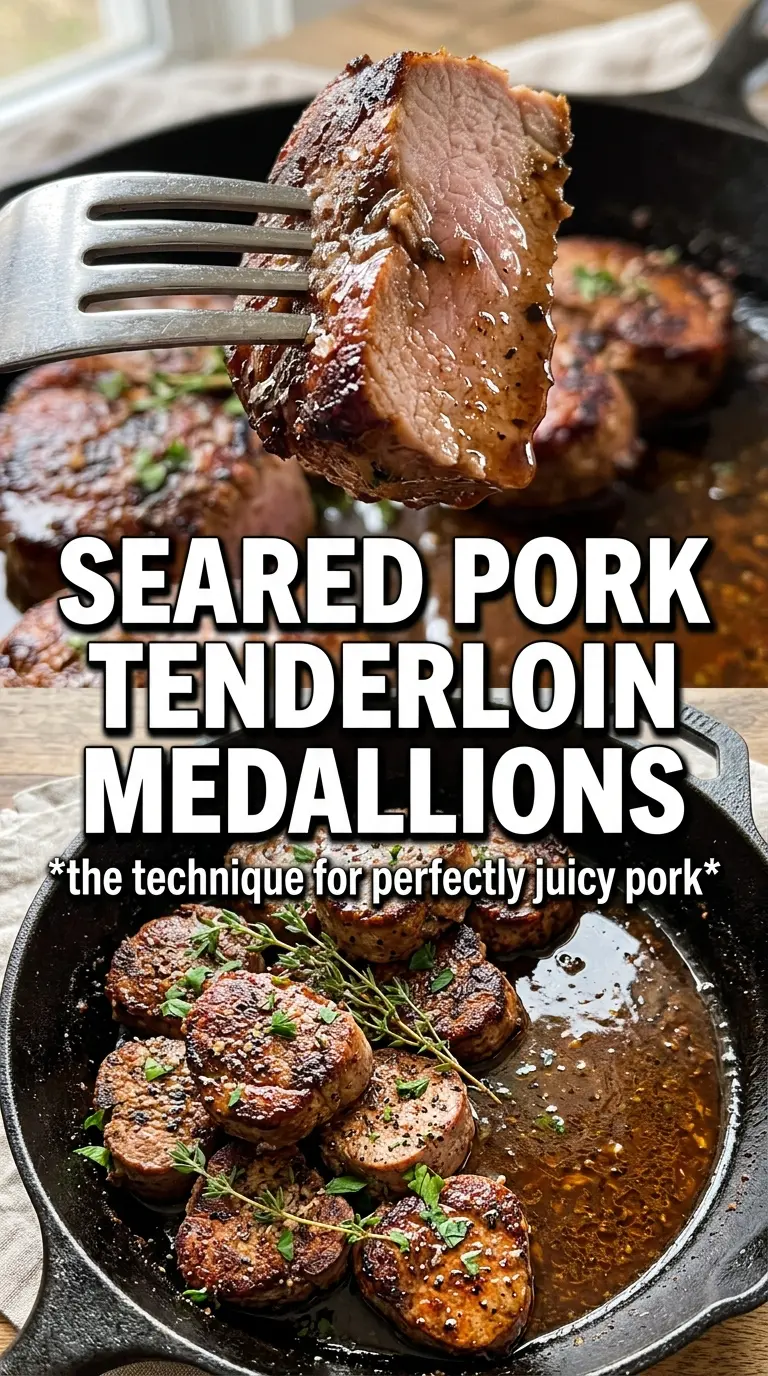
Pork tenderloin medallions cook fast, take a hard sear beautifully, and still stay tender enough to slice with almost no effort. The best part is the pan sauce that clings to the meat after the last minute in the skillet — sharp Dijon, lemon, garlic, and rosemary turn the browned bits at the bottom into something that tastes far more deliberate than the short ingredient list suggests.
This version works because the medallions are cut thick enough to brown before they dry out, and the pan stays hot long enough to build a crust instead of steaming the pork. The sauce starts with the same skillet, which matters more than it sounds like it does; those caramelized bits are what give the finished dish depth. Butter goes in after the sear, not before, so it can carry the garlic and herbs without burning.
Below, I’ve included the small timing details that keep the pork juicy and the sauce glossy, plus a few smart ways to change it up if you need a dairy-free or lower-carb dinner.
The medallions got that gorgeous crust without drying out, and the sauce thickened just enough to coat the pork instead of pooling on the plate. My husband kept saying the Dijon and lemon made it taste restaurant-level.
Save these pork tenderloin medallions for a fast pan-seared dinner with a glossy Dijon rosemary sauce and a blush-pink center.
The Sear Is Fast — The Mistake Is Moving the Pork Too Soon
Pork tenderloin medallions reward high heat and patience for just a few minutes. If you start nudging them around the skillet before the surface has browned, they stick, tear, and lose the crust that gives the whole dish its texture. Let them sit until the bottom releases on its own. That’s the sign the Maillard browning has happened.
The other common failure is crowding the pan. Even though the pieces are small, they still need space for moisture to evaporate. If they’re packed in tightly, the pan cools down and you end up with gray pork instead of a deep golden exterior. Work in batches and keep the first batch warm while you finish the rest.
What Each Ingredient Is Actually Doing in the Pan Sauce
- Pork tenderloins — Tenderloin is lean, which is why it cooks quickly and slices neatly into medallions. It doesn’t have much fat, so the sear and the sauce have to do the heavy lifting. If you swap in pork loin, expect a slightly firmer, less delicate bite and add a minute or two if the pieces are thicker.
- Olive oil — Use enough to coat the pan and help the pork brown evenly over high heat. A neutral oil works too, but olive oil gives a little extra flavor without getting in the way of the sauce.
- Butter — This softens the garlic and gives the pan sauce a rounder finish. Add it after the pork comes out so it doesn’t burn during the sear.
- Dijon mustard — Dijon is what pulls the sauce together. It adds sharpness and helps emulsify the broth and butter into something glossy instead of thin and greasy. Yellow mustard won’t give the same depth.
- Chicken broth — This is the body of the sauce. Use a broth you’d actually drink, because once it reduces, the flavor gets concentrated fast. If you only have stock, that works too.
- Fresh rosemary and lemon juice — Rosemary can get woody if you overdo it, so mince it finely. Lemon juice goes in at the end for brightness; add it earlier and it loses the sharp edge that makes the sauce pop.
How to Keep the Pork Juicy While the Sauce Comes Together
Drying and Seasoning the Medallions
Pat the pork dry before it hits the skillet. Moisture on the surface is the enemy of browning, and wet pork steams before it sears. Season generously with salt and pepper so the crust tastes seasoned all the way through, not just on the sauce-coated surface.
Building the Crust in Batches
Heat the oil until it shimmers, then lay the medallions in without crowding the pan. You should hear an immediate, steady sizzle. Leave them alone for 2 to 3 minutes per side until they lift cleanly and the edges look deeply golden. If they’re pale when you flip them, the pan wasn’t hot enough or the pork was moved too early.
Making the Garlic Herb Pan Reduction
Once the pork is out, lower the heat before adding butter and garlic. Garlic goes from fragrant to bitter fast, so thirty seconds is enough. Add the broth and rosemary, scrape the pan well, and let the liquid simmer until it reduces slightly and smells savory instead of raw and boozy.
Finishing with Dijon and Lemon
Stir in the Dijon and lemon juice off the hottest part of the burner if the pan is screaming hot. The sauce should turn glossy and lightly thickened, not heavy. Return the pork just long enough to coat it and warm it through. If you cook it much longer, the medallions will go from juicy to dry in a hurry.
How to Adapt This for Different Kitchens and Different Nights
Dairy-Free Version
Swap the butter for another tablespoon of olive oil or a dairy-free butter substitute. The sauce won’t have quite the same round finish, but it still reduces nicely and stays glossy if you keep the heat moderate.
Lower-Carb Serving Style
Serve the medallions over cauliflower mash, sautéed greens, or roasted asparagus instead of potatoes or rice. The pan sauce is already naturally low in carbs, so the rest of the plate is where the difference shows up.
No Fresh Rosemary
Use 1/3 teaspoon dried rosemary instead of fresh. Dried rosemary is stronger and a little rougher, so crush it between your fingers before adding it to the broth. Too much will make the sauce taste piney.
Storage and Reheating
- Refrigerator: Store leftovers in an airtight container for up to 3 days. The pork stays good, though the crust softens once it sits in the sauce.
- Freezer: You can freeze the cooked pork and sauce for up to 2 months, but the texture of the medallions will be a little softer after thawing. Freeze in a shallow container for quicker reheating.
- Reheating: Warm gently in a covered skillet over low heat with a splash of broth or water. High heat dries out tenderloin fast, so don’t blast it in the microwave unless you’re okay with a tougher texture.
Questions I Get Asked About This Recipe

Pork Tenderloin Medallions with Garlic Herb Pan Sauce
Ingredients
Equipment
Method
- Pat the pork tenderloin medallions dry, then season generously with salt and pepper.
- Heat olive oil in a skillet over high heat, then sear medallions 2–3 minutes per side without moving until deeply golden, working in batches if needed.
- Remove medallions to a plate and reduce heat to medium.
- Melt butter in the same skillet, then sauté garlic for 30 seconds.
- Add chicken broth and rosemary, scrape up browned bits, then simmer for 2 minutes.
- Stir in Dijon mustard and lemon juice until the sauce is glossy and slightly reduced.
- Return medallions to the pan, toss to coat, and heat just until warmed through.
- Garnish with fresh parsley and serve immediately.