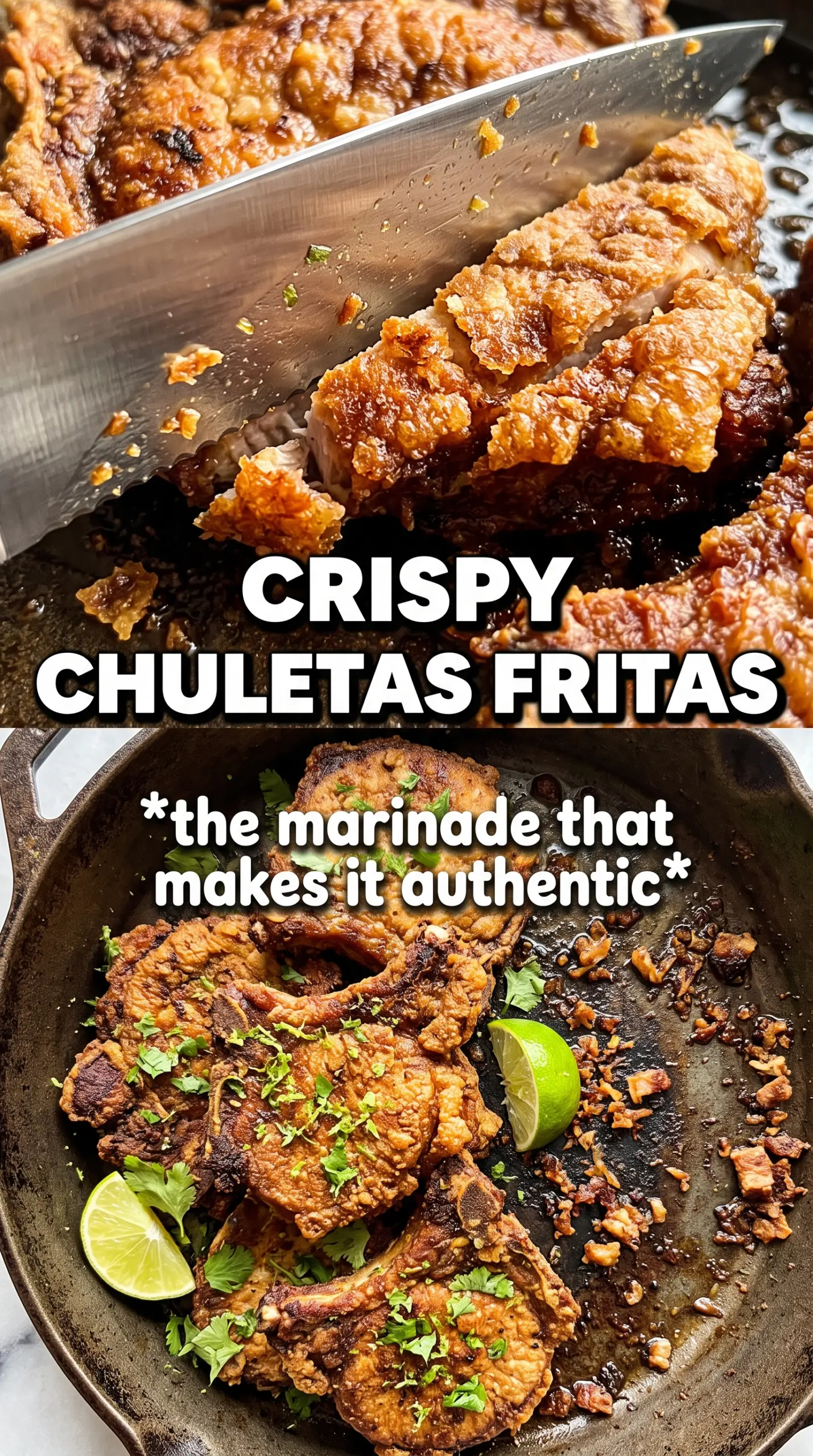
Golden, crispy Puerto Rican fried pork chops hit the pan with a seasoned crust and stay juicy inside when they’re cut thin and cooked fast. The outside picks up that deep, savory edge from adobo and sazon, while the vinegar in the marinade keeps the pork tasting bright instead of heavy. These are the kind of chops that disappear first from the plate, especially when there’s rice, beans, and a squeeze of lime waiting beside them.
What makes these work is the balance: enough oil to fry, but not so much that the coating turns greasy; enough marinating time for the seasonings to cling, but not so long that the pork gets soft on the surface. Thin chops matter here. They cook through before the crust has a chance to burn, and bone-in chops stay a little juicier if you can find them. The heat needs to be steady and hot enough to brown quickly, not so hot that the spices scorch before the center is done.
Below, I’ve included the details that matter most: how to keep the crust crisp, what to do if your pork chops are thicker than usual, and the best way to serve chuletas fritas so they taste like a proper plate of Puerto Rican home cooking.
The chops browned up fast and stayed juicy inside. I used bone-in thin cuts like you suggested, and the adobo-sazon seasoning stuck to every bite without falling off in the skillet.
Save these Puerto Rican fried pork chops for the nights when you want a crisp adobo crust, juicy pork, and a fast pan-fried dinner with rice and beans.
The Trick to Keeping Chuletas Fritas Crisp Instead of Steamy
The biggest mistake with fried pork chops is crowding the pan or letting the oil sit too cool. Both lead to chops that absorb grease instead of sealing into a crisp crust. You want the oil shimmering before the first chop goes in, and you want enough space that each chop can fry, not steam. If the pan gets too busy, the coating softens and the seasoning loses its edge.
Thin chops are the other part of the equation. They cook fast enough that the crust gets deep golden before the meat dries out. If your chops are thicker, pound them closer to even thickness so the edges don’t overcook while the center catches up. That one step changes the whole texture of the dish.
- Adobo seasoning — This is the backbone of the crust. It brings salt, garlic, and the savory base that gives chuletas fritas their familiar taste.
- Sazon seasoning — This adds the color and that rounded, peppery depth that makes the pork look and taste like classic Puerto Rican home cooking. If you don’t have it, the chops will still work, but they’ll be a little less vibrant.
- White vinegar — The vinegar sharpens the seasoning and helps the pork taste seasoned all the way through. Lime juice can work in a pinch, but it’s a little brighter and less mellow.
- Thin bone-in pork chops — Bone-in chops stay juicier and taste fuller once fried. Boneless works too, but it dries out faster, so keep the cooking time tight.
What Each Ingredient Is Actually Doing in This Recipe
- Primary ingredient (the star) — Quality matters most. Choose the best you can find.
- Cooking medium (oil, butter, or broth) — This carries flavors and prevents dryness.
- Seasonings (salt, pepper, spices, herbs) — Layer flavors so nothing overpowers. Build depth gradually.
- Aromatics (garlic, onion, herbs) — Cook with fat to bloom flavors. Become the foundation.
- Supporting ingredients — Complement the main ingredient without overpowering it.
- Sauce or liquid (if applicable) — Brings flavors together. Balance richness with acid.
- Acid (lemon, vinegar, wine, or other) — Brightens and prevents flat-tasting results.
- Final finish (garnish, glaze, or sauce) — Prevents one-dimensional taste and adds visual appeal.
How to Fry the Pork So the Seasoning Stays Put
Marinating the Chops
Mix the adobo, sazon, garlic powder, oregano, vinegar, and olive oil into a loose paste, then rub it all over the pork chops until every surface is coated. Thirty minutes is enough to season the exterior and let the meat relax; two hours gives you a little more depth without turning the texture mushy. If the chops sit too long in the vinegar, the surface can get soft instead of well-seasoned.
Heating the Oil
Use a heavy skillet and add just enough oil for a shallow fry, about a quarter inch. Heat it over medium-high until it shimmers and moves quickly across the pan. If the oil is smoking hard, it’s too hot and the spices can burn before the pork cooks through. If it barely moves, the chops will soak up oil and lose their crunch.
Frying to a Deep Golden Crust
Lay the chops into the pan without crowding them and let them fry undisturbed for 4 to 5 minutes on the first side. You’re looking for a deep golden crust that releases easily from the skillet; if it sticks, it needs another minute. Flip and fry the second side until the pork is cooked through and the edges look crisp, not pale. The center should be juicy, with no pink juices running when you cut in near the bone.
Draining and Serving
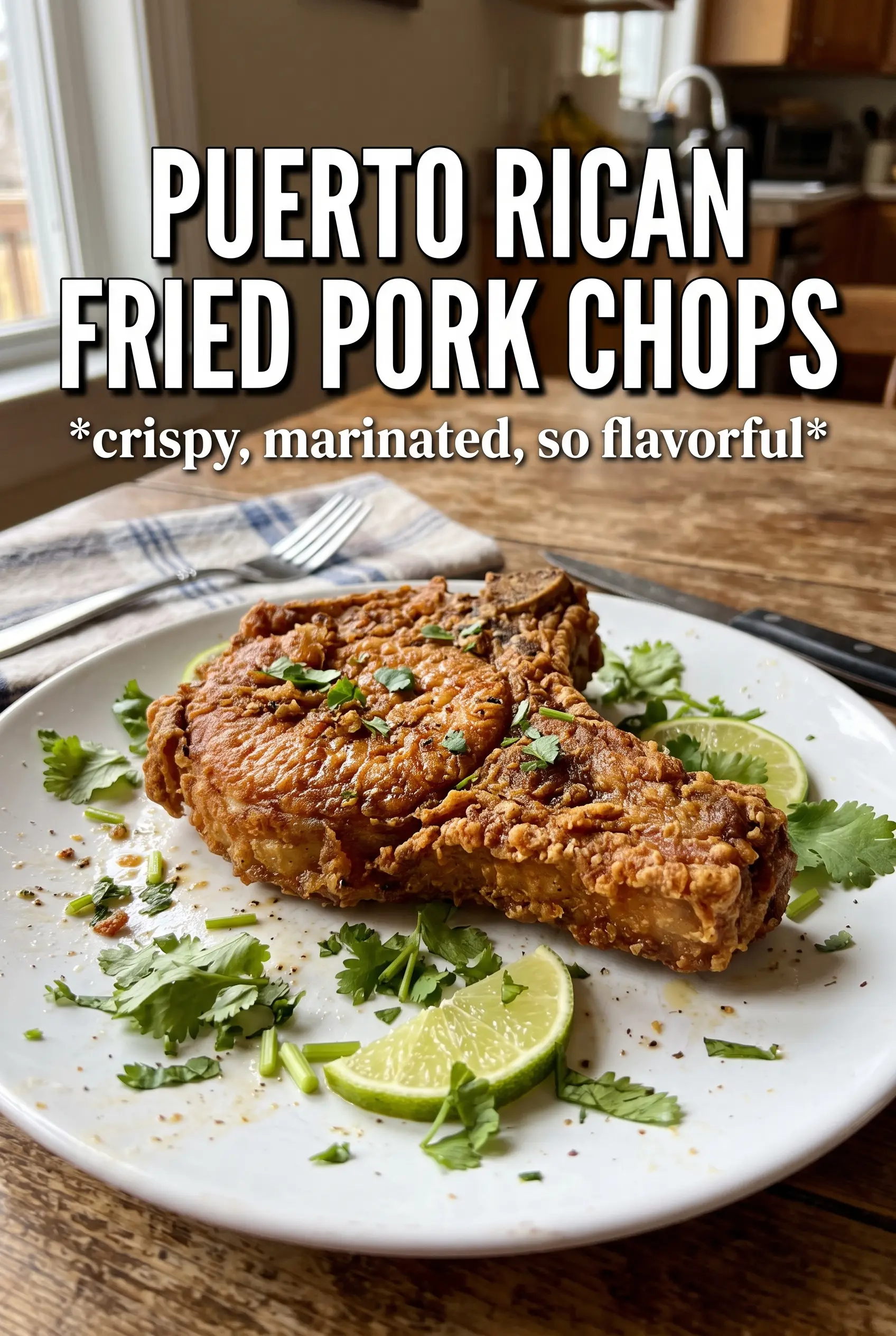
Move the chops to paper towels for just a brief rest. Too long and the bottom crust loses its snap. Serve them right away with white rice, pink beans, and lime wedges, because the citrus wakes up the fried seasoning and cuts through the richness of the pork.
How to Adapt Chuletas Fritas for Your Table
Gluten-Free and Naturally Crisp
This recipe is already gluten-free as written, as long as your adobo and sazon are certified gluten-free. The crust comes from the seasoned surface of the pork itself, not from flour, so you still get that golden fried finish without any breading.
Boneless Chops for a Leaner Cut
Boneless chops work fine if that’s what you have, but they cook a little faster and dry out sooner. Pull them from the pan as soon as they’re cooked through and keep them thin so you don’t lose the juicy center that makes this dish worth frying.
No Sazon in the Cabinet
If you’re out of sazon, add a little extra garlic powder and a pinch of annatto or paprika for color. You won’t get the exact same flavor, but you’ll keep the warm, savory look and most of the seasoning balance.
Storage and Reheating
- Refrigerator: Store leftovers in an airtight container for up to 3 days. The crust will soften a little, but the flavor holds well.
- Freezer: These freeze best after cooking if you wrap them well and freeze in a single layer first. The texture won’t be quite as crisp after thawing, but it still works for a quick meal.
- Reheating: Reheat in a 375°F oven or air fryer until hot and re-crisped. Skip the microwave if you want to keep the coating from turning limp.
Questions I Get Asked About This Recipe
Puerto Rican Fried Pork Chops (Chuletas Fritas)
Ingredients
Equipment
Method
- Mix adobo seasoning, sazon seasoning, garlic powder, dried oregano, white vinegar, and olive oil, then coat the pork chops thoroughly and season with salt and pepper. Refrigerate to marinate for 30 minutes to 2 hours, covered.
- Heat 1/4 inch of oil in a heavy skillet over medium-high heat until shimmering, not smoking. Carefully place pork chops in the hot oil.
- Fry pork chops for 4–5 minutes per side, flipping once, until deep golden brown and cooked through. If needed, adjust the heat to keep the oil at a steady sizzle.
- Drain pork chops briefly on paper towels to keep the crust crisp. Serve immediately while still hot and crunchy.
- Serve Puerto Rican fried pork chops with white rice, pink beans, and lime wedges on the side. Plate as shown with a squeeze of lime right before eating.