Ranch roasted carrots come out sweet at the center, caramelized at the edges, and coated in that familiar herby tang that keeps people reaching for one more piece. The Parmesan melts into the hot carrots and clings to every ridge, so you get a little salty finish without burying the vegetable flavor. They land on the table like a side dish, but they disappear like a snack.
The trick is getting the carrots dry enough to brown and keeping them in a single layer so they roast instead of steam. Ranch seasoning already carries salt, garlic, onion, and herbs, which means you don’t need much else; olive oil helps the spices stick and gives the edges a little blistered color. Add the Parmesan after roasting so it stays savory and toasty instead of disappearing into the pan.
Below, you’ll find the one step that keeps the carrots from going soft, plus a few smart swaps if you want to change the herb finish or make them dairy-free.
The carrots got those browned edges I was hoping for, and the ranch-Parmesan coating stuck beautifully without turning soggy. My kids kept picking them off the pan before dinner was even on the table.
These ranch roasted carrots stay crisp-edged, herby, and Parmesan-topped — save them for the easiest side dish that still feels special.
The Edge Between Roasted and Soggy Carrots
Carrots go flat in the oven when they’re crowded or cut too unevenly. The smaller pieces soften before the larger ones have a chance to brown, and by the time everything feels tender, the pan is full of steam instead of roasted edges. A hot oven and a single layer solve most of that problem before it starts.
The second thing that matters here is the seasoning. Ranch packet mix contains dried herbs and dairy solids, which helps it cling to the olive oil and toast lightly in the oven. If the carrots look dry before roasting, add just enough oil to coat them; too much oil makes the seasoning slide off and leaves the vegetables greasy instead of glazed.
What the Ranch Packet and Parmesan Are Doing Here
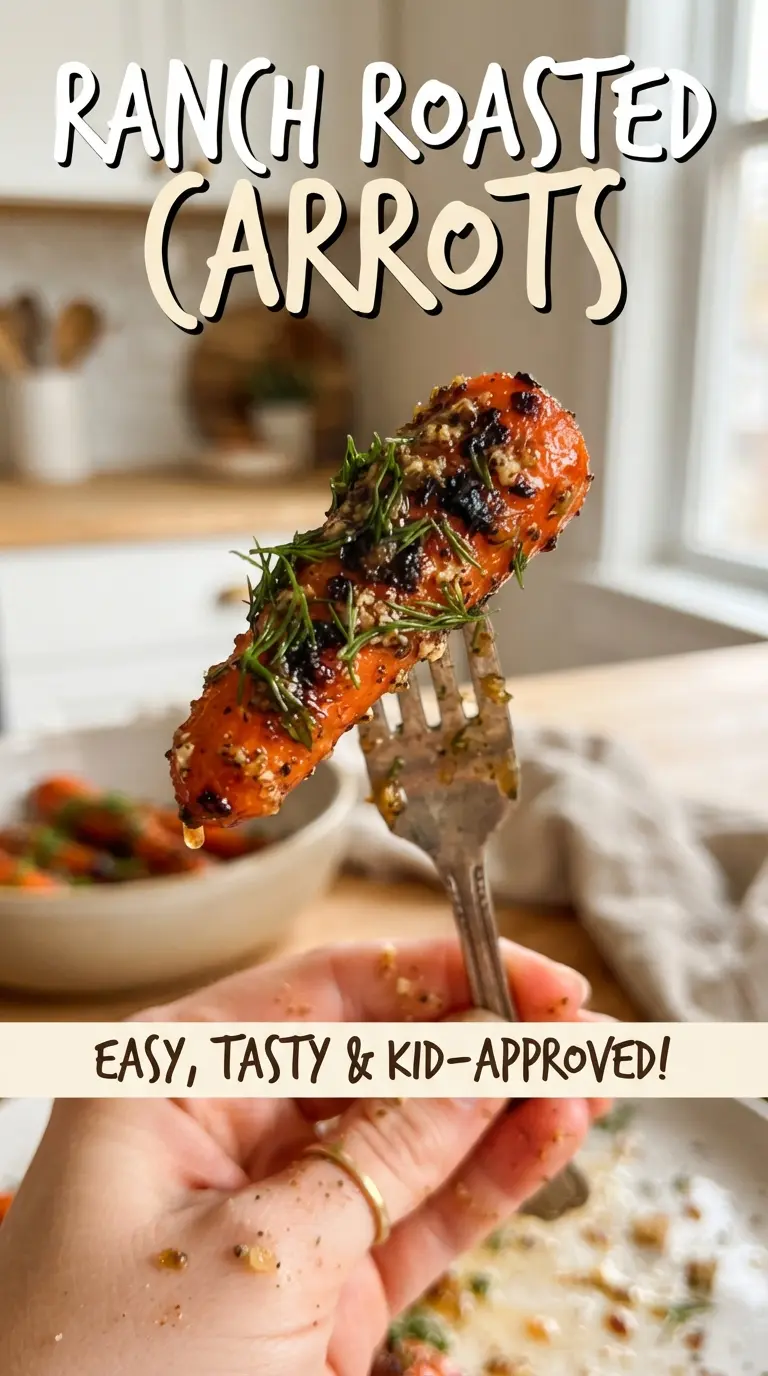
- Carrots — Cut them into sticks close to the same size so they finish together. Thicker sticks stay a little snappy in the center, while thinner ones soften more and pick up extra browning.
- Olive oil — This carries the ranch seasoning and helps the edges caramelize. A neutral oil works in a pinch, but olive oil gives the carrots a fuller finish.
- Ranch seasoning — This is the main flavor here, so the packet matters more than it would in a soup or dip. Homemade ranch seasoning works too if it’s already mixed with dried dill, onion, garlic, and salt; if it’s salt-free, add seasoning in layers so the carrots don’t taste flat.
- Parmesan — Add it after roasting for the best texture. Grated Parmesan melts onto the hot carrots and turns savory, while finely shredded cheese can disappear into the pan before it adds much.
- Fresh dill or parsley — This brightens the finished dish and keeps the ranch flavor from tasting one-note. Dill gives the most natural match; parsley is cleaner and milder.
Getting the Carrots Brown Before the Cheese Goes On
Coating the carrots evenly
Toss the carrots with olive oil and ranch seasoning until every piece looks lightly slicked and speckled. You want the seasoning to cling, not pool in the bottom of the bowl. If the carrots are wet from washing, dry them first or the spice mix will turn patchy and paste-like in the oven.
Roasting in a single layer
Spread the carrots out so they aren’t touching much. If they overlap, the steam trapped between them softens the surface and keeps the edges pale. Halfway through roasting, toss them once so the underside gets the same chance to brown as the top.
Finishing with Parmesan and herbs
Pull the pan when the carrots are tender with browned tips and the bottoms look deeply colored in spots. Sprinkle the Parmesan over the hot carrots right away so it softens on contact. Add the fresh herbs at the end so they stay bright instead of turning wilted and dull from the oven heat.
How to Change the Finish Without Losing the Point
Dairy-Free Ranch Roasted Carrots
Skip the Parmesan and finish with extra herbs plus a pinch of flaky salt if you want the flavor to pop. The carrots still roast up sweet and savory, and the ranch seasoning carries most of the work on its own.
Using Baby Carrots Instead of Whole Carrots
Baby carrots work, but they brown a little less deeply because they hold more moisture. Roast them until they’re visibly browned at the edges and give the pan an extra toss halfway through so they don’t color unevenly.
Making Them Spicier
A pinch of cayenne or crushed red pepper goes well with the ranch and Parmesan without turning the dish into something new. Add it to the oil before tossing so the heat spreads evenly instead of landing in hot spots.
Storage and Reheating
- Refrigerator: Store in an airtight container for up to 4 days. The carrots soften a little, but the flavor holds well.
- Freezer: I don’t recommend freezing these. Roasted carrots turn watery and lose their browned edges after thawing.
- Reheating: Warm them on a sheet pan in a 400F oven until hot, or use a skillet over medium heat. The mistake to avoid is microwaving them too long, which turns the seasoning muddy and the carrots limp.
Answers to the Questions Worth Asking
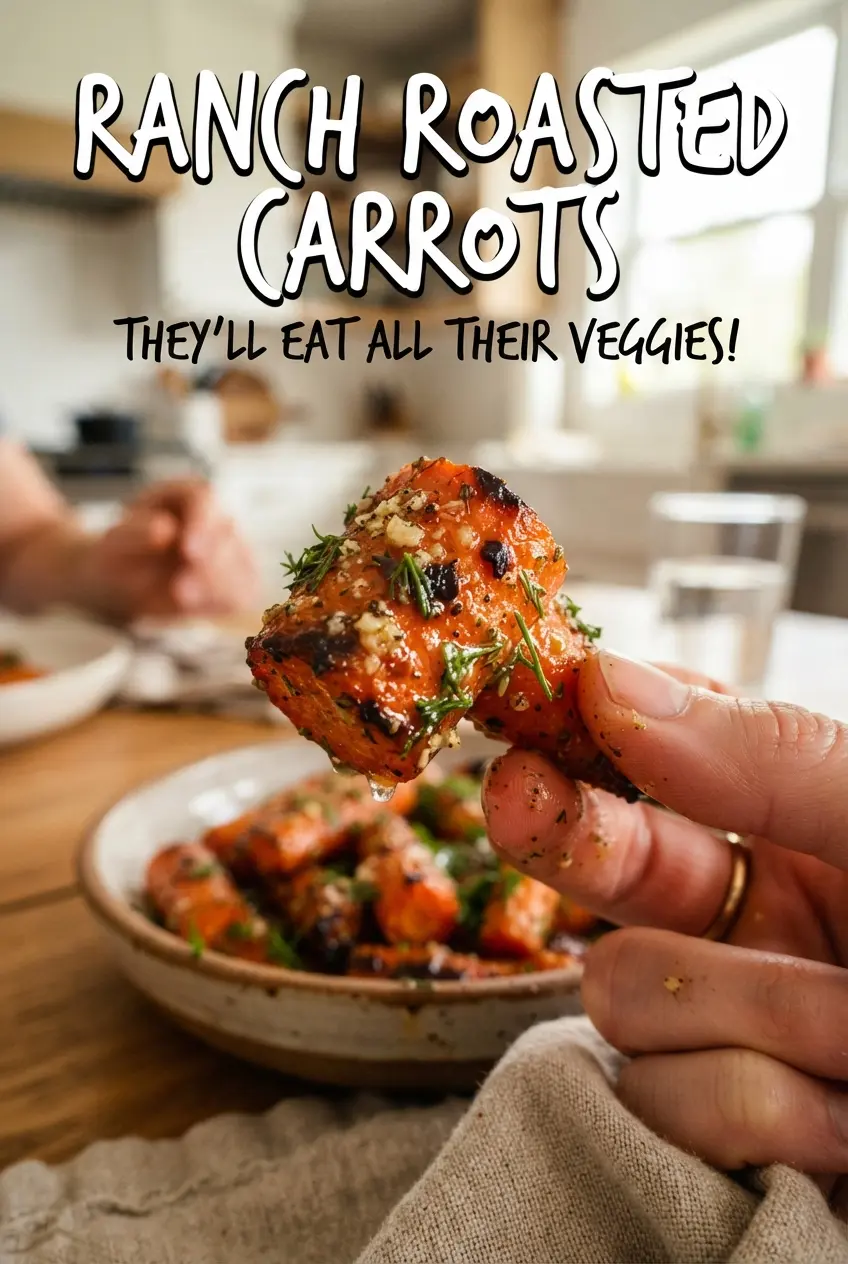
Ranch Roasted Carrots
Ingredients
Equipment
Method
- Preheat oven to 425F and line a sheet pan with parchment for easy cleanup (hot oven cue).
- Toss carrots with olive oil and ranch seasoning until evenly coated so every stick looks speckled (even coating visual cue).
- Spread the carrots in a single layer on the sheet pan to help them roast and brown instead of steam (single-layer visual cue).
- Roast for 20-25 minutes, tossing halfway, until tender and browned at the edges (toss halfway; browned-edge cue).
- Sprinkle with Parmesan and fresh dill or parsley, then serve warm (fresh-herb and cheesy top cue).