Pork chops turn into something memorable when they’re coated in a glossy raspberry glaze that clings to every bite instead of running off the plate. The sweet-tart fruit, sharp balsamic, and a little Dijon give the sauce enough backbone to stand up to the richness of the meat, and that ruby color makes the whole skillet look restaurant-worthy without any fuss.
Bone-in chops work best here because they stay juicier through the sear and the short finish in the sauce. The jam does the heavy lifting for sweetness and body, but it needs the vinegar and broth to keep it from tasting flat or sticky in the wrong way. A brief simmer before the pork goes back in is what turns the mixture from a loose sauce into a true glaze.
Below, you’ll find the searing cue that keeps the chops from drying out, the ingredient swap that still gives you a balanced glaze, and the small timing detail that keeps the garlic from burning before the sauce comes together.
The glaze thickened up beautifully and coated the chops instead of pooling in the pan. I used the fresh raspberries on top like you suggested, and it made the whole dish taste brighter.
Save these raspberry glazed pork chops for a quick skillet dinner with a glossy sweet-tart sauce and a short cook time.
The Reason the Glaze Stays Glossy Instead of Turning Grainy
The biggest mistake with fruit-glazed pork is rushing the sauce after the meat comes out of the pan. If the jam goes in and then gets blasted over high heat, the sugars tighten up before the vinegar and broth can loosen them, and you end up with a sticky paste instead of a smooth glaze.
This version works because the sauce is built in layers. Garlic gets just 30 seconds in the pan so it turns fragrant without browning, then the jam, balsamic, Dijon, rosemary, and broth simmer long enough to melt together and reduce. The glaze should look shiny and spoonable, not thick like jelly. When it coats the back of a spoon and leaves a clear line when you drag a finger through it, it’s ready for the pork to go back in.
What Each Ingredient Is Doing in This Dish
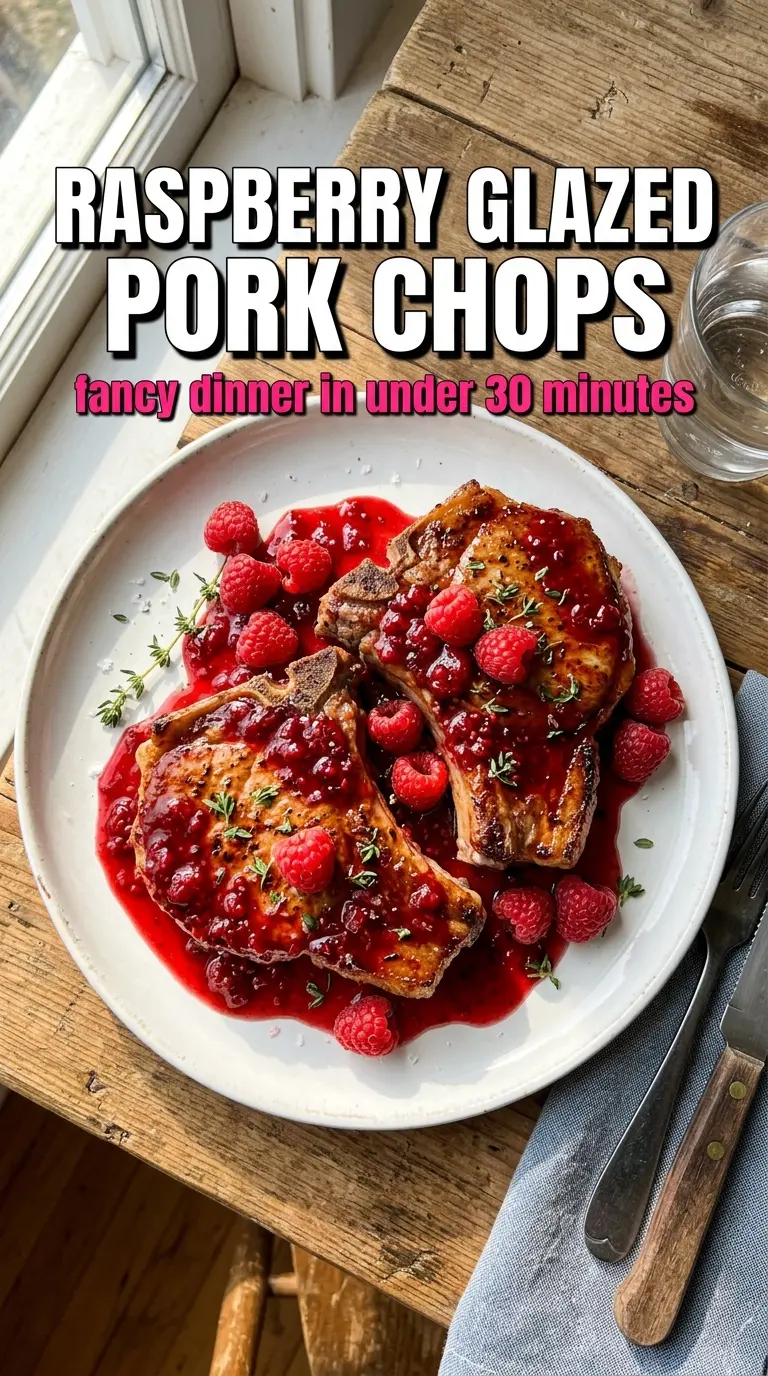
- Bone-in pork chops — These hold onto moisture better than boneless chops and give you a little more forgiveness during the sear. If you only have boneless, cut the sear time down by a minute or two per side so they don’t dry out.
- Raspberry jam — This gives the glaze its sweetness, body, and fruit flavor in one ingredient. Use a good-quality jam if you can, because watery or overly sugary jam can make the sauce thin or cloying.
- Balsamic vinegar — This is what keeps the glaze from tasting like dessert. It sharpens the fruit and adds depth, so don’t skip it unless you’re replacing it with another acid like red wine vinegar plus a touch of honey.
- Dijon mustard — Dijon rounds out the sweetness and helps the sauce emulsify a little as it simmers. Yellow mustard won’t taste quite as balanced here, but it will still work in a pinch.
- Fresh rosemary and garlic — Rosemary gives the glaze a piney, savory edge that fits pork perfectly, and garlic adds a little backbone. Keep the garlic brief in the pan; once it browns, it turns bitter fast.
- Chicken broth — This loosens the jam enough to create a sauce that reduces cleanly instead of setting up like preserves. Water will work, but it leaves the glaze flatter and less savory.
How to Sear the Chops So the Sauce Has Something to Cling To
Seasoning and Searing
Pat the pork chops dry before they hit the skillet, then season them well with salt and pepper. Moisture on the surface is the enemy of browning, and a wet chop steams before it sears. Set them in the hot oil and leave them alone until a deep golden crust forms and they release easily from the pan. If you have to pry them up, they’re not ready yet.
Building the Glaze in the Same Pan
After the chops come out, the skillet should still have browned bits stuck to the bottom. Those bits are flavor, not a mess to clean away. Add the garlic first for a quick sizzle, then stir in the jam, balsamic, Dijon, rosemary, and broth. Keep the heat at a steady simmer so the sauce reduces without scorching on the bottom edge of the pan.
Finishing the Pork in the Sauce
Slide the chops back into the glaze and turn them once or twice to coat every side. The last few minutes aren’t about cooking them from raw; they’re about warming the pork through and letting the glaze cling. If the sauce gets too thick, add a splash of broth. If it looks thin, let it bubble a little longer before serving.
How to Adapt This for Different Tables and Pantry Situations
Use Boneless Pork Chops
Boneless chops cook faster and can dry out if you use the same timing as bone-in chops. Pull them from the skillet a little earlier and watch for the glaze to coat, not bubble aggressively around the edges of the meat. The flavor stays the same, but the texture is a touch leaner and less forgiving.
Make It Gluten-Free
This recipe is naturally gluten-free as written as long as your chicken broth and Dijon are certified gluten-free. That matters because some broths and mustards hide thickeners or vinegar blends you wouldn’t expect. No other changes are needed.
Swap the Jam
If raspberry jam isn’t in the pantry, blackberry or apricot jam both work well. Blackberry gives you a darker, slightly more tannic glaze, while apricot leans brighter and a little less tart. Keep the balsamic in place so the sauce still has enough sharpness to balance the fruit.
Make It Dairy-Free Without Changing a Thing
This dish is already dairy-free, which is one less thing to juggle on a busy night. The flavor still lands because the glaze gets richness from reduction, not cream or butter. If you want a silkier finish, swirl in a teaspoon of olive oil at the very end.
Storage and Reheating
- Refrigerator: Store leftovers in an airtight container for up to 3 days. The glaze will thicken as it chills.
- Freezer: Freeze for up to 2 months, though the sauce may separate a little after thawing. It still tastes good, but the texture is best fresh.
- Reheating: Warm gently in a covered skillet over low heat with a splash of broth or water. High heat can tighten the pork and make the glaze stick before it loosens.
Answers to the Questions Worth Asking

Raspberry Glazed Pork Chops
Ingredients
Equipment
Method
- Season the pork chops with salt and pepper.
- Heat olive oil in a skillet over medium-high heat and sear the chops 4–5 minutes per side until golden; set aside.
- In the same pan, sauté the minced garlic for 30 seconds, stirring to avoid browning.
- Stir in the raspberry jam, balsamic vinegar, Dijon mustard, minced rosemary, and chicken broth.
- Simmer the sauce for 3–4 minutes until it reduces to a glossy glaze.
- Return the pork chops to the pan and coat in the raspberry glaze.
- Cook for 2–3 minutes until heated through, keeping the glaze clinging to the chops.
- Garnish with fresh raspberries and rosemary, then serve.