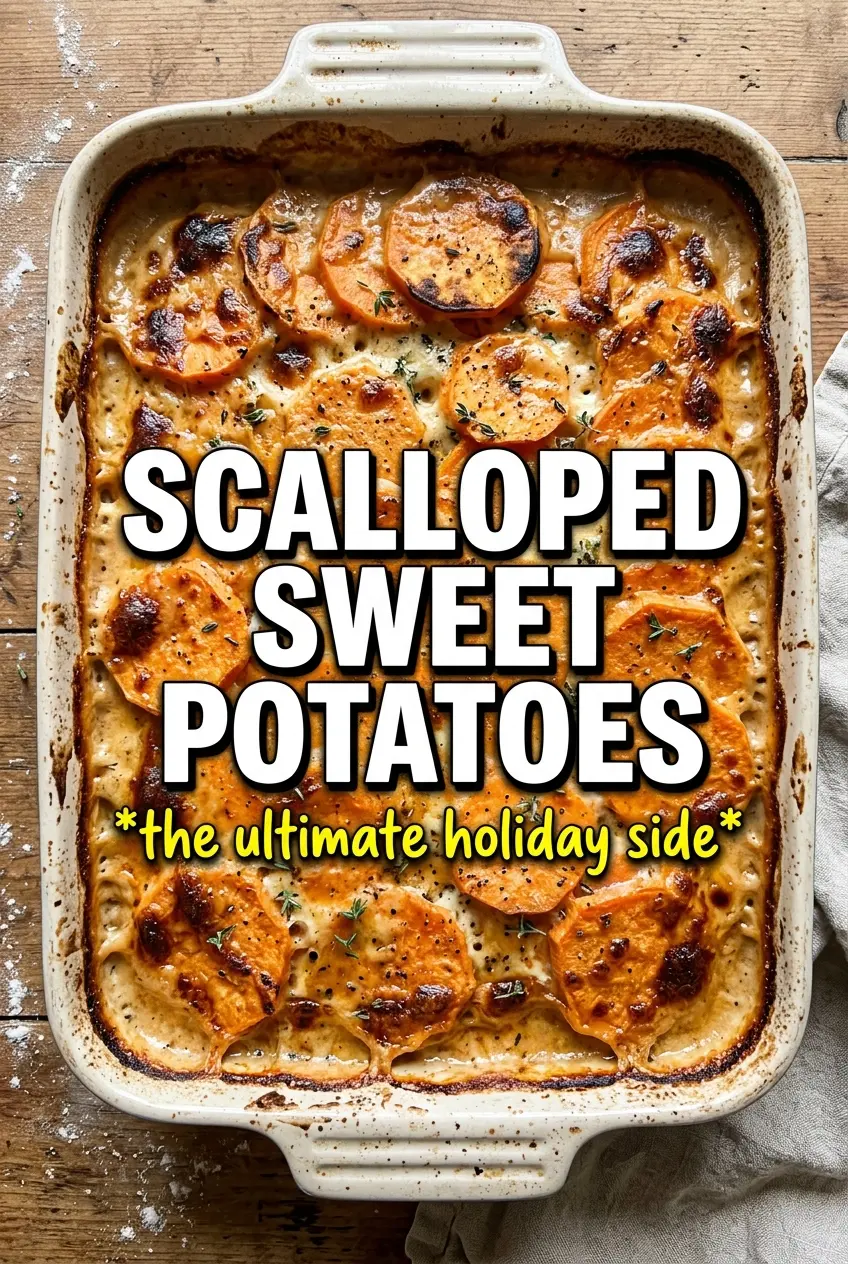
Scalloped sweet potatoes turn soft, savory-sweet, and deeply comforting when the layers are sliced thin enough to cook evenly and the top bakes into a bronzed Gruyere crust. The best versions don’t lean too sweet; they balance the natural sugar in the potatoes with garlic, thyme, and just enough maple to round everything out. What you end up with is a side dish that slices cleanly, holds together on the plate, and still gives you those edges where the cream has reduced into something almost caramelized.
Thin slices matter here. If the potatoes are cut too thick, the top browns before the center turns tender, and the cream never fully works its way through the layers. I like using both heavy cream and a little whole milk because the cream gives body while the milk keeps the sauce from feeling heavy before it bakes down. The maple syrup doesn’t make this taste like dessert; it quietly deepens the sweet potato flavor and helps the top color a little faster.
Below, I’m walking through the exact layering pattern, the cheese combination that gives you a crisp, savory finish, and the small resting time that keeps the whole dish from collapsing the second you serve it.
The sweet potatoes baked up tender all the way through, and the Gruyere on top got that browned, bubbly edge I was hoping for. I’d been worried the maple would make it too sweet, but it just gave the sauce a nice depth.
Save these scalloped sweet potatoes for the nights when you want tender layers, maple-kissed cream, and a golden Gruyere-Parmesan crust.
The Trick to Keeping the Cream from Turning Watery
The biggest mistake with scalloped sweet potatoes is crowding in thick slices and expecting the sauce to rescue them. Sweet potatoes release moisture as they bake, and if the slices are uneven, some layers turn soft while others stay firm. Thin, overlapping rows give you a dish that cooks evenly from edge to center and lets the cream settle into every gap instead of pooling at the bottom.
Foil matters here too. Covered baking gives the potatoes enough steam to soften before the top browns, which is what keeps the cheese from burning before the middle is done. If you uncover too early, the surface can dry out and the sauce can reduce before the potatoes are tender. The final uncovered bake is where the crust happens; it’s not there to finish the potatoes from raw, but to turn the top into something golden and bubbling.
What Each Ingredient Is Actually Doing in This Dish
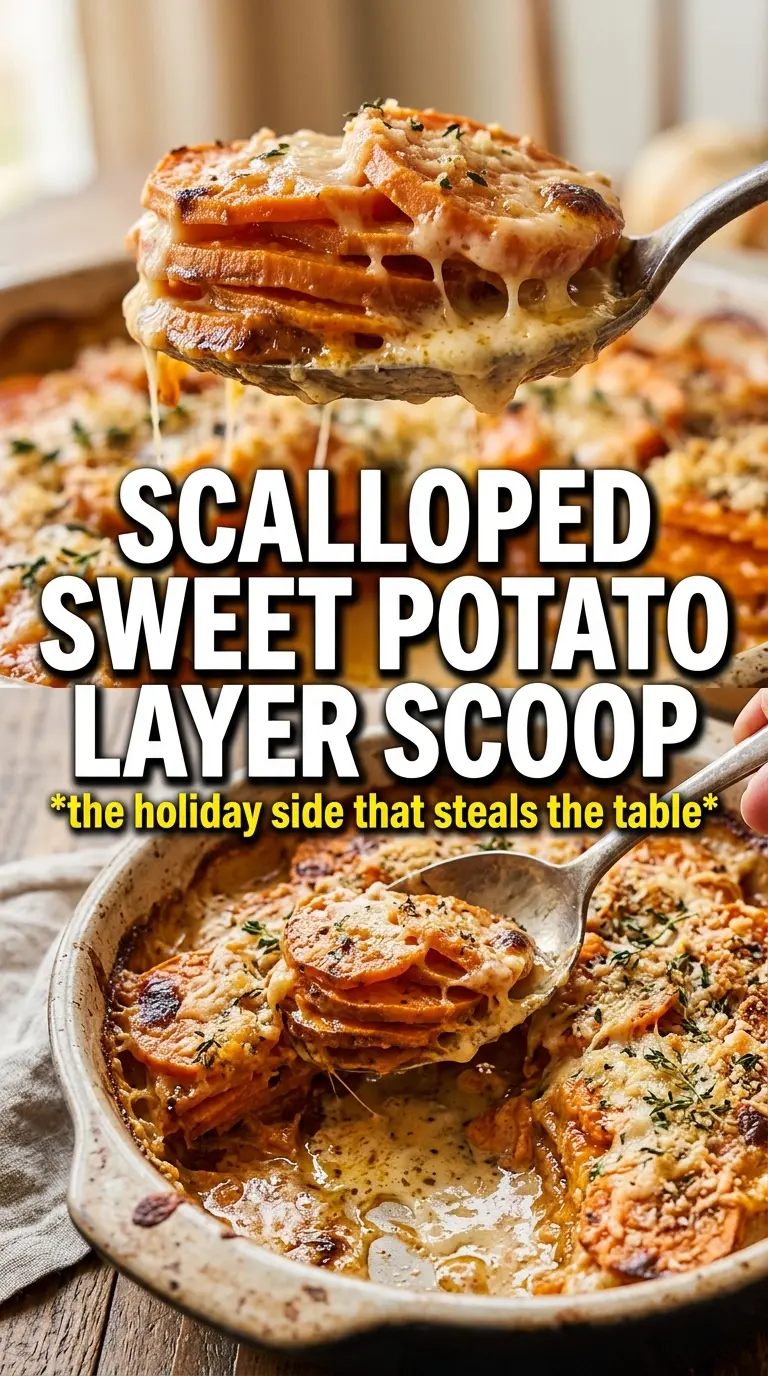
- Sweet potatoes — These need to be sliced thinly and evenly, or the whole casserole bakes unevenly. A mandoline is the easiest way to get the right thickness, but a sharp knife works if you stay patient.
- Heavy cream and whole milk — The cream gives richness and helps the sauce cling to the potatoes, while the milk loosens it just enough to flow between layers. Don’t swap in low-fat milk if you want the same silky result; it tends to separate and tastes thin after baking.
- Gruyere — This is the cheese that gives the top a nutty, savory edge and melts into those browned ridges that make people go back for another scoop. If you can’t find it, Swiss is the closest substitute, though it won’t brown quite as deeply.
- Parmesan — Parmesan sharpens the flavor and helps the top bake into a firmer crust. Use the real grated kind, not the shelf-stable shaker, because you want it to melt and brown instead of clumping.
- Maple syrup, thyme, cinnamon, and nutmeg — These are the quiet background notes that keep the dish from tasting flat. The maple deepens the potatoes’ natural sweetness, thyme keeps everything savory, and the spice blend adds warmth without turning this into dessert.
- Garlic — Raw garlic would be too sharp here, but whisked into the cream it mellows as it bakes and perfumes the whole dish. Don’t skip it; it keeps the sauce from tasting one-dimensional.
Building the Layers So the Center Cooks Before the Top Burns
Whisking the Cream Base
Start by whisking the cream, milk, garlic, maple syrup, thyme, cinnamon, nutmeg, salt, and pepper until the mixture looks smooth and evenly speckled. You don’t need to warm it first. What matters is that the spices and garlic are dispersed so every layer gets seasoned as the sauce settles through the potatoes. If the garlic clumps at the bottom of the bowl, give it another quick whisk before pouring.
Stacking the Sweet Potatoes
Lay the slices in overlapping rows, slightly shingled so the sauce can move through the gaps. Pack them close, but don’t jam them down hard; compact enough to hold together, loose enough for the cream to reach the center. Uneven slicing is the thing that causes trouble here, because thicker pieces will still be firm when the rest of the dish is tender.
Covered Baking for Tenderness
Cover the dish tightly with foil and bake until the potatoes are starting to soften all the way through. Tight foil traps steam and helps the potatoes cook before the top is exposed to direct heat. If your foil is loose, the edges dry out and the sauce reduces too soon, which leaves the center undercooked and the perimeter overly thick.
Cheese and Final Browning
Uncover the dish, scatter the Gruyere and parmesan over the top, and return it to the oven until the cheese is melted, bubbly, and deeply golden in spots. You’re looking for a crust that has color at the edges and a little sheen from the melted fat. Let it rest for 10 minutes before serving so the cream can settle; otherwise the first scoop will slide apart.
Three Ways to Adjust This Without Losing the Texture
Dairy-Free Version with Coconut Cream
Use full-fat coconut milk in place of the cream and milk, but expect a subtle coconut note in the finished dish. It still bakes up rich, though the sauce won’t taste as neutral as the original. Replace the Gruyere and parmesan with a dairy-free melting cheese if you want the top to brown a little, but the crust will be softer.
Make It More Savory and Less Sweet
Cut the maple syrup back by half and add an extra pinch of thyme or a little more black pepper. This keeps the dish closer to a classic gratin and lets the cheese come forward more strongly. It’s the best move if you’re serving it with a roast and don’t want the side to lean sweet.
Gluten-Free by Default
This recipe is naturally gluten-free as written, which is one reason it works so well for a holiday table. Just check your cheese labels if you’re cooking for someone with celiac disease, since a few pre-shredded cheeses use anti-caking additives that vary by brand. Freshly grated cheese keeps the texture better anyway.
Storage and Reheating
- Refrigerator: Store covered for up to 4 days. The sauce thickens as it chills, so the texture will be a little firmer after refrigeration.
- Freezer: It freezes, but the cream sauce can separate slightly after thawing. If you want to freeze it, cool it completely, wrap it tightly, and thaw overnight in the refrigerator before reheating.
- Reheating: Reheat covered in a 325F oven until hot through, then uncover for the last few minutes if you want the top to crisp again. The common mistake is blasting it in the microwave, which makes the potatoes uneven and the sauce oily.
Answers to the Questions Worth Asking
Scalloped Sweet Potatoes
Ingredients
Equipment
Method
- Preheat the oven to 375F and butter a 9x13 baking dish.
- Whisk heavy cream, whole milk, garlic, maple syrup, fresh thyme, cinnamon, nutmeg, salt, and pepper until evenly combined.
- Layer the sweet potato slices in overlapping rows in the baking dish.
- Pour the cream mixture over the sweet potato layers so they are evenly coated.
- Cover tightly with foil and bake for 40 minutes at 375F, until the potatoes are starting to soften.
- Uncover and scatter Gruyere and parmesan over the top.
- Bake 20 to 25 more minutes at 375F until the sweet potatoes are completely tender and the topping is golden and bubbly.
- Rest the scalloped sweet potatoes for 10 minutes before serving, so the sauce thickens slightly.