Southern fried cabbage lands in that sweet spot between humble and hard to stop eating: tender cabbage with browned edges, smoky bacon, and onions that melt down into the skillet. The best bites have a little salt, a little sweetness, and enough pepper to keep the whole pan from tasting flat. It’s the kind of side dish that disappears fast and somehow makes everything else on the plate taste better.
What makes this version work is the order. Bacon goes first so the drippings season the pan, then the onion softens in all that flavor before the cabbage ever hits the heat. A small spoonful of sugar helps the cabbage caramelize instead of just steaming, and the splash of apple cider vinegar at the end wakes everything up. Without that acid, the dish can taste heavy; with it, the whole skillet tastes balanced and bright.
Below, I’ll show you how to keep the cabbage from going soggy, what the vinegar is doing at the end, and how to adjust the dish if you want it a little spicier, richer, or lighter.
The cabbage turned tender without getting mushy, and that little splash of vinegar at the end made the bacon flavor pop. I served it with pork chops and my husband went back for seconds before he finished the meat.
Save this Southern Fried Cabbage for the nights when you want smoky bacon, sweet onion, and caramelized cabbage in one skillet.
The Part That Stops Fried Cabbage From Turning Watery
The biggest mistake with fried cabbage is crowding the skillet and expecting browning to happen anyway. Cabbage holds a lot of moisture, and if the pan is too full or the heat is too low, it steams itself soft before it ever picks up color. A large skillet matters here because the cabbage needs room to touch hot metal.
The other trap is adding everything at once. Bacon renders first, onion softens in the drippings, and then the cabbage goes in after the pan already has some flavor built into it. That layering is what gives you those caramelized edges instead of pale, limp cabbage.
- Bacon drippings — This is the backbone of the dish. You can swap in a little butter if needed, but you won’t get the same smoky depth.
- Yellow onion — It softens and sweetens as it cooks, which balances the cabbage’s mild bitterness. White onion works in a pinch, but yellow gives a rounder flavor.
- Sugar — Just a teaspoon helps the cabbage brown a little faster and offsets the vinegar at the end. Leave it out if you want, but the pan will taste flatter.
- Apple cider vinegar — This is the finishing move. It cuts through the fat and keeps the whole dish from tasting heavy.
What Each Ingredient Is Doing in the Skillet
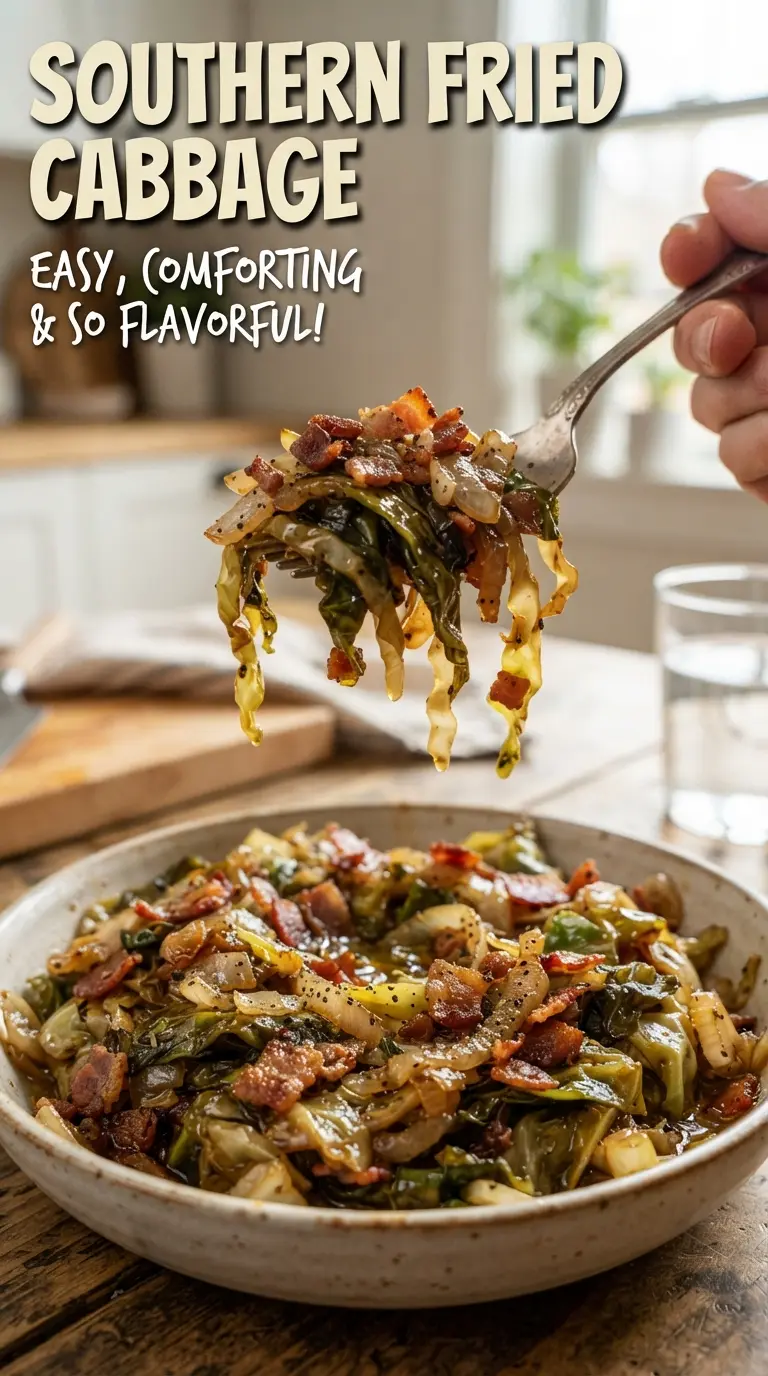
- Green cabbage — Fresh, firm cabbage cooks into tender ribbons with little pockets of browning. Pre-shredded cabbage can work, but chop it a bit coarser so it doesn’t disappear in the pan.
- Butter — Bacon drippings bring flavor, but butter gives the cabbage a glossy finish and helps the onion and garlic move around the skillet without sticking. If you use only drippings, the dish can taste a little harsher.
- Red pepper flakes — They don’t make the dish spicy-hot; they just keep the bacon and cabbage from tasting one-note. If you want real heat, add a pinch more at the end.
- Garlic — It only needs 30 seconds because it can turn bitter fast. Once it smells fragrant, the cabbage should go in right away.
How to Cook the Cabbage So It Caramelizes Instead of Steams
Rendering the Bacon
Start with the bacon in a cold skillet and let the heat build gradually. That gives the fat time to render out cleanly instead of seizing the meat. When the pieces are crisp and the drippings are shimmering, pull the bacon out and leave the fat in the pan. If the bacon burns before the fat renders, the whole dish picks up a bitter edge.
Softening the Onion
Add the sliced onion to the drippings and cook until it turns translucent with a few golden spots. You want it softened, not browned all the way through, because it keeps cooking once the cabbage goes in. Stir in the garlic only at the end of this stage so it doesn’t scorch. If the garlic goes in too early, it can turn sharp and overpower the sweetness of the cabbage.
Working the Cabbage
Add the cabbage, butter, salt, pepper, red pepper flakes, and sugar, then stir it enough to coat everything before letting it sit for short stretches. Those pauses are what let the edges take on color. Stirring constantly keeps the cabbage moving but also keeps it pale and wet. After 12 to 15 minutes, it should be tender with a few browned bits on the leaves and the flavor should taste cooked down and savory, not raw.
Finishing With Vinegar and Bacon
Take the skillet off the heat before stirring in the vinegar and bacon. The vinegar should smell bright and sharp for a second, then soften into the fat and seasoning in the pan. If you add it while the skillet is screaming hot, it can blow off too fast and leave the dish dull. The final toss should taste balanced: smoky, sweet, peppery, and clean at the end.
How to Adapt This for a Lighter Pan or a Bigger Crowd
Dairy-Free Southern Fried Cabbage
This recipe is naturally dairy-free if you skip the butter and use the bacon drippings only. The result is a little more rustic and a touch less rich, but the smoky flavor stays front and center. If the pan looks dry, add a tablespoon of neutral oil instead of butter.
A Meatless Version That Still Tastes Substantial
Leave out the bacon and start the onion in butter and a tablespoon of olive oil. You lose the smoky note, but you can build it back with a pinch of smoked paprika or a tiny splash of liquid smoke if that’s your style. The cabbage will still caramelize nicely as long as the pan stays wide and hot.
Bigger Batch for a Crowd
Double the recipe only if you have a large Dutch oven or a very wide skillet. If you pile in twice as much cabbage at once, it will steam and shrink before it browns. For the best texture, cook in two batches and combine everything at the end with the vinegar and bacon.
Storage and Reheating
- Refrigerator: Store in an airtight container for up to 4 days. The cabbage softens a bit more as it sits, but the flavor stays good.
- Freezer: It freezes, but the texture turns softer after thawing. Freeze only if you’re fine with a more tender, less crisp result.
- Reheating: Warm it in a skillet over medium-low heat with a small splash of water or broth. The mistake to avoid is blasting it in the microwave, which pushes it from tender to mushy fast.
Answers to the Questions Worth Asking
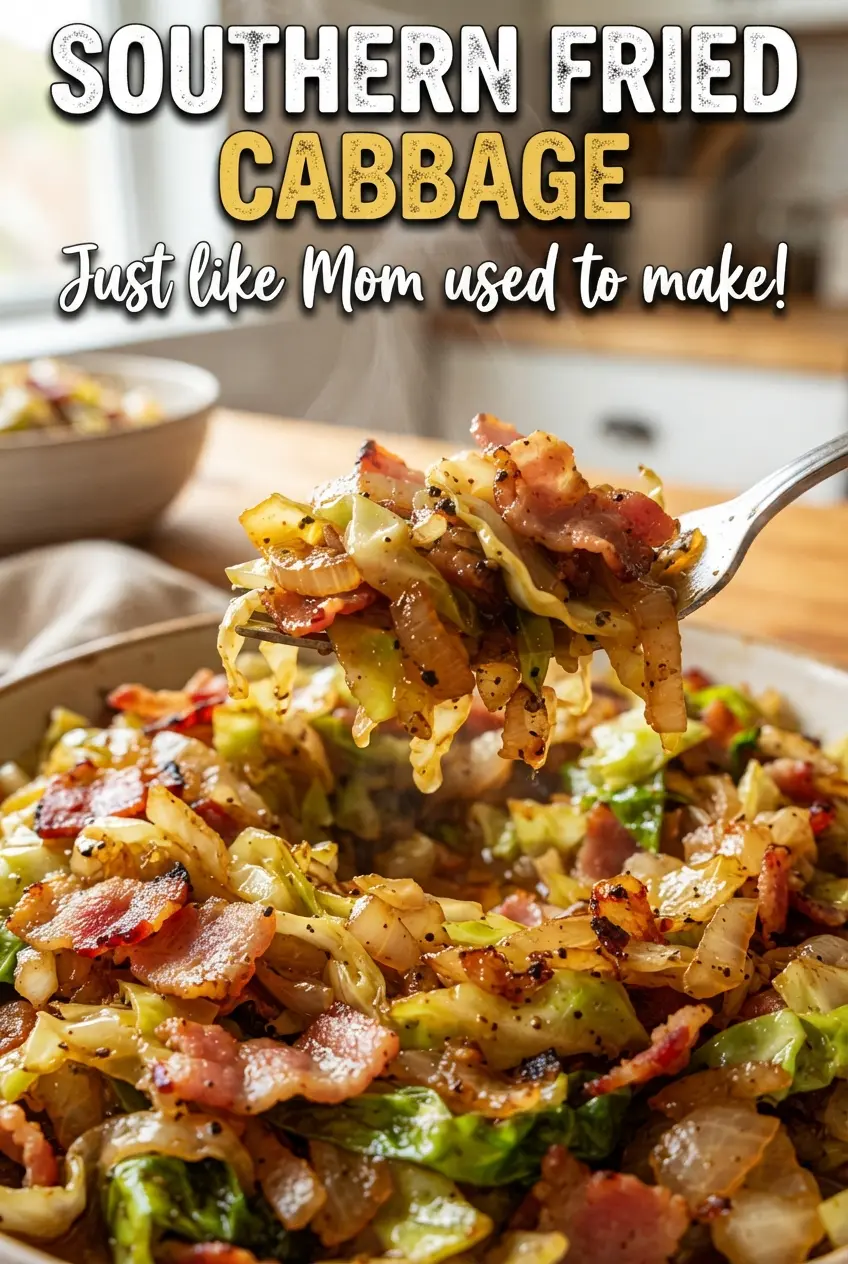
Southern Fried Cabbage
Ingredients
Equipment
Method
- Cook the chopped bacon in a large cast iron skillet over medium heat for 8 minutes, stirring occasionally, until crisp and golden. Leave the drippings in the skillet.
- Add the sliced onion to the bacon drippings and cook for 5 minutes over medium heat until softened. Stir in the minced garlic and cook for 30 seconds, just until fragrant.
- Add chopped green cabbage, butter, salt, black pepper, red pepper flakes, and sugar to the skillet and stir to coat. Cook for 12–15 minutes over medium heat, stirring occasionally, until the cabbage is tender and caramelized at the edges with darker golden spots.
- Stir in the apple cider vinegar and fold in the crispy bacon pieces. Serve warm right away for best texture.