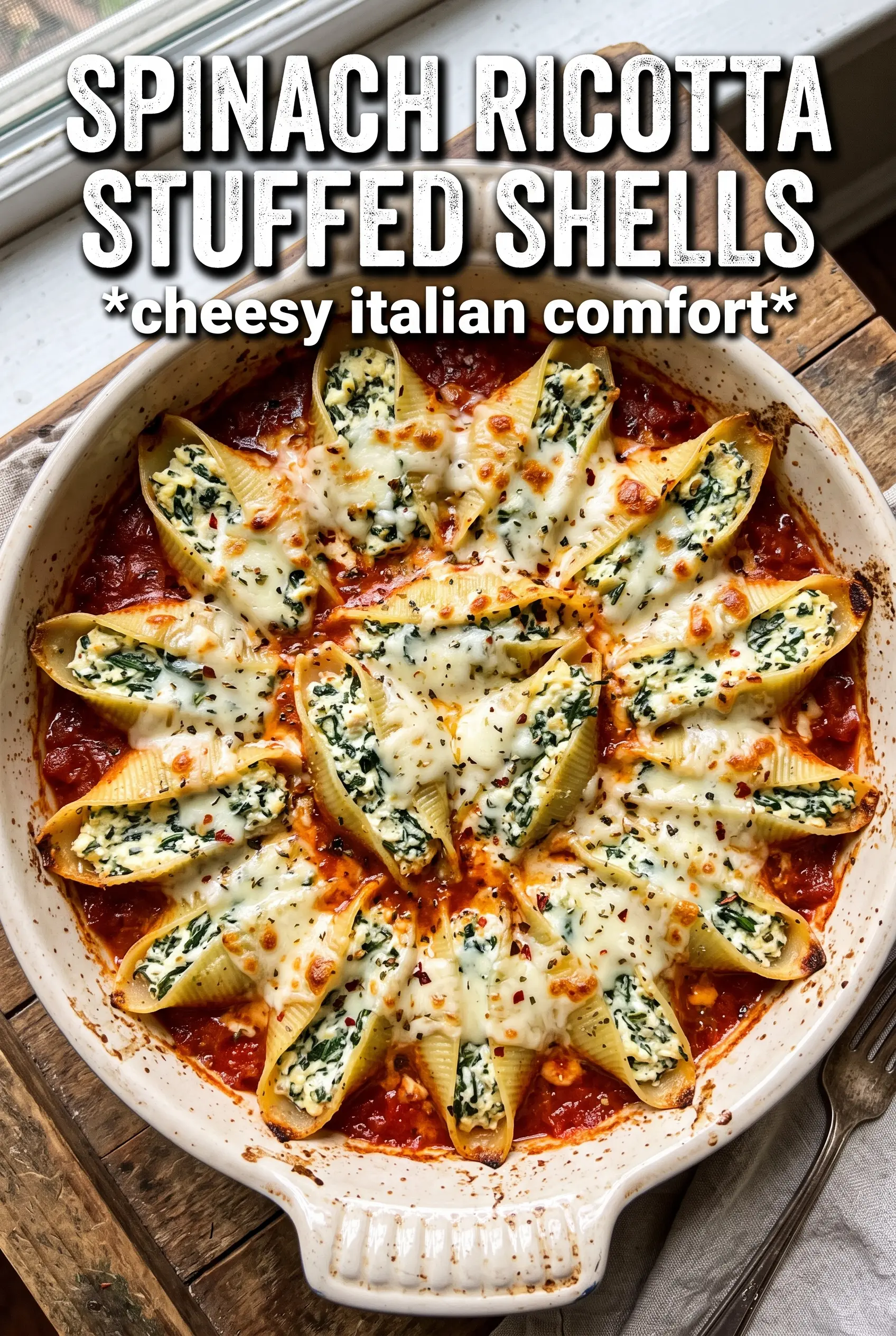
Big pasta shells filled with spinach ricotta and baked under marinara turn into the kind of dinner that disappears fast. The filling stays creamy, the shells hold their shape, and the top gets that bubbling layer of mozzarella that makes the whole dish feel complete without needing anything else on the table.
What makes this version work is the balance. Ricotta brings the soft, mild base, Parmesan sharpens it, and a little nutmeg gives the filling that old-school baked-pasta depth you can taste even through the sauce. The spinach gets chopped fine so it blends into the ricotta instead of turning into stringy little clumps, and the egg helps the filling set just enough in the oven.
Below, I’m walking through the little details that matter most: how to keep the shells from tearing, how to stop the filling from getting watery, and what to change if you want to make it ahead or adapt it for what’s already in your kitchen.
The filling stayed thick and creamy, and the shells held up perfectly after baking. I added a little extra marinara around the edges and it came out bubbling and not watery at all.
Save these spinach and ricotta stuffed shells for the night you want a bubbling baked pasta with creamy filling and golden mozzarella on top.
The Reason Most Stuffed Shells Turn Watery Before They Hit the Table
The filling is where stuffed shells usually go wrong. Ricotta holds a lot of moisture, and spinach can turn the whole mixture loose if it’s chopped too coarsely or added wet. That’s how you end up with shells that slide apart in the pan and a sauce that looks thin instead of glossy and baked down.
Here, the egg gives the ricotta structure, the Parmesan adds body, and the spinach gets chopped small enough to disappear into the cheese instead of carrying extra water into every bite. The marinara underneath and over the top also matters. It keeps the pasta from drying out, but it should be just enough to coat the dish and nestle around the shells, not flood them.
- Keep the ricotta thick. If your ricotta looks loose or wet, drain it in a fine-mesh strainer before mixing.
- Chop the spinach finely so it blends into the filling and doesn’t tear the shells when you stuff them.
- Use the egg. It helps the filling set in the oven instead of staying loose and spoonable.
- Don’t drown the dish in sauce. A shallow layer under the shells and a good spoonful over the top is enough.
What Each Ingredient Is Doing in the Pan
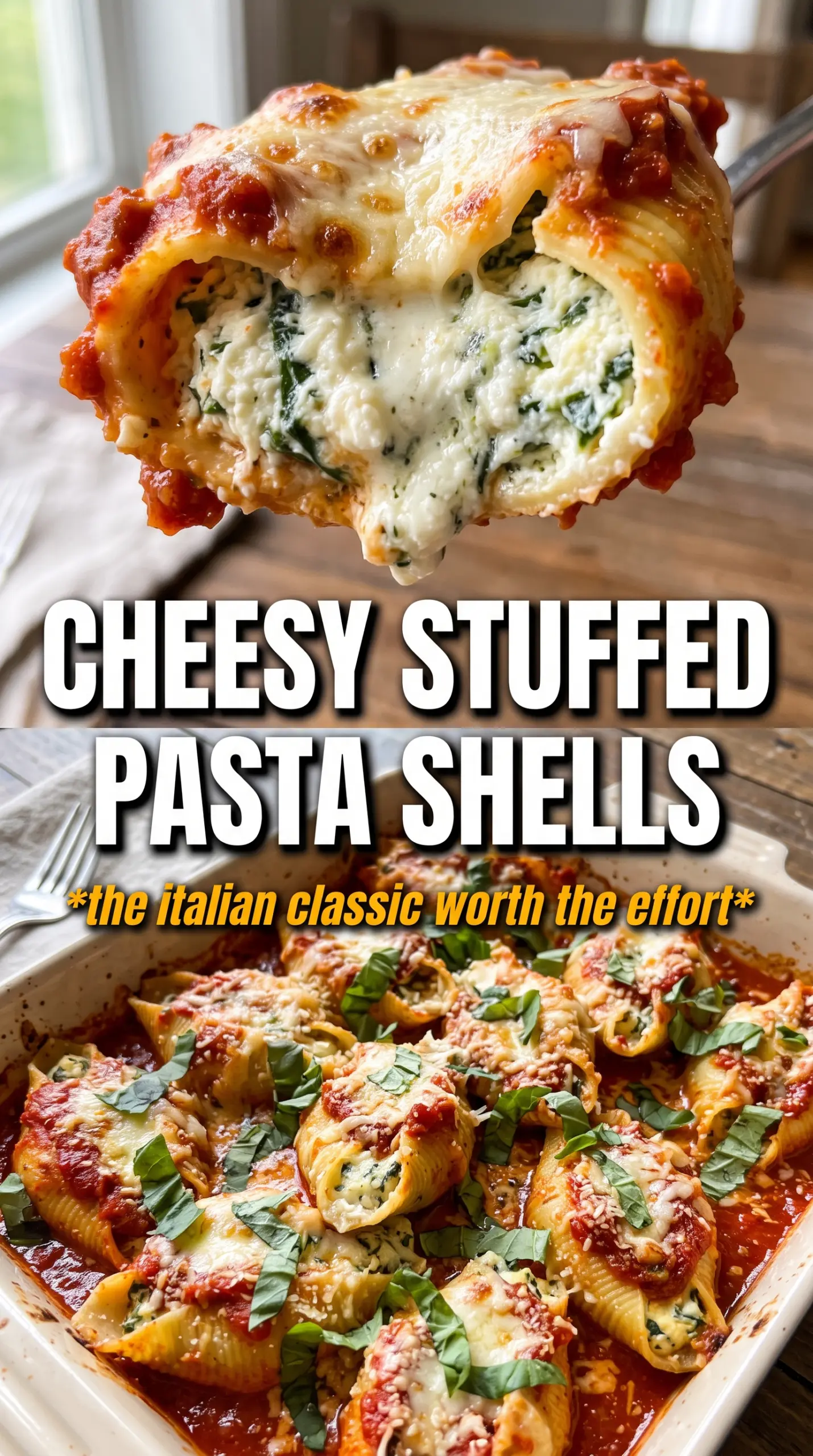
- Ricotta — This is the heart of the filling. Whole-milk ricotta gives the creamiest texture, but part-skim works if it’s what you’ve got. If it’s watery, drain it first or the filling won’t hold its shape.
- Spinach — Fresh baby spinach gives a clean, mild green flavor and keeps the filling from feeling heavy. Chop it finely so it disappears into the cheese. Frozen spinach works too, but it must be thawed and squeezed almost dry.
- Mozzarella — Half goes into the filling for stretch and the rest melts over the top. Buy pre-shredded if that’s easier, but block mozzarella melts a little better and gives you a smoother top.
- Parmesan — This adds saltiness and depth that ricotta alone doesn’t have. Freshly grated is worth it here because the flavor is sharper and the filling tastes fuller.
- Marinara — Use a sauce you actually like eating on its own. A bright, balanced marinara keeps the shells lively; a bland one will make the whole dish taste flat.
- Nutmeg — Just a little changes the whole filling. It doesn’t taste sweet; it gives the ricotta that warm, bakery-like background note people can never quite place.
Filling, Nesting, and Baking the Shells Without Breaking Them
Cook the Pasta Just to Tender
Boil the shells until they’re al dente, not soft. They need enough structure to hold the filling and enough flexibility to open without tearing. Drain them carefully and lay them out in a single layer so they don’t stick together while you make the filling.
Mix the Filling Until It Holds Together
Stir the ricotta, spinach, mozzarella, Parmesan, egg, garlic, seasoning, nutmeg, salt, and pepper until the mixture looks evenly speckled and thick. If it looks runny, it’ll slump out of the shells in the oven. The filling should mound on a spoon and stay put when you scoop it.
Stuff Generously, Then Stop Short of Overfilling
Spoon the filling into each shell with enough fullness that the top is rounded, but don’t force it so tight that the shell splits. A broken shell leaks filling into the sauce and loses that neat baked-pasta look. Arrange them seam-side up in the dish so the filling stays tucked in place.
Bake Covered First, Then Brown the Top
Cover the dish tightly with foil for the first part of baking so the shells heat through and the cheese melts without drying out. Pull the foil off at the end so the mozzarella can brown and the sauce can bubble around the edges. If the top isn’t taking on color, give it a minute or two longer, but don’t leave it so long that the sauce reduces too far.
Three Ways to Make These Stuffed Shells Fit Your Table
Use Frozen Spinach for a Faster Shortcut
Thawed frozen spinach works well here, but squeeze it dry in a clean kitchen towel until no more liquid comes out. It gives you a slightly denser filling than fresh spinach, but the flavor is still right and it saves chopping time.
Make It Gluten-Free Without Changing the Filling
Use gluten-free jumbo shells if your store carries them. They can be a little more fragile, so undercook them by a minute and handle them gently when filling. The ricotta mixture and baking method stay the same.
Add Sausage for a Heartier Bake
Brown crumbled Italian sausage first, then cool it slightly before mixing a small amount into the filling or layering it in the sauce. The dish becomes richer and saltier, so hold back a little on the Parmesan if the sausage is already heavily seasoned.
Storage and Reheating
- Refrigerator: Store covered for up to 4 days. The shells soften a bit as they sit, but the flavor holds up well.
- Freezer: Freeze baked or unbaked in a tightly wrapped dish for up to 2 months. For best texture, freeze before baking and add the mozzarella right before it goes into the oven.
- Reheating: Cover with foil and reheat at 350°F until hot in the center. Uncovered reheating dries out the pasta and tightens the ricotta too much, so keep the top protected until the last few minutes.