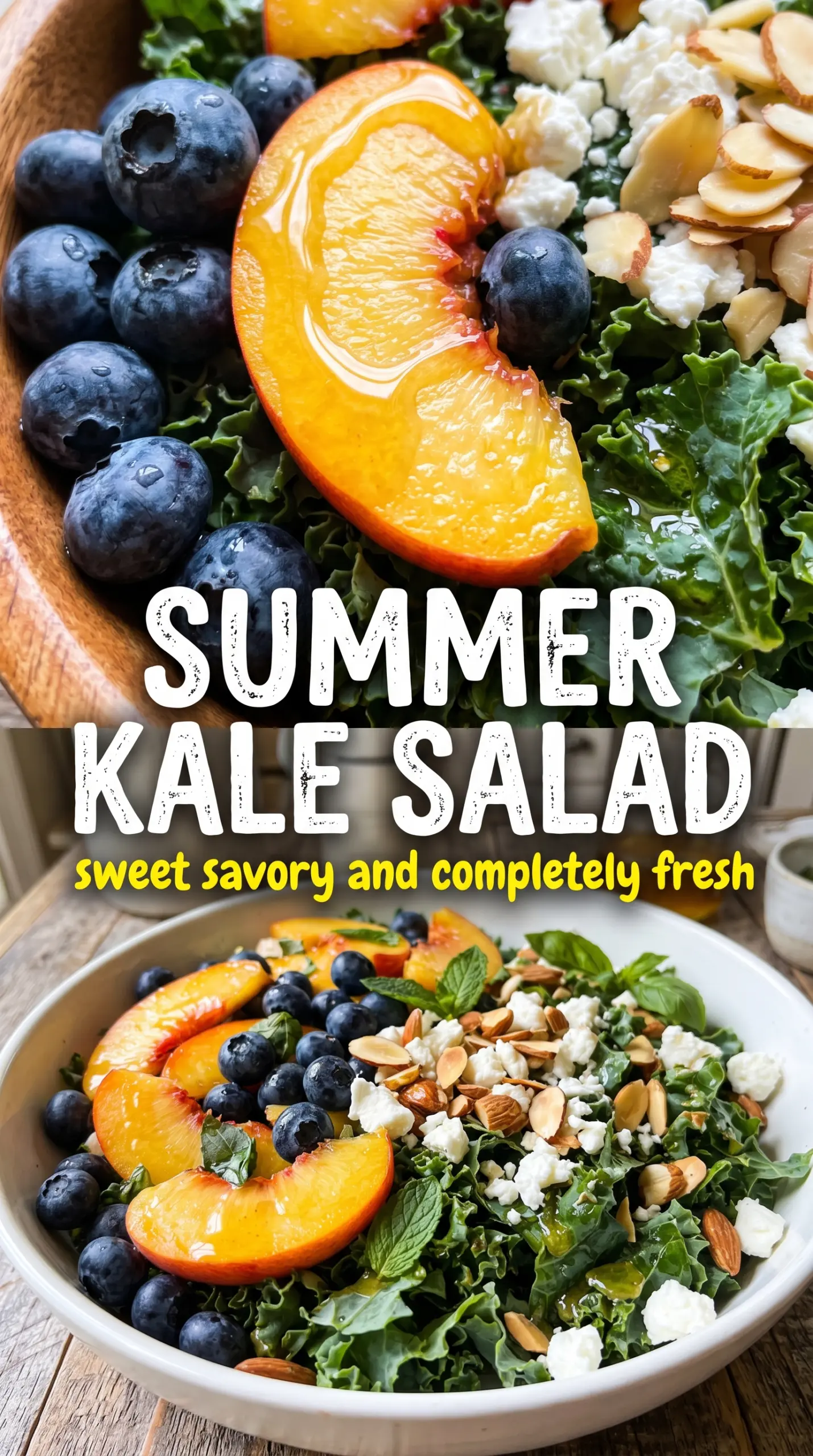
Massaged kale turns tender and glossy instead of tough and bitter, and that matters here because the fruit brings enough sweetness on its own. The peaches stay juicy, the blueberries burst against the leafy base, and the goat cheese gives each bite a cool, tangy finish. It’s the kind of salad that eats like a full lunch but still feels fresh enough to sit next to anything off the grill.
The part that makes this work is the massage. A few tablespoons of dressing rubbed into the kale before anything else changes the leaves from rigid to silky, and the ten-minute rest gives them time to settle down and absorb the lemon and honey. I also like using ripe but still intact peaches, because overripe slices disappear into the bowl instead of holding their shape.
Below, I’ve broken down what each ingredient is doing and why the order matters, plus a few easy ways to adapt this salad depending on what’s in your kitchen.
The kale got so tender after massaging it with the dressing, and the peaches stayed juicy instead of making the salad soggy. I brought the bowl to dinner and everyone asked what was in the dressing.
Save this peach blueberry kale salad for the days when you want a crisp, sweet-savory salad that holds up after tossing.
The Reason Massaged Kale Tastes Like a Different Salad
Kale is sturdy, which is exactly why it can go from rough and chewy to silky and mellow if you treat it right. The mistake most people make is tossing it with dressing at the very end and calling it done. That leaves you with leaves that still taste like leaves. Massage first, and the salt, acid, and fat start working on the fibers before the fruit and cheese go in.
The ten-minute rest matters too. It gives the dressing time to soften the kale without turning it limp, and it keeps the salad from tasting sharp or unfinished. If your kale still seems stubborn after a couple of minutes, keep going. You’re looking for darker leaves, a softer bend, and a slight shrink in volume.
- Kale — Curly or lacinato both work, but lacinato gives you softer ribbons and a cleaner bite. Strip out the stems and slice the leaves thinly so the massage reaches every piece.
- Peaches — Use ripe peaches that still hold their shape. If they’re too firm, the salad loses some sweetness; if they’re too soft, they collapse and muddy the bowl.
- Blueberries — Fresh berries matter here because frozen ones leak juice and stain the dressing. Their tart pop balances the honey and goat cheese.
- Candied pecans — These add crunch and a little caramel note that plain toasted nuts can’t match. If you only have raw pecans, toast them in a dry skillet until fragrant, then add a pinch of sugar and a pinch of salt.
- Goat cheese — This is the ingredient that gives the salad its creamy, tangy finish. Feta can step in, but it’s saltier and less soft, so the result will taste sharper.
- Honey-lemon dressing — The honey smooths out the lemon and helps the vinaigrette cling to every leaf. Dijon is what keeps it emulsified, so whisk until the dressing looks slightly thick and unified instead of streaky.
What Each Ingredient Is Actually Doing in This Salad
- Base greens (lettuce, kale, or spinach) — Choose fresh, tender greens. Wash and dry thoroughly.
- Vegetables (cut uniformly) — This ensures even bites. Variety prevents boring texture.
- Protein (if using) — Cook properly so it stays juicy. Warm or cold depending on salad style.
- Cheese (if using) — Crumble or grate into small pieces. Distributes flavor throughout.
- Dressing base (oil and acid) — Use quality oil. Acid brightens the entire salad.
- Seasonings and herbs (salt, pepper, spices) — Build flavor boldly. Taste and adjust before serving.
- Crunch element (nuts, seeds, or croutons) — Adds texture and prevents monotone mouth feel.
- Fresh garnish (herbs or edible flowers) — These add aroma and visual appeal. Add right before serving.
How to Build the Salad So the Kale Turns Tender, Not Limp
Whisking the Dressing Until It Stays Together
Start by whisking the olive oil, lemon juice, honey, Dijon, garlic, salt, and pepper until the dressing looks glossy and lightly thickened. If it looks broken or separated, keep whisking for another few seconds; the Dijon is doing the work of holding everything together. The garlic should disappear into the emulsion instead of floating in little bits, which keeps the flavor even across the bowl.
Massaging the Kale Ribbons
Put the sliced kale in a large bowl and use just a couple tablespoons of dressing first. Work it in with your hands for 2 to 3 minutes until the leaves darken, soften, and lose that dry, scratchy feel. If you skip this or rush it, the salad stays tough no matter how good the dressing is. Letting it rest for 10 minutes gives the acid time to finish the job.
Adding the Fruit and Crunch
Add the peaches, blueberries, red onion, and candied pecans after the kale has already softened. That order keeps the fruit intact and the nuts crisp. Toss gently, because aggressive mixing crushes the blueberries and smears goat cheese before it even hits the top.
Finishing With Goat Cheese
Scatter the goat cheese over the salad last so it stays in distinct crumbles instead of dissolving into the dressing. A few pieces will melt slightly into the warmest spots of the kale, which is part of the appeal, but you still want visible pockets of tang. Serve the salad right away so the fruit stays fresh and the pecans keep their crunch.
Three Smart Ways to Adapt This Salad
Make It Dairy-Free Without Losing the Creamy Finish
Leave out the goat cheese and add a little extra olive oil to the dressing, then finish with sliced avocado if you want that soft, rich contrast. The salad will taste cleaner and fruit-forward, with less tang and no creamy crumbles on top.
Swap the Pecans for a Different Crunch
Toasted almonds or walnuts work if that’s what you have, but they bring a deeper, less candy-like crunch than candied pecans. If you use plain nuts, add a pinch of maple sugar or a light drizzle of honey while they’re still warm from the pan.
Turn It Into a Fuller Meal
Add grilled chicken, salmon, or chickpeas and serve the salad over farro or quinoa if you want it to eat like lunch or dinner. The sweet fruit and lemon dressing work especially well with savory protein, and the grains soak up the extra vinaigrette.
Use What You Have When Peaches Aren’t in Season
Nectarines, strawberries, or thin slices of ripe pear can stand in for the peaches. Strawberries make the salad a little brighter and softer, while pears bring a firmer bite and a more muted sweetness.
Storage and Reheating
- Refrigerator: Store leftovers for up to 1 day. The kale will stay edible, but the peaches soften and the pecans lose some crunch.
- Freezer: Don’t freeze this salad. The fruit and dressed kale turn watery and the texture falls apart.
- Reheating: No reheating needed. If the salad has been chilled, let it sit at room temperature for 10 to 15 minutes and give it one gentle toss before serving.
Answers to the Questions Worth Asking
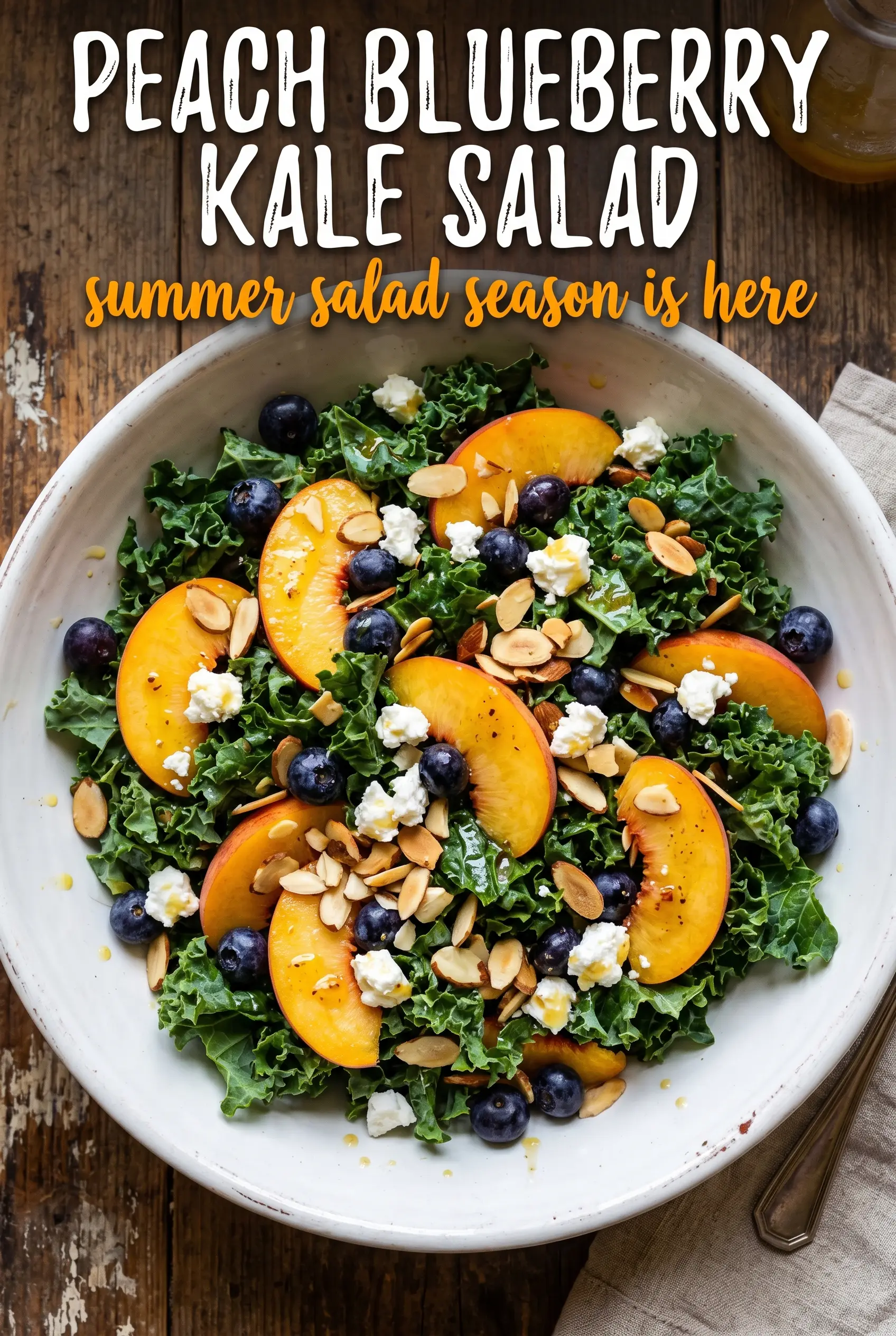
Summer Peach Blueberry Kale Salad
Ingredients
Method
- Whisk together olive oil, fresh lemon juice, honey, Dijon mustard, minced garlic, salt, and cracked black pepper until emulsified. Stop when the mixture looks glossy and well combined.
- Place sliced kale in a large bowl and drizzle 2 tablespoons of dressing over it. Start with a light coating so every ribbon gets contact.
- Massage the kale firmly with your hands for 2-3 minutes until leaves soften and darken. You should see the kale ribbons turn deeper green and lose some crispness.
- Let the massaged kale rest for 10 minutes. The texture should become more pliable while holding its ribbons.
- Add peach slices, fresh blueberries, thinly sliced red onion, and candied pecans to the massaged kale. Distribute evenly so fruit and crunch are visible throughout.
- Drizzle the remaining dressing over the salad and toss gently to coat. Toss just until the vinaigrette glistens on the leaves.
- Top with crumbled goat cheese. Scatter it generously so it looks speckled across the surface.
- Serve immediately. The massaged kale will wilt slightly for the best texture.