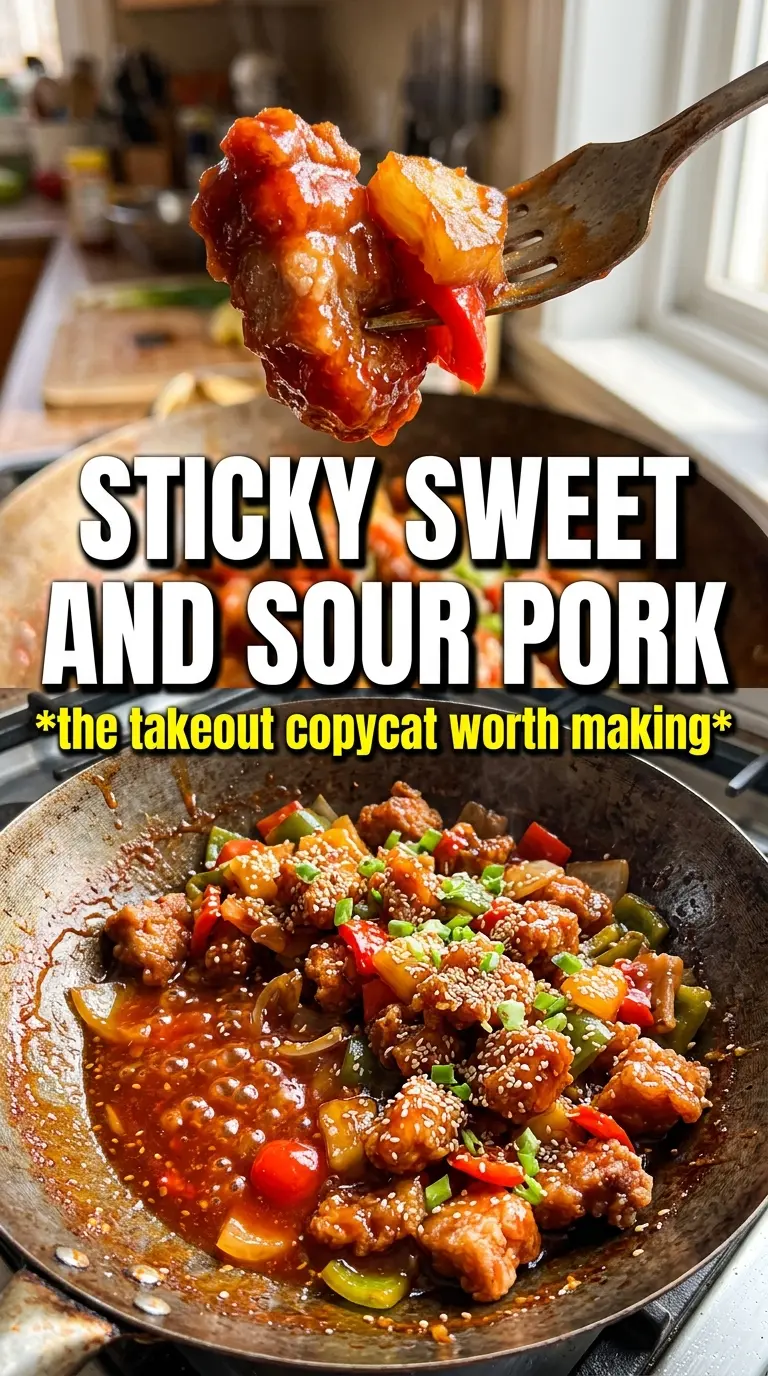
Crispy sweet and sour pork hits the table with the kind of contrast that keeps people going back for one more piece: crackly golden coating, tender pork inside, sharp-sweet sauce, and little bursts of pineapple and peppers in every bite. The trick is not just getting the pork crispy — it’s keeping enough of that crunch after the sauce goes on so the dish still tastes lively instead of soggy.
This version leans on a simple marinade of egg, soy sauce, and cornstarch to help the pork stay juicy and hold onto its coating. A cornstarch-flour dredge gives you a shell that fries up light and crisp, while the sauce thickens in the pan just long enough to cling without turning gluey. The ketchup, vinegar, sugar, and pineapple juice balance each other in a way that tastes familiar, bright, and exactly right over hot rice.
Below, I’ve included the part that matters most: how to fry the pork in batches so the oil stays hot, how to keep the sauce glossy instead of stiff, and the swaps that still work if you need to adjust the cut of pork or make the dish gluten-free.
The pork stayed crispy even after tossing it in the sauce, and the pineapple juice in the sauce gave it that restaurant-style sweet tang without making it too sugary.
Save this sweet and sour pork for the night you want crisp pork, glossy sauce, and takeout-style flavor at home.
The Part Where the Pork Stays Crispy After Saucing
The most common failure with sweet and sour pork is timing. If the pork sits in sauce too long, the coating softens fast and you end up with tender meat but no contrast. The fix is to fry the pork until it’s deeply golden, build the sauce in the pan until it’s thick enough to coat a spoon, and toss everything together right before serving.
Batch frying matters here. Crowding the pan drops the oil temperature, which gives you pale, greasy pieces instead of crisp ones. You want the pork to come out with a dry, craggy surface that sounds almost hollow when you tap it with tongs.
- Frying in batches keeps the oil hot enough to seal the coating quickly.
- Cornstarch in the marinade helps the surface of the pork turn crisp instead of bready.
- Thickened sauce should coat the back of a spoon before the pork goes in.
- Final toss should take less than a minute so the crust keeps some structure.
What Each Ingredient Is Actually Doing in This Dish
- Pork shoulder or loin both work, but shoulder gives you a little more forgiveness because it stays juicy even after frying. Loin is leaner and cooks a touch faster, so watch it closely.
- Egg, soy sauce, and cornstarch create a quick marinade that helps the coating stick and seasons the meat from the inside. Skip the egg and the crust won’t cling as well.
- Cornstarch and flour give you the best of both worlds: crispness from the starch and enough body from the flour to hold up to the sauce. All cornstarch makes the shell lighter but more fragile.
- Ketchup, vinegar, sugar, soy sauce, and pineapple juice build that classic sweet-sour balance. Pineapple juice matters because it softens the edge of the vinegar and ties the sauce to the fruit in the pan.
- Bell peppers and pineapple need just enough heat to warm through and pick up a little color. Overcooking them turns the peppers limp and the pineapple mushy.
Building the Sauce and Tossing Everything at the Right Moment
Marinating the Pork
Stir the pork with the egg, soy sauce, and cornstarch until every piece looks lightly coated and a little tacky. That short 15-minute rest is enough to help the coating grab, and it keeps the outside from frying off in loose bits. If the marinade looks too wet, add just a pinch more cornstarch; it should cling, not pool.
Coating for a Crisp Shell
Mix the flour and cornstarch, then toss the pork until each cube is evenly dusted. Pressing the coating on lightly helps create those rough edges that fry up extra crisp. If you see bare spots, those are the places that will brown unevenly, so turn the pork until every side looks covered.
Frying Until Deeply Golden
Heat the oil to 350°F and fry in small batches. The pork should sizzle steadily when it goes in, then turn pale gold before deepening to a richer color in about 4 to 5 minutes. If the oil smokes or the coating browns too fast, the heat is too high; if the pieces look greasy, the oil isn’t hot enough.
Thickening the Sauce and Finishing Fast
Stir-fry the peppers and pineapple for 2 minutes so they stay bright and just tender. Whisk the sauce before it goes in, then boil it until it turns glossy and thick enough to leave a trail when you drag a spoon through it. Add the pork last and toss quickly, just until every piece is coated. The second the crust disappears under sauce, it starts softening, so get it to the table right away.
How to Adapt This for Different Pans, Tastes, and Diets
Gluten-Free Sweet and Sour Pork
Use a gluten-free flour blend in place of the regular flour and swap in tamari for the soy sauce. The texture stays crisp, but the coating may brown a little faster, so watch the oil closely and fry by color, not just by time.
Less-Sweet Sauce
Drop the sugar to 2 tablespoons if you like a sharper sauce. You’ll lose a little of that classic takeout-style gloss, but the vinegar and pineapple will stand out more and keep the dish from tasting candy-sweet.
Using Pork Loin Instead of Shoulder
Pork loin cooks a little leaner and faster, so it’s the better choice if you want a cleaner bite. The tradeoff is that it dries out more easily, which means you need to keep the pieces moving in the fryer and pull them as soon as they’re golden.
Make It Ahead Without Losing the Crunch
Fry the pork and cook the sauce separately, then store them apart. Reheat the pork in a hot oven or air fryer until it firms back up, warm the sauce on the stove, and toss them together right before serving. If you combine them too early, the crust softens and never really comes back.
Storage and Reheating
- Refrigerator: Store leftovers for up to 3 days. The pork will soften once sauced, but the flavor stays good.
- Freezer: Freeze the fried pork and sauce separately for up to 2 months. Thaw in the refrigerator before reheating for the best texture.
- Reheating: Reheat the pork on a sheet pan at 400°F or in an air fryer until crisp again, then warm the sauce in a skillet and combine just before serving. Microwaving the whole dish turns the coating soggy fast.
Answers to the Questions Worth Asking

Sweet and Sour Pork
Ingredients
Equipment
Method
- Marinate the pork cubes in egg, soy sauce, and cornstarch for 15 minutes.
- Mix cornstarch and flour in a bowl, then coat the marinated pork pieces thoroughly.
- Deep-fry the coated pork at 350°F in batches for 4–5 minutes until golden and cooked through.
- Drain the fried pork on paper towels until the surface looks crisp and dry.
- Whisk ketchup, rice vinegar, sugar, soy sauce, cornstarch, and pineapple juice together until smooth.
- Stir-fry red bell pepper and green bell pepper with pineapple chunks in 1 tablespoon oil over high heat for 2 minutes, until bright and slightly tender.
- Pour in the sweet and sour sauce, bring it to a boil until thickened, then add the crispy pork and toss to coat until glossy.
- Serve the sweet and sour pork over rice while the coating looks vibrant and the pork stays crisp.