Golden herb crust on the outside, juicy slices all the way through, and pan juices that taste like they came from a much fancier dinner table — that’s what a good pork roast should give you. The biggest difference in this version is that it stays moist without turning bland. The garlic-herb paste clings to the meat, the sear builds a savory crust, and the broth in the pan keeps the drippings from drying out while the roast finishes in the oven.
Pork loin gets dry when it’s cooked past the point where the center is still tender. That’s why the thermometer matters more than the clock here. Pulling it at 145°F and letting it rest gives you a roast that slices cleanly but still keeps its juices. The herb paste also does more than season the surface — the olive oil helps it spread evenly, and the paprika adds color and a little warmth without overpowering the pork.
Below, I’ll walk through the part that makes the whole roast work, plus a few practical ways to adjust it if you want to change the herbs, swap the pan juices, or plan ahead for dinner.
The herb crust browned beautifully and the roast stayed juicy all the way through. I loved that the pan juices were enough to spoon over the slices without making a separate gravy.
Tender Juicy Pork Roast with that golden herb crust belongs on your Pinterest dinner board for the nights when you want a dependable main dish that slices beautifully.
The Sear Is What Gives This Pork Roast Its Flavor, Not the Oven
A lot of pork roasts come out pale and flat because they go straight into the oven without a proper sear. That misses the one step that gives you the best part of the crust. When the roast hits a hot pan, the surface browns fast and the drippings start to develop deep savory flavor before the meat ever goes in the oven.
The other mistake is crowding the pan or rushing the sear. If the roast is damp, it steams instead of browns. Patting it dry and giving each side a full 2–3 minutes lets the herb paste turn into a real crust rather than a wet coating.
- Dry surface: Moisture is the enemy of browning, so the paper towel step matters.
- Hot pan: You want enough heat to color the roast quickly without burning the garlic.
- Broth in the pan: It protects the drippings from scorching and gives you juices to spoon over the sliced meat.
What Each Ingredient Is Actually Doing in This Pork Roast
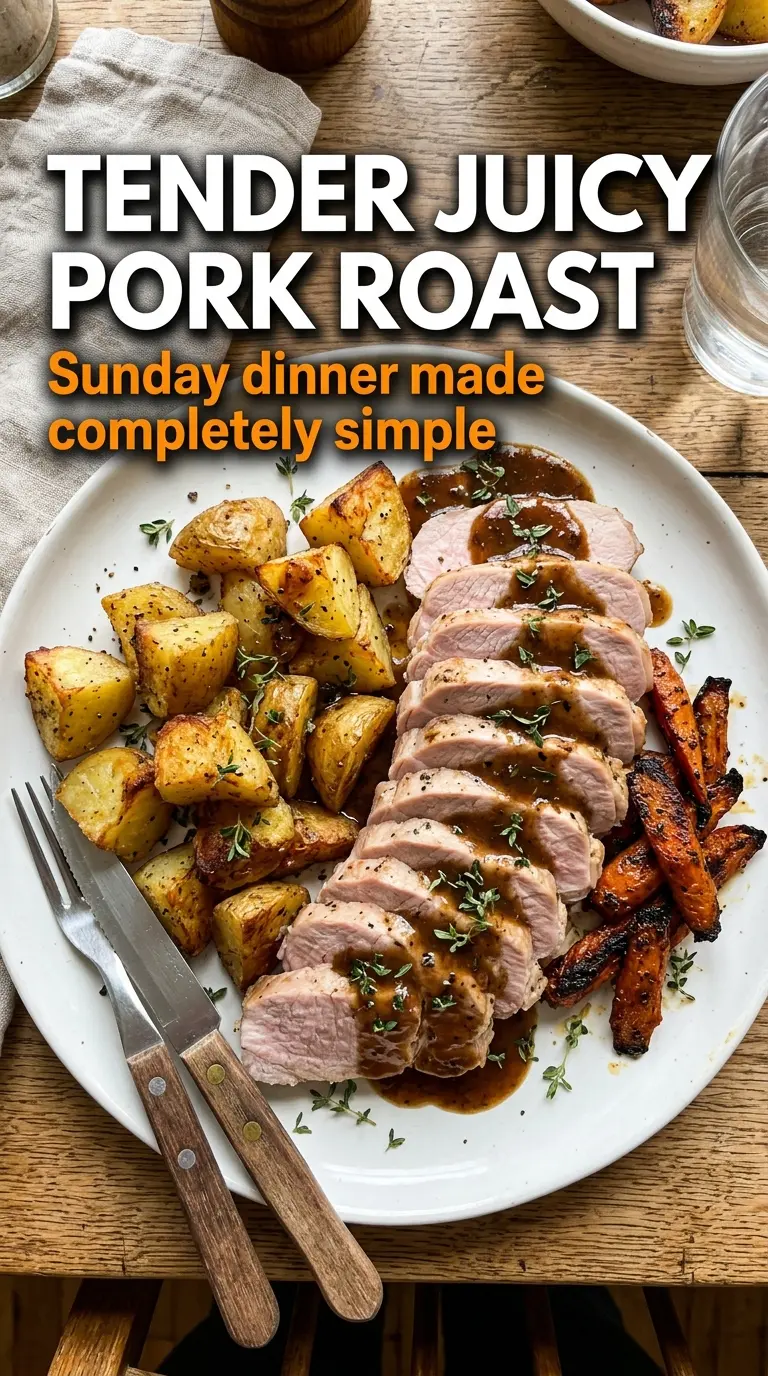
- Boneless pork loin roast: This is a lean cut, which is why the temperature and rest matter so much. It slices neatly and gives you tender meat when you stop cooking at 145°F.
- Olive oil: It helps the herb mixture spread into a paste and gives the surface enough fat to brown well. You can use another neutral oil in a pinch, but olive oil brings better flavor.
- Garlic, rosemary, and thyme: These are the backbone of the roast. Fresh herbs work too, but dried herbs hold up well to high heat and cling to the meat without burning as fast.
- Smoked paprika and onion powder: Paprika adds color and a hint of smoky depth, while onion powder rounds out the savory base. Neither one should dominate; they just help the roast taste seasoned all the way through.
- Chicken broth: This keeps the pan moist and captures the browned bits after searing. Water won’t give you the same flavor in the juices, so broth is worth using here.
The 20 Minutes That Set Up the Whole Roast
Building the Herb Paste
Stir the olive oil, garlic, rosemary, thyme, paprika, onion powder, salt, and black pepper into a thick paste. It should look more like a spread than a loose marinade. If it’s too runny, it slides off the roast and ends up in the pan instead of on the meat. The garlic should be finely minced so it cooks with the crust rather than leaving sharp, raw bites.
Searing for a Deep Brown Crust
Pat the pork completely dry, then rub the paste over every surface. Set the roast in a hot oven-safe skillet and leave it alone long enough to brown before turning it. You’re looking for a crust that releases easily from the pan and turns deep golden, not a pale surface that sticks. If the garlic starts to darken too fast, lower the heat a little — burnt garlic will give the whole roast a bitter edge.
Roasting to 145°F
Pour the broth into the pan, then move the skillet to the oven. Roast until the center reaches 145°F on an instant-read thermometer, which usually takes 60–75 minutes for a 3–4 pound roast. Don’t rely on color alone; pork can look done before it actually is. Pulling it at the right temperature is what keeps the slices juicy instead of chalky.
Resting Before the First Slice
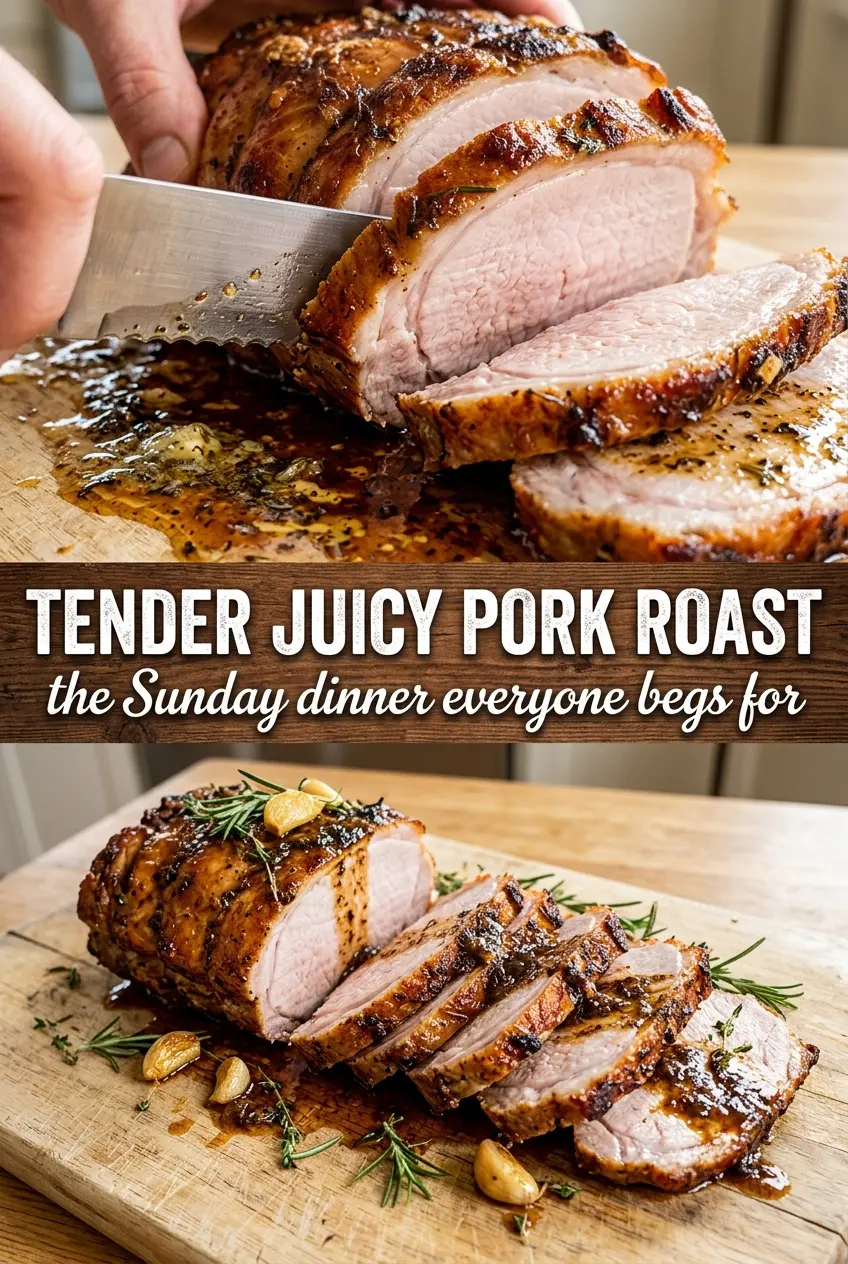
Let the roast sit for 15 minutes before carving. This gives the juices time to settle back into the meat instead of running out onto the cutting board. If you slice too soon, even a perfectly cooked roast can seem dry. Spoon the pan juices over the top right before serving for the best texture and flavor.
Three Smart Ways to Adapt This Roast
Swap the Herb Mix for a Different Flavor Profile
Rosemary and thyme give you a classic roast-pork flavor, but you can lean Italian with sage and oregano or go more savory with parsley, garlic, and a little extra black pepper. Keep the oil and garlic base the same so the coating still sticks and browns well.
Make It Gluten-Free Without Changing the Method
This roast is naturally gluten-free as written as long as your chicken broth is certified gluten-free. The cooking method stays exactly the same, and the pan juices still work as the finish.
Use a Bone-In Roast When That’s What You Have
A bone-in pork roast usually needs a little more time than a boneless one, so start checking the temperature early and let the thermometer decide when it’s done. The bone can add flavor, but the real change is the timing, not the seasoning.
Storage and Reheating
- Refrigerator: Store sliced pork and pan juices in an airtight container for up to 4 days. The meat stays best when it’s sliced after cooling a bit instead of left in one large piece.
- Freezer: It freezes well for up to 2 months. Wrap portions tightly and freeze with a little of the juices so the slices don’t dry out when thawed.
- Reheating: Warm slices gently in a covered skillet with a splash of broth or in a low oven until just heated through. High heat is the mistake that turns leftover pork dry and stringy.
Answers to the Questions Worth Asking
Tender Juicy Pork Roast
Ingredients
Equipment
Method
- Preheat the oven to 375°F.
- Mix olive oil, garlic, rosemary, thyme, paprika, onion powder, salt, and pepper into a paste.
- Pat the pork roast dry and rub the herb paste all over every surface.
- Heat an oven-safe skillet or roasting pan over medium-high heat and sear the roast on all sides until golden, about 2–3 minutes per side.
- Pour the chicken broth into the pan and transfer to the oven.
- Roast for 60–75 minutes, until the internal temperature reaches 145°F.
- Rest the roast 15 minutes before slicing, then spoon the pan juices over the top.