Seared chicken breasts under a blanket of caramelized onions, buttery mushrooms, and melted Monterey jack cheese hit the plate with the kind of diner-style comfort that makes people stop talking for a second. The chicken stays juicy because it gets a hard sear first, then finishes under the broiler just long enough for the cheese to melt into the onion-mushroom layer without drying anything out.
What makes this version work is the order of the steps. The pan gets built from the chicken drippings, so the onions and mushrooms pick up that savory browned flavor instead of tasting like they were cooked in a separate skillet. Pounding the chicken thin helps it cook evenly and keeps the broiler time short, which matters when you’re covering the top with cheese.
Below, I’ve laid out the timing that keeps the cheese from sliding off, the ingredient choices that matter most, and a few easy swaps if you want to stretch the recipe or adjust it for what’s in the fridge.
The onions and mushrooms turned sweet and jammy, and the jack cheese melted into that savory broth instead of getting greasy. I followed the broiler time exactly and the chicken stayed juicy all the way through.
Save this Texas Roadhouse smothered chicken for the nights when you want a cheesy skillet dinner with caramelized onions and mushrooms.
The Broiler Finish That Keeps the Cheese Melted, Not Broken
The biggest mistake with smothered chicken is treating the cheese like a garnish instead of the finish. If the chicken goes under the broiler too long, the jack turns oily and the onions start to dry out. If it goes under too briefly, the cheese sits there in a soft heap and never fuses with the savory pan juices underneath.
The fix is to keep the skillet hot when the chicken goes back in, then broil just until the cheese is fully melted and bubbling at the edges. You’re looking for the top layer to soften and sink into the mushrooms a little. That’s the moment when the dish looks rich instead of scattered.
- Thin chicken breasts cook fast and stay tender. Pounding them even matters more than the exact thickness; uneven pieces overcook at the edges before the center is done.
- Monterey jack melts smoothly and blankets the chicken without turning stringy or greasy. Pre-shredded works, but freshly shredded cheese melts more evenly.
- Chicken broth gives you just enough liquid to loosen the browned bits in the pan. Water will technically work, but it won’t give the same savory depth.
- Butter and olive oil together let the chicken sear without burning the butter, then help the mushrooms and onions brown instead of steam.
What Each Ingredient Is Actually Doing in This Dish
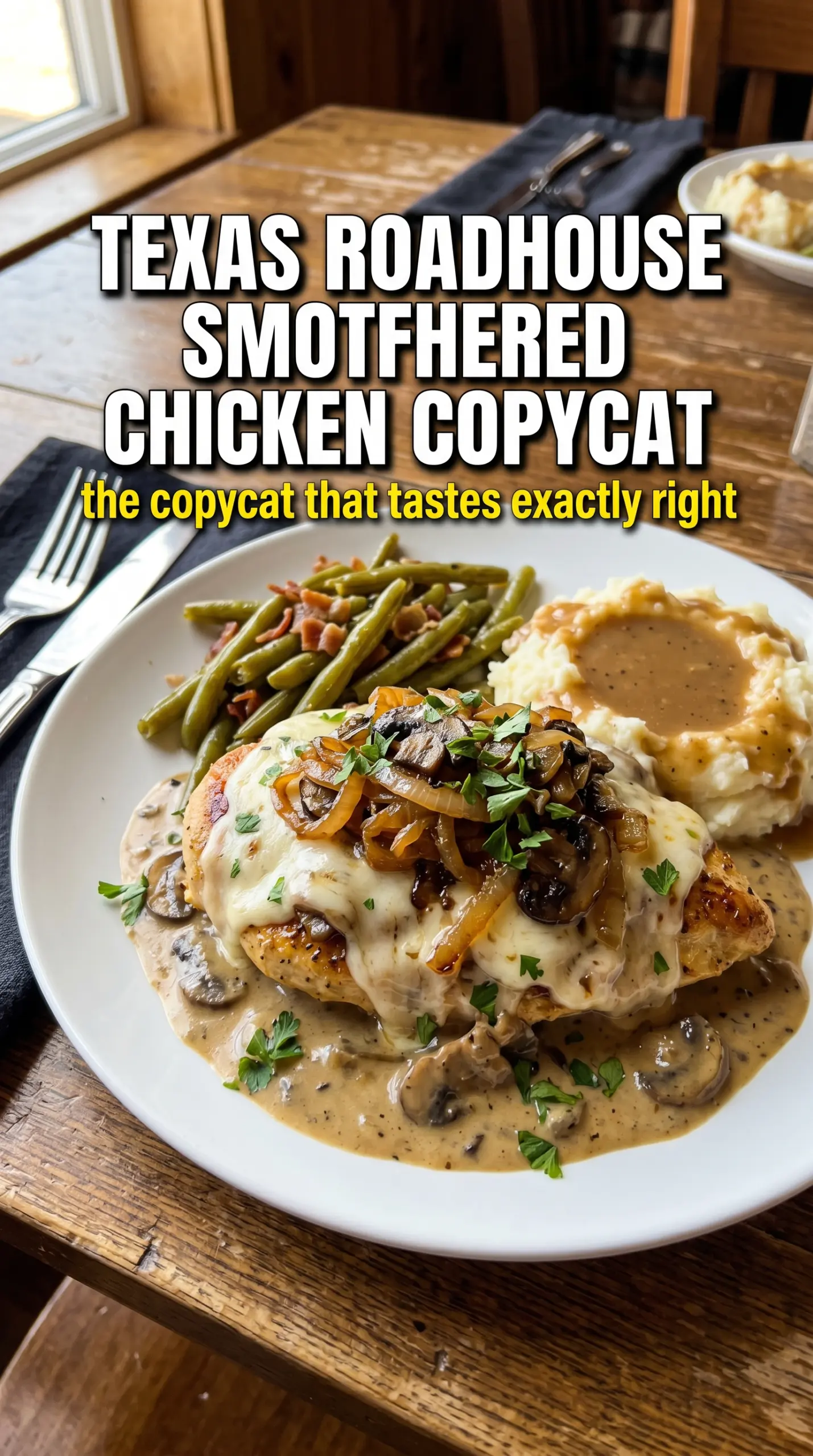
- Chicken breasts are the base, so they need to be pounded thin enough to cook through before the cheese overbrowns. If you skip that step, the top finishes too fast and the center lags behind.
- Mushrooms add the earthy, meaty layer that makes this taste like a restaurant skillet. Cremini have a little more depth than white buttons, but either one works.
- Onion is what gives the sauce its sweet, jammy backbone once it’s cooked down in the chicken drippings. Slice it thin so it softens at the same pace as the mushrooms.
- Monterey jack cheese melts cleanly and gives the signature creamy cap. Mozzarella will melt, but it tastes blander; pepper jack adds heat if you want a sharper finish.
- Garlic powder and onion powder season the chicken evenly without needing a separate marinade. Fresh garlic can burn during the sear, so the powders are the safer choice here.
Building the Skillet So the Toppings Taste Like the Chicken
Season and Sear the Chicken
Pat the chicken dry, then coat both sides with the garlic powder, onion powder, salt, and pepper. The dry surface is what gives you that golden crust instead of pale, steamed chicken. Sear in hot oil until the first side releases easily and has a deep golden color, then flip and finish the second side. If the pan isn’t hot enough, the chicken will cling to the skillet and you’ll lose the crust before it sets.
Cook Down the Onions and Mushrooms
Use the same skillet, because the brown bits left behind are the whole point. Add the butter, then the onions and mushrooms, and cook until the onions soften and the mushrooms shrink and pick up color around the edges. If they start to look watery, keep going; the moisture has to cook off before the vegetables can caramelize. This is where the dish gets its rich, savory base.
Deglaze and Return the Chicken
Pour in the broth and scrape the bottom of the pan until the browned bits dissolve into the liquid. That’s what keeps the finished dish from tasting flat. Nestle the chicken back into the skillet and spoon some of the mushrooms and onions over the top so every piece gets coated. If the pan looks dry before the chicken goes back in, add a splash more broth rather than letting the vegetables stick.
Melt the Cheese Under the Broiler
Pile the jack cheese generously over each breast, then slide the skillet under the broiler just until the cheese melts and bubbles. Stay close; this goes from perfect to scorched fast. You want the edges to turn glossy and the center to slump over the mushrooms, not brown hard on top. Finish with parsley right away so the herbs stay bright against the hot cheese.
Three Good Ways to Put Your Own Spin on Smothered Chicken
Make it gluten-free without changing the method
This recipe is naturally gluten-free as written, so the only thing to watch is the broth. Check that it’s certified gluten-free if you’re cooking for someone sensitive. The texture and browning stay exactly the same because the sauce doesn’t rely on flour.
Swap in pepper jack for a little heat
Pepper jack gives you a sharper finish and a mild kick without changing the texture of the melted topping. It works best if you like a little heat but still want the cheese to blanket the chicken smoothly. If you use it, keep the pepper light on the chicken so the dish doesn’t get too aggressive.
Use chicken thighs for a richer version
Boneless thighs bring more fat and a deeper chicken flavor, and they stay tender even if they sit a minute before serving. They take a little longer to cook than pounded breasts, so give them an extra minute or two per side before the broiler. The finished dish feels a little more rustic and a little less lean.
Storage and Reheating
- Refrigerator: Store leftovers in an airtight container for up to 3 days. The cheese firms up a bit, but the flavors hold well.
- Freezer: It freezes, but the cheese topping can turn grainy after thawing. If you want to freeze it, wrap portions tightly and thaw overnight in the fridge before reheating.
- Reheating: Reheat covered in a 325°F oven until hot, then uncover for the last few minutes so the cheese loosens again. The common mistake is blasting it in the microwave, which can make the chicken rubbery and the cheese oily.
Answers to the Questions Worth Asking

Texas Roadhouse Smothered Chicken Copycat
Ingredients
Equipment
Method
- Season the chicken breasts with garlic powder, onion powder, salt, and black pepper. Pat to adhere so spices form an even layer.
- Heat olive oil in an oven-safe cast iron skillet over medium-high heat and sear the chicken for 5–6 minutes per side until golden. Set the chicken aside.
- Melt butter in the same skillet, then add onions and mushrooms and cook over medium heat for 8–10 minutes until caramelized. Keep stirring so they brown evenly.
- Add chicken broth and stir to deglaze, scraping up the browned bits from the pan. Stop when the liquid looks glossy and unified.
- Nestle the chicken back into the skillet on top of the mushroom-onion mixture. Press lightly so the chicken contacts the topping.
- Pile Monterey jack cheese generously on top of each chicken breast. Cover the surface so it melts into a thick blanket.
- Place the skillet under the broiler for 3–4 minutes until the cheese is melted and bubbly, then garnish with parsley. Look for golden blistering at the edges and serve immediately.