Watermelon sangria lands where a good party drink should: cold, crisp, and just sweet enough to keep people coming back for one more glass. The watermelon gives it a fresh, clean fruitiness instead of that candy-sweet sangria vibe, and the rosé keeps the whole pitcher light and bright. It pours a gorgeous blush color, but the real win is the balance — juicy fruit, citrus, and a little sparkle at the end.
The trick here is starting with blended watermelon juice instead of relying only on chunks. That gives the wine a fuller watermelon flavor without making the pitcher muddy or overly diluted. A dry rosé or white wine keeps the drink from tasting syrupy, while a small amount of honey rounds off the sharp edges from the lime and lemon. The sparkling water goes in right before serving so the sangria stays lively instead of flat.
Below, I’ll walk through the part that matters most: how to keep the fruit crisp, the wine balanced, and the final pour cold enough to taste like it came straight from the fridge, not from a bucket of melted ice.
I loved that the watermelon flavor came through without turning the sangria thick or pulpy. Chilling it for two hours made a huge difference, and the mint at the end kept it tasting fresh all night.
Save this watermelon sangria for the next pitcher you want to make ahead, chill until the fruit is infused, and finish with a bright sparkle.
The Part That Keeps Watermelon Sangria Bright, Not Watery
The biggest mistake with fruit sangria is dumping everything together and serving it right away. The wine needs time to pick up the watermelon flavor, and the fruit needs time to soften just a little without collapsing into mush. That’s why this version uses both strained watermelon juice and whole cubes. You get flavor in the liquid and texture in the glass.
Dry wine matters here. A sweet bottle can make the whole pitcher taste flat once the watermelon and triple sec go in. Rosé gives a softer, fruitier finish, while a dry white wine leans a little crisper and cleaner. Either way, keep the sparkling water out of the pitcher until the last minute. If it goes in early, you lose the lift that makes the drink feel fresh.
What Each Ingredient Is Doing in the Pitcher
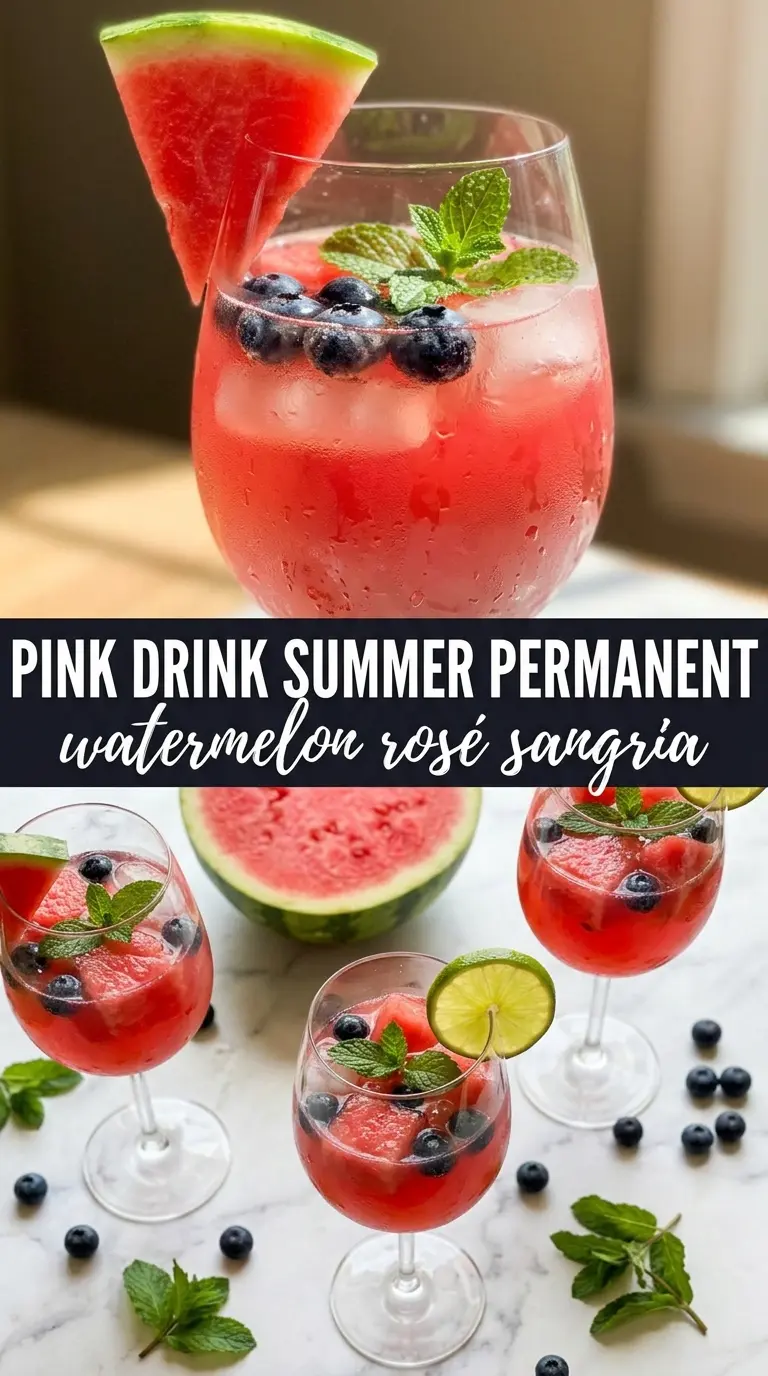
- Fresh watermelon — This is where the flavor starts. Blending part of it into juice gives you a stronger watermelon base than chunks alone, and the remaining cubes keep every glass a little more interesting. Seedless watermelon is easiest here because you won’t fight with straining or picking out seeds.
- Dry rosé or white wine — Use a wine you’d actually drink. Since this isn’t cooked, every edge stays in the glass, so a cheap bottle with harsh acidity or obvious sweetness will show. Rosé makes the sangria rounder and prettier; white wine makes it a touch sharper.
- Vodka and triple sec — Vodka adds a clean boost without changing the flavor much, while triple sec brings in a little orange depth that plays well with the citrus slices. Watermelon vodka works if you want a stronger melon note, but plain vodka keeps the drink more balanced.
- Honey or simple syrup — The amount here is small on purpose. Watermelon can taste broad and soft, but not always sweet enough once you chill it and add citrus. Start with the listed amount, then taste after chilling if your melon was pale or under-ripe.
- Lime and lemon — These keep the sangria from tasting one-note. The lime gives it bite, and the lemon adds a cleaner citrus edge. Slice them thin so they perfume the pitcher without overpowering the fruit.
- Sparkling water — This is the finishing move, not a base ingredient. It lightens the drink and wakes everything up right before serving. Club soda is a good choice if you want a cleaner finish; sparkling water gives a softer bubble.
Chilling the Base So the Flavor Actually Develops
Blend the watermelon for juice first
Blend half of the cubed watermelon until smooth, then strain it through a fine mesh sieve. You want about one cup of juice, and the straining step matters because it removes the gritty pulp that can make the sangria feel heavy. If the watermelon is extra juicy, press gently with a spoon, but don’t force the pulp through the sieve or the pitcher will cloud up.
Build the pitcher before the bubbles go in
Stir the watermelon juice, wine, vodka, triple sec, and honey together in a large pitcher until the honey disappears. Add the remaining watermelon cubes, lemon slices, and lime slices, then chill the pitcher for at least two hours. That resting time mellows the alcohol and lets the fruit flavor spread through the whole drink instead of sitting on top.
Finish with carbonation at the last second
Right before serving, pour in the sparkling water and stir once or twice with a light hand. Too much stirring knocks out the fizz, and too early means the drink goes flat before it reaches the table. Serve over ice with mint sprigs on top so the first sip stays cold and the herbs lift the fruit instead of muddying it.
Three Ways to Adjust the Pitcher Without Losing the Balance
Make it lighter and lower alcohol
Cut the vodka back to 1/4 cup and use extra sparkling water at the end. The sangria will taste fresher and less boozy, but it will also be a little softer and less punchy, so serve it well chilled. This version is a good fit for long afternoons when you want something more sippable than strong.
Use white wine for a sharper finish
Swap the rosé for a dry sauvignon blanc, pinot grigio, or other crisp white wine. You’ll lose some of the berry-like softness from rosé, but the drink will taste brighter and cleaner, which works especially well if your watermelon is very sweet.
Make it non-alcoholic
Replace the wine with chilled white grape juice or a nonalcoholic dry white wine, then skip the vodka and triple sec. Add a little extra lime juice and keep the sparkling water so the mocktail stays bright instead of tasting like juice. This version needs the same chill time so the watermelon flavor has time to settle into the base.
Storage and Reheating
- Refrigerator: Keep the sangria base, without sparkling water, covered in the fridge for up to 24 hours. The fruit will soften more over time, and the watermelon flavor gets deeper, but it can start to lose its fresh edge after a day.
- Freezer: I don’t recommend freezing this. The wine and citrus won’t thaw with the same texture, and the fruit turns mushy.
- Reheating: No reheating needed. If it has been sitting in the fridge, add fresh ice, top with sparkling water, and give it one gentle stir. Don’t shake it or the carbonation disappears.
Questions I Get Asked About This Recipe
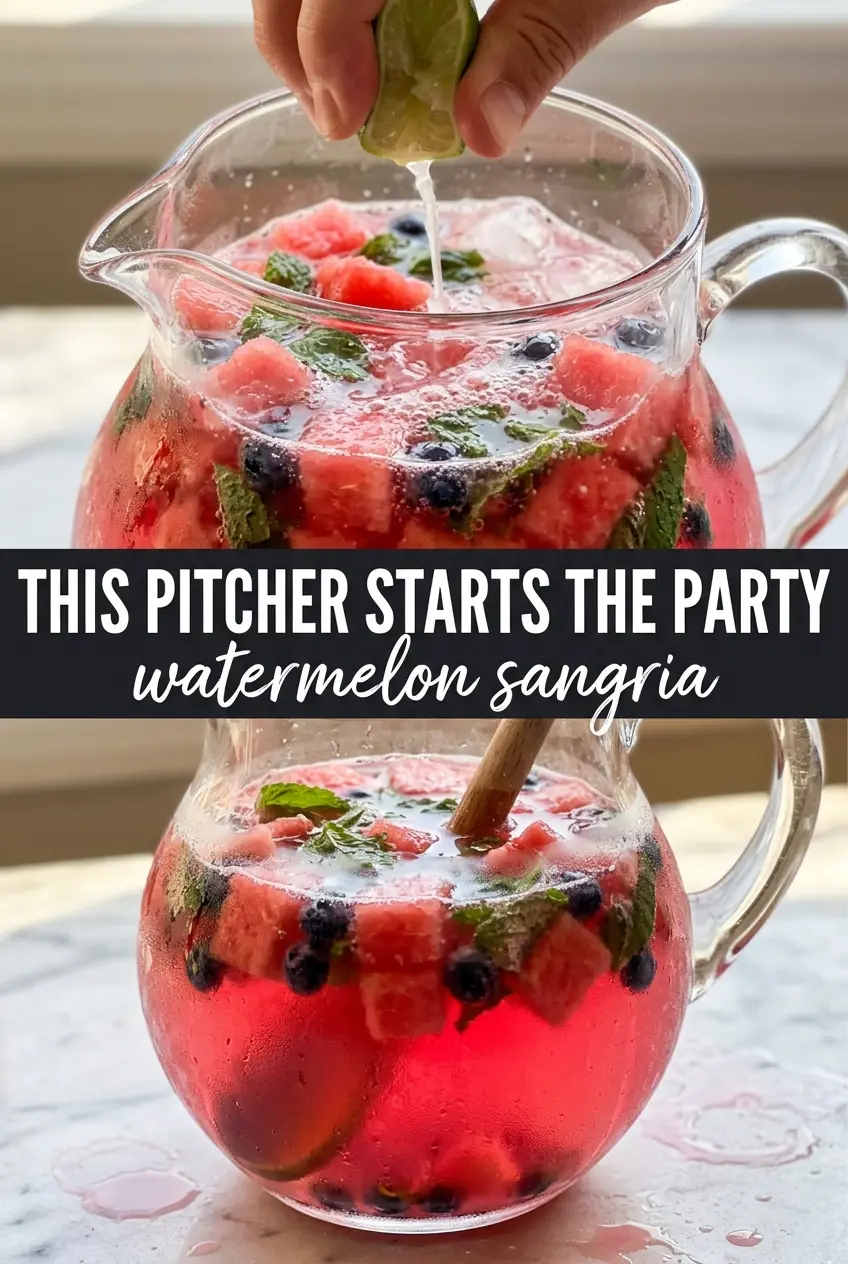
Watermelon Sangria
Ingredients
Equipment
Method
- Blend 2 cups of cubed and seeded watermelon until smooth, then strain through a fine mesh sieve to get 1 cup of fresh watermelon juice. Stop when the juice is smooth and the pulp is left behind.
- Combine the watermelon juice, dry rosé or white wine, watermelon vodka (or plain vodka), triple sec, and honey (or simple syrup) in a large pitcher and stir to combine. Mix until the honey/syrup dissolves and the base looks evenly tinted.
- Add the remaining watermelon cubes, thinly sliced lime, and thinly sliced lemon to the pitcher. Stir gently so the citrus slices float throughout the pink base.
- Cover and refrigerate for at least 2 hours to chill and allow flavors to meld. Chill until very cold before serving.
- Right before serving, add sparkling water or club soda to the pitcher and stir gently. Pour into ice-filled glasses and garnish each with fresh mint sprigs.