Golden-edged white chicken enchiladas are the kind of casserole that disappears fast because every bite hits the right balance of creamy sauce, tender shredded chicken, and melted Monterey jack. The tortillas soften just enough in the oven to turn plush without falling apart, and the green chiles keep the whole dish from tasting heavy.
What makes this version work is the sauce. The butter and flour build a quick roux, then the broth goes in slowly so it thickens without lumps. Sour cream gets stirred in off the heat, which keeps the sauce smooth instead of grainy or split. That little bit of restraint is what turns a basic enchilada bake into something worth repeating.
Below, I walk through the one step that keeps the sauce silky, the ingredient choices that matter most, and a few practical swaps if you need to work with what’s already in the kitchen.
The sauce thickened up exactly right and stayed creamy after baking. I used rotisserie chicken and the enchiladas still tasted like I spent all afternoon on them.
Creamy white chicken enchiladas with a silky sour cream sauce are worth pinning for an easy Tex-Mex casserole night.
The Sauce Fails When It Goes on Too Hot
Most white enchilada bakes go wrong in one of two places: the sauce turns lumpy, or it breaks after the sour cream goes in. The fix is simple, but it matters. Cook the flour and butter long enough to lose the raw taste, whisk in the broth gradually, then pull the pan off the heat before adding the sour cream. High heat after dairy goes in is what makes a smooth sauce turn grainy.
The other thing that gets overlooked is how the sauce should look before it hits the pan. It should coat a spoon and feel a little looser than a finished gravy, because it keeps thickening in the oven. If it gets too thick on the stove, the tortillas can bake up dry instead of soft and creamy.
- The roux gives the sauce body, so cook it for a full minute before adding broth.
- Whisk the broth in slowly to avoid flour pockets.
- Sour cream goes in off the heat for the smoothest finish.
- The sauce should pour easily. If it looks like paste, thin it with a splash more broth.
What Each Ingredient Is Actually Doing in This Dish

Cooked chicken — Rotisserie chicken is the easiest path here because it shreds into soft, juicy strands that stay tender after baking. Leftover roasted chicken works too. Just avoid chicken breast that’s been cooked too far, because it can dry out once it sits under the sauce.
Flour tortillas — Soft flour tortillas are what make these enchiladas feel plush instead of brittle. Corn tortillas don’t behave the same way in this creamy filling; they can crack when rolled and give a drier finished texture. If you need a gluten-free version, use a sturdy gluten-free tortilla and warm it first so it bends without tearing.
Diced green chiles — They bring mild heat and a little brightness, which keeps the sauce from tasting flat. Canned chiles are one of the rare places where the standard grocery version works perfectly. Drain them if they look watery, but don’t skip them unless you plan to season more aggressively elsewhere.
Monterey jack — This cheese melts smoothly and gives the top that soft, stretchy layer you want on a baked enchilada casserole. Pre-shredded cheese will work, but block cheese melts more cleanly because it doesn’t carry the anti-caking coating. If Monterey jack isn’t available, a mild cheddar-jack blend is the closest match.
Building the Filling and Sauce Without Losing the Texture
Mix the Filling First
Toss the shredded chicken with half the cheese and part of the green chiles before it goes into the tortillas. That little bit of cheese inside the roll helps the filling hold together once it bakes, and it keeps the center from tasting like plain chicken under sauce. Roll each tortilla tightly and place it seam-side down so the enchiladas stay closed while the sauce bubbles around them.
Cook the Roux Until It Smells Nutty
Melt the butter, whisk in the flour, and let it cook for about a minute. The mixture should look smooth and slightly foamy, not blond and raw. If you rush this part, the sauce can taste floury even after it thickens. Once the broth goes in, whisk constantly until the sauce turns glossy and coats the whisk.
Finish the Sauce Off the Heat
Take the pan off the burner before stirring in the sour cream, the rest of the chiles, garlic powder, salt, and pepper. That off-heat step is what keeps the dairy from splitting. The finished sauce should taste tangy, creamy, and a little seasoned on its own, because the tortillas and chicken will mellow it out in the oven.
Bake Until the Edges Buble and Brown
Pour the sauce evenly over the enchiladas so every tortilla gets covered, then top with the remaining cheese. Bake uncovered until the sauce is bubbling at the edges and the cheese on top has golden spots. If the top browns before the center is hot, the oven was too hot or the dish sat too high. Let it rest for a few minutes before serving so the sauce settles and the rolls slice cleanly.
Three Ways to Adjust White Chicken Enchiladas Without Losing the Creamy Finish
Make it gluten-free with the right tortilla
Swap in a sturdy gluten-free tortilla and warm it briefly before rolling so it bends instead of cracking. The sauce already uses flour, so you’d need a gluten-free flour blend for the roux as well. The texture will be a little softer, but the flavor stays right in the same lane.
Use rotisserie chicken when time is tight
This is the best shortcut in the recipe because the chicken is already seasoned and tender. Shred it finely so it blends into the filling instead of sitting in dry chunks. You’ll get the same cozy result in less time, which is exactly what this casserole is good at.
Turn up the heat without changing the structure
Add a little chopped jalapeño or use hot green chiles if you want more kick. Keep the amount moderate so the sauce still tastes creamy instead of sharp or overloaded. The filling can take the extra heat, but the dairy sauce should still be the calm center of the dish.
Make it ahead for an easy bake later
Assemble the enchiladas and sauce in the dish, then cover and refrigerate before baking. The tortillas will soften a little in the fridge, which is normal, and the casserole still bakes up well. If you go straight from cold to oven, add a few extra minutes so the center heats through.
Storage and Reheating
- Refrigerator: Store covered for up to 4 days. The tortillas soften more as they sit, but the flavor holds up well.
- Freezer: This freezes well if assembled before baking. Wrap tightly and freeze for up to 2 months, then thaw in the fridge before baking or reheating.
- Reheating: Reheat covered in a 325°F oven until hot in the center. The biggest mistake is blasting it in the microwave too long, which makes the sauce separate and the tortillas rubbery.
Answers to the Questions Worth Asking
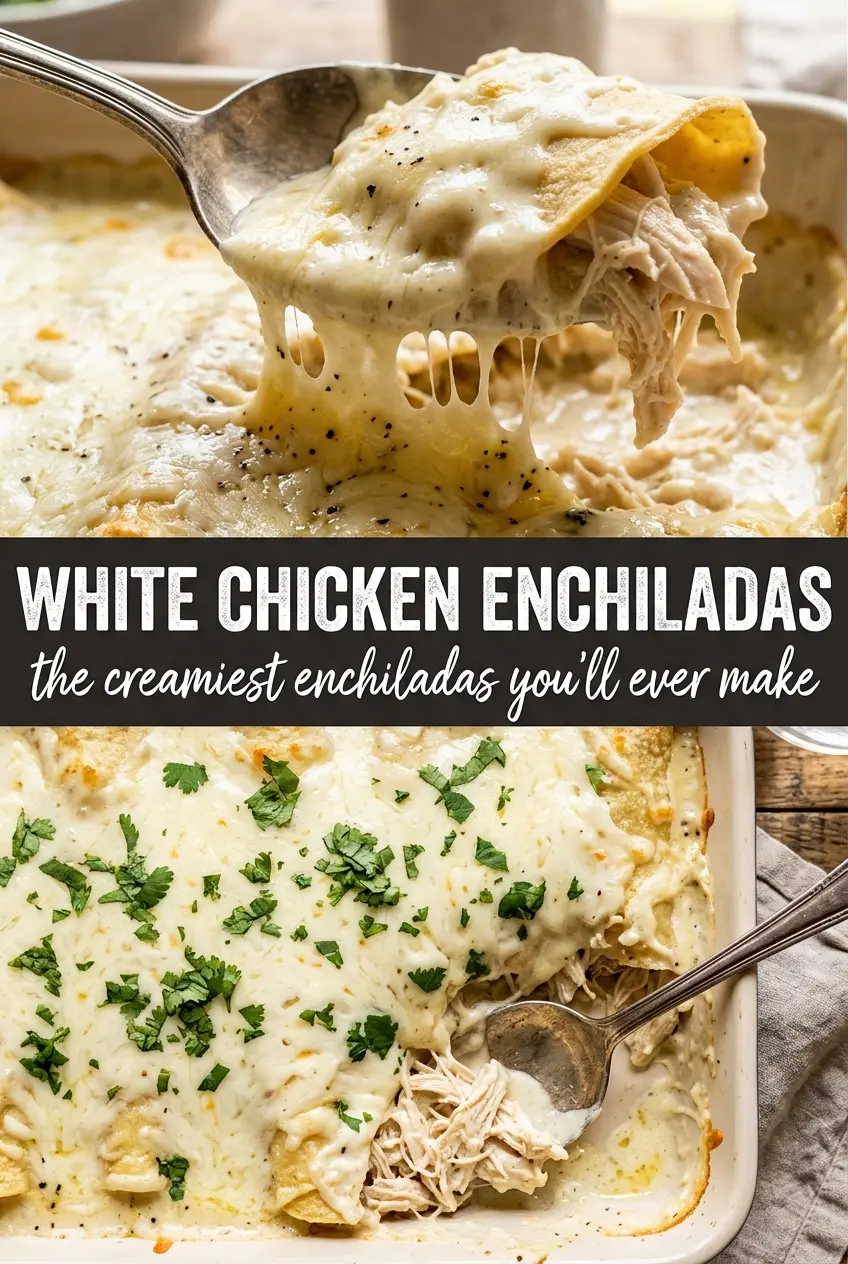
White Chicken Enchiladas
Ingredients
Equipment
Method
- Preheat oven to 375°F and grease a 9x13 baking dish.
- Mix shredded cooked chicken with diced green chiles and 1/2 cup Monterey jack cheese, then divide mixture among the flour tortillas.
- Roll tortillas up tightly and place seam-side down in the greased baking dish.
- Top the rolled enchiladas with the remaining Monterey jack cheese.
- Melt butter in a saucepan, then whisk in all-purpose flour and cook for 1 minute.
- Slowly add chicken broth while whisking constantly until the sauce thickens, about 3 minutes.
- Remove the saucepan from heat and stir in sour cream, diced green chiles, garlic powder, salt, and pepper.
- Pour the white sauce evenly over the enchiladas.
- Bake uncovered at 375°F for 25–30 minutes, until bubbly and golden around the edges.
- Garnish with fresh cilantro right before serving.