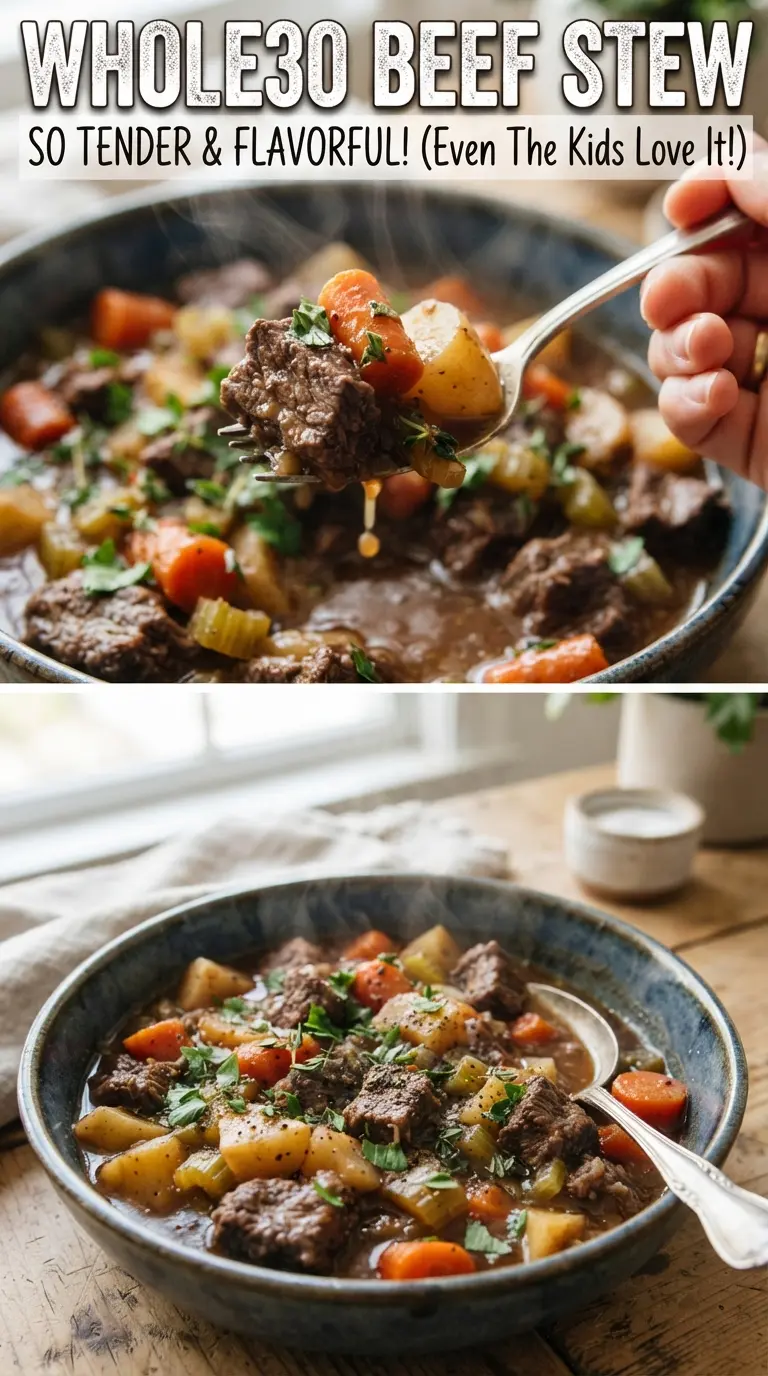
Rich, spoon-coating beef stew earns its keep when the gravy turns deep and glossy without a speck of flour. The beef comes out tender enough to pull apart with a fork, the sweet potatoes hold their shape, and the mushrooms add the kind of earthy depth that makes the whole pot taste like it cooked all day. It’s the kind of stew that settles in evenly, with a savory broth that thickens naturally at the end instead of tasting pasty or weighed down.
What makes this version work is the layering. Browning the beef in batches gives you a dark base, and the tomato paste cooks long enough to lose its raw edge before the liquid goes in. Coconut aminos and a little compliant Worcestershire bring back the salty, fermented note that flourless stews can miss, while arrowroot finishes the sauce cleanly at the end without dulling the flavor.
Below, I’ve included the part that matters most: how to get the sear without steaming the meat, when to add the vegetables so they stay intact, and the small substitution that keeps the stew Whole30 without making it taste like a compromise.
The beef got tender without falling apart, and the gravy thickened up beautifully with the arrowroot. I loved that the sweet potatoes stayed in chunks instead of turning mushy.
Save this Whole30 Beef Stew for a thick, hearty dinner with tender beef, sweet potatoes, and a naturally rich gravy.
The Trick to a Deep Gravy Without Flour
The mistake that ruins a lot of beef stew is rushing the browning. If the pan is crowded, the beef gives off liquid and steams, which leaves you with pale meat and a thinner, flatter broth. Browning in batches is slower, but it’s the step that gives this stew its backbone. Those dark bits on the pan are what turn plain broth into something with actual weight.
The other place people lose flavor is after the meat goes in. Once the broth is added, you want a steady simmer, not a hard boil. A boil tightens the meat and muddies the broth; a gentle simmer coaxes the chuck into tenderness while the liquid reduces enough to taste like stew instead of soup.
What Each Ingredient Is Doing in the Pot
- Beef chuck — This cut has enough connective tissue to turn silky during the long simmer. Leaner stew meat can work, but it won’t give you the same rich texture.
- Tomato paste — This is the quiet flavor builder in the pot. Cooking it for a minute with the onions deepens the stew and keeps it from tasting sharp or tinny.
- Bone broth — Use a broth you’d actually sip. A weak broth stays weak no matter how long it simmers, and this stew depends on the liquid for most of its flavor.
- Coconut aminos and compliant Worcestershire — Together they replace the savory, slightly fermented edge that soy sauce and regular Worcestershire usually bring. If you only have balsamic vinegar, use it sparingly; it adds acidity, not the same depth.
- Arrowroot slurry — This thickens the stew cleanly at the end. Add it after the vegetables are tender, then simmer just long enough for the gravy to gloss over the meat and vegetables.
Building the Stew in the Right Order
Getting the Beef Browned Before Anything Else
Season the beef well, then sear it in hot oil without moving it around. You want a dark crust on the outside and actual browning in the pan, not gray cubes sitting in their own moisture. If the beef sticks at first, leave it alone; it will release once the crust forms. Pull each batch out as it finishes so the pan stays hot enough to keep building color.
Softening the Onion and Cooking Out the Paste
Once the beef is out, the onion goes into the same pan to pick up every browned bit. Cook it until it turns translucent and starts to smell sweet, then add the garlic and tomato paste together. That short cook matters because raw tomato paste can taste harsh and metallic if it goes straight into the broth.
The Long Simmer That Makes the Chuck Tender
After the broth, coconut aminos, Worcestershire, thyme, bay leaf, and beef go in, cover the pot and keep the heat low enough for lazy bubbles at the surface. The beef should soften gradually, not shred apart immediately. If it’s boiling hard, the liquid will reduce too fast and the meat can end up dry around the edges instead of tender all the way through.
Adding the Vegetables at the End
Sweet potatoes, carrots, and mushrooms need less time than the beef, so they go in once the meat is already close to tender. This keeps the carrots from dissolving and the mushrooms from disappearing into the gravy. By the time the vegetables are done, the stew should smell concentrated and taste full-bodied even before you thicken it.
Finishing With Arrowroot
Stir the arrowroot slurry in at the end and let the pot simmer for just a couple of minutes. Arrowroot thickens quickly, but it can lose its power if it boils too long, so don’t walk away and let it reduce for ages. When it’s ready, the broth will coat the back of a spoon and settle into a glossy gravy that clings to the beef.
How to Adjust This Stew for Different Kitchens
Swap the Sweet Potato for Yukon Gold Potatoes
Yukon Golds give you a more classic beef stew feel and hold their shape well, but they don’t bring the same subtle sweetness. Cut them into larger chunks so they don’t break down before the meat is tender.
Make It Dairy-Free and Whole30 as Written
This stew already works without dairy as long as you use avocado oil instead of ghee and choose a compliant Worcestershire or the balsamic vinegar swap. The finished stew stays rich because the beef, broth, and arrowroot carry the texture.
Add Red Wine if Whole30 Isn’t the Goal
A half cup of dry red wine added after the onions deglazes the pan and gives the broth a deeper edge. Let it reduce before adding the broth so the stew doesn’t taste sharp.
Storage and Reheating
- Refrigerator: Keeps well for 4 days. The gravy thickens as it chills, so expect it to look even richer the next day.
- Freezer: Freezes well for up to 3 months in airtight containers. Leave a little headspace because the broth expands, and thaw it overnight in the fridge before reheating.
- Reheating: Warm it gently on the stove over low heat with a splash of broth if needed. A hard boil can tighten the beef and break up the vegetables, especially the sweet potatoes.
Answers to the Questions Worth Asking

Whole30 Beef Stew
Ingredients
Equipment
Method
- Season the beef cubes with salt and black pepper, then brown in batches in hot oil in a Dutch oven until browned on all sides, about 6-8 minutes total. Keep the pan hot and avoid overcrowding so the beef browns instead of steams.
- Add the diced onion to the pot and cook for 4 minutes, stirring occasionally, until softened. Add the minced garlic and tomato paste and cook for 1 minute until fragrant and darker.
- Add the beef bone broth, coconut aminos, compliant Worcestershire sauce (or balsamic vinegar), dried thyme, bay leaf, and the browned beef, then stir to combine. Cover and simmer at 185-200°F (85-93°C) for 1 1/2 hours, until the beef is nearly tender and the liquid starts to reduce slightly.
- Stir in the cubed sweet potato, sliced carrots, and quartered cremini mushrooms, then return to a simmer. Cover and simmer for 40-45 minutes, stirring once or twice, until the vegetables are tender.
- Stir the arrowroot powder slurry (arrowroot mixed with water) into the stew, then simmer for 2 minutes to thicken. You’ll see the gravy turn glossy and cling to the meat and vegetables.
- Remove the bay leaf and ladle the stew into bowls to serve. Top with fresh thyme if desired.