
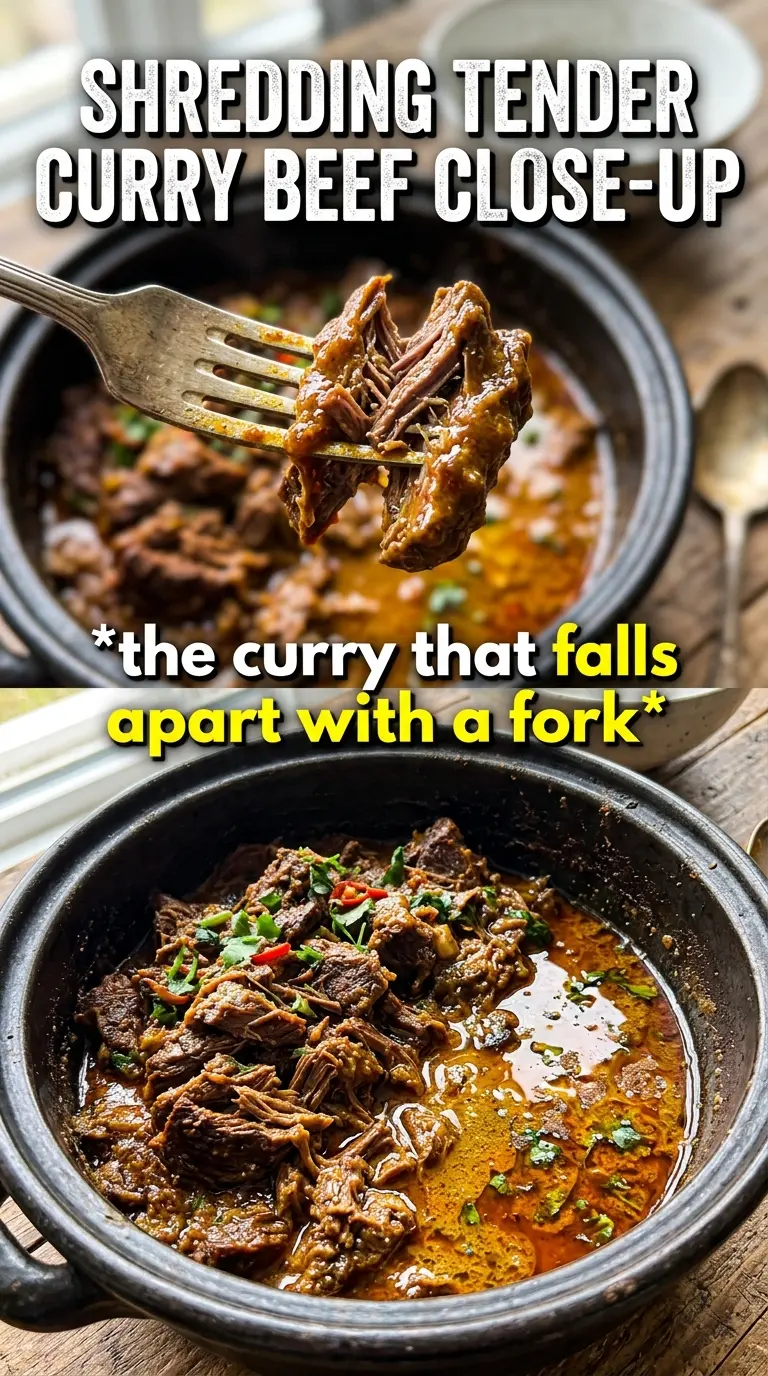
Fall-apart coconut red curry drip beef lands somewhere between a braise and a weeknight shortcut, and that’s exactly why it earns a permanent spot in the dinner rotation. The beef turns silky and shreddable after a long, gentle cook, and the sauce ends up rich with coconut milk, bright tomato, and enough red curry paste to give it backbone without burying the beef.
The trick is keeping the heat low and letting the chuck roast cook slowly in the curry liquid instead of roasting or searing it hard first. Chuck has plenty of connective tissue, and that’s the part that turns into those tender strands you can pull apart with a fork. The lime goes in at the end for a reason: it wakes up the coconut and tomato sauce after the long simmer and keeps the whole dish from tasting flat.
Below, I’ll show you the one detail that keeps the sauce balanced, plus a few smart swaps if you want to make this dairy-free, a little spicier, or easier to serve for a crowd.
The beef shredded beautifully after 8 hours and the coconut curry sauce was thick enough to spoon over rice without being watery. I added the lime at the end like you said and it made the whole pot taste brighter.
Save this coconut red curry drip beef for the nights when you want shredded beef with a coconut-tomato sauce that clings to rice.
The Part That Keeps Coconut Curry Beef From Tasting Flat
The biggest mistake with slow cooker curry beef is treating all the flavoring ingredients like they need to be loud from the start. They don’t. Coconut milk softens the curry paste, tomatoes add body, and the broth keeps the roast partly submerged so it braises instead of drying out around the edges. If the sauce tastes one-note at the end, it’s usually because the lime went in too early or the seasoning never got adjusted after shredding.
Chuck roast is the right cut here because the long cook time gives the connective tissue time to break down. If you swap in a leaner cut, you’ll get fibers that shred, but they won’t turn buttery and the sauce won’t have the same richness. The gentle curry base also matters: red curry paste needs time to melt into the coconut milk, not fry hard in a skillet where it can turn sharp instead of round.
- Chuck roast — This is the cut that gives you that drapey, pull-apart texture. Flat iron or sirloin won’t give the same result because they don’t have enough connective tissue to turn silky over 8 hours.
- Coconut milk — Use full-fat coconut milk if you want the sauce to coat the beef instead of drinking into it. Light coconut milk works in a pinch, but the finished sauce will be thinner and less lush.
- Red curry paste — This is the engine of the dish. Different brands vary a lot in heat and salt, so start with the amount listed and add more only after the beef has shredded and the sauce has settled.
- Lime juice — Add it at the end, not at the start. Acid added too early can make the finished curry taste dull and a little muddy after hours of cooking.
What Each Ingredient Is Actually Doing in This Recipe
- Primary ingredient (the star) — Quality matters most. Choose the best you can find.
- Cooking medium (oil, butter, or broth) — This carries flavors and prevents dryness.
- Seasonings (salt, pepper, spices, herbs) — Layer flavors so nothing overpowers. Build depth gradually.
- Aromatics (garlic, onion, herbs) — Cook with fat to bloom flavors. Become the foundation.
- Supporting ingredients — Complement the main ingredient without overpowering it.
- Sauce or liquid (if applicable) — Brings flavors together. Balance richness with acid.
- Acid (lemon, vinegar, wine, or other) — Brightens and prevents flat-tasting results.
- Final finish (garnish, glaze, or sauce) — Prevents one-dimensional taste and adds visual appeal.
How to Build the Curry Sauce So It Stays Balanced All Day
Whisking the Base Until It Looks Smooth
Mix the coconut milk, tomatoes, red curry paste, garlic, ginger, fish sauce, brown sugar, cumin, and beef broth until the paste is fully dissolved and the sauce looks uniform. You want no streaks of curry paste sitting on the surface, because those can hit the roast in pockets and taste harsher than the rest of the pot. The sauce should look loose and pourable before it goes into the slow cooker.
Letting the Roast Braise, Not Boil
Set the seasoned chuck roast in the Crockpot and pour the sauce around and over it, then tuck in the bruised lemongrass stalk. Cook on Low for 7 to 8 hours until the beef gives up easily when nudged with a spoon. If your cooker runs hot and the sauce starts bubbling hard, the edges of the meat can dry out before the center is tender, so low heat is the safer move here.
Shredding and Finishing in the Sauce
Remove the lemongrass, then shred the beef right in the pot so every strand picks up the curry broth. Stir in the lime juice and taste again before serving. If the sauce seems thin, give it 10 to 15 minutes with the lid off so it reduces a little; if it tastes flat, it usually needs salt more than it needs more curry paste.
Three Smart Ways to Adjust the Pot Without Losing the Recipe
Make it dairy-free as written
This recipe already fits a dairy-free table because the richness comes from coconut milk instead of cream. Keep an eye on the curry paste you buy, though, since some brands sneak in ingredients you wouldn’t expect. The flavor stays full and silky without any dairy at all.
Turn up the heat without wrecking the sauce
Add sliced red chili at the table or stir in a little extra curry paste after the beef has shredded. That keeps the base balanced and lets people control their own heat instead of making the whole pot aggressive from the start. If you add too much heat early, the long cook can make it taste harsh rather than lively.
Use a pressure cooker when you need it faster
You can cook this in an Instant Pot on high pressure until the beef shreds easily, then finish with lime and fresh herbs after releasing the pressure. The texture stays close to the slow cooker version, but the sauce won’t have the same gentle reduction, so you may want to simmer it a little after shredding. That’s the tradeoff for speed.
Storage and Reheating
- Refrigerator: Store for up to 4 days. The sauce thickens as it chills, and the beef tastes even better the next day.
- Freezer: Freezes well for up to 3 months in airtight containers. Freeze it with plenty of sauce so the beef stays moist when thawed.
- Reheating: Warm gently on the stove or in the microwave with a splash of broth or water if needed. Don’t boil it hard, or the coconut sauce can separate and the beef can get stringy.