Pork chops braised low and slow turn into something entirely different from the quick-seared dinner most people expect. The meat gets so tender that a fork slides through it with almost no resistance, and the gravy underneath picks up all the browned bits, onion sweetness, and mushroom richness from the pan. What you end up with is the kind of comfort food that tastes like it took all day because, honestly, it did.
The trick here is not rushing the oven. Thick bone-in chops need time in gentle heat so the connective tissue can relax instead of tightening up and drying out. A quick sear builds flavor on the outside, but the long covered braise is what gives you that spoon-tender texture and the silky gravy that clings to every bite. The soup-and-broth mixture might look simple going in, but it becomes deep and savory once it simmers around the pork.
Below, I’ll walk through the one detail that keeps the chops tender instead of stringy, what each ingredient is doing in the pan, and the small timing cues that tell you when they’re done for real.
The pork chops came out unbelievably tender, and the gravy thickened into this smooth, rich sauce that was perfect over mashed potatoes. I did the full braise time, and the meat practically fell apart when I lifted it out.
Save these fall apart pork chops for the night you want bone-in chops braised until tender in rich mushroom gravy.
The One Thing That Keeps Braised Pork Chops Tender Instead of Dry
Most pork chop recipes fail because they treat chops like steaks. They get blasted with heat, and the lean meat tightens before the connective tissue has any chance to soften. For this dish, the sear is only there to build flavor. The real work happens in the covered braise at a low oven temperature, where the pork slowly relaxes in the sauce until it turns fork-tender.
Thick bone-in chops matter here. Thin chops are much more likely to dry out before the braise has time to do its job, and boneless chops don’t hold on to moisture the same way. The bone also helps the chops cook more evenly, which gives you a better chance at that soft, shreddable texture instead of a tough edge with a bland center.
What Each Ingredient Is Doing in the Pan

- Thick bone-in pork chops — These hold up to a long braise and stay juicy enough to become truly fork-tender. Thin cuts won’t give you the same payoff.
- Garlic powder — It seasons the meat evenly and gives you a deeper savory base than fresh garlic alone would on the chops themselves.
- Onion — This softens into the gravy and adds sweetness that balances the mushroom soup. Slice it thin so it disappears into the sauce instead of staying stringy.
- Cream of mushroom soup — This is the body of the gravy. If you swap it, you’ll lose some of the built-in thickness and that classic earthy richness, so any substitute should still be creamy and able to simmer without breaking.
- Chicken broth — It loosens the soup into a braising liquid. Use a broth you’d actually drink on its own; the sauce only tastes as good as what you pour in.
- Worcestershire sauce — This adds salt, tang, and a little fermented depth that keeps the gravy from tasting flat.
- Dried thyme — A small amount is enough. It gives the dish an herbal note that reads as slow-cooked and savory without taking over.
How to Build the Braise So the Gravy Stays Silky
Season and Sear First
Pat the pork chops dry, then season them well with salt, pepper, and garlic powder. When they hit the hot oil, they should sizzle immediately and develop a deep golden crust in 3 to 4 minutes per side. If the pan is crowded or not hot enough, the chops will steam instead of brown, and that lost color means less flavor in the gravy.
Soften the Onion in the Same Pan
Don’t wipe out the skillet after searing. Those browned bits are the backbone of the sauce. Cook the onion in the same pan until it turns soft and a little translucent, then stir in the garlic just long enough to smell fragrant, about 30 seconds. If the garlic goes in too early, it can burn and turn the whole braise bitter.
Whisk the Sauce Until Smooth
Stir the cream of mushroom soup, broth, and Worcestershire together until the mixture looks even and pourable. If you drop thick soup straight into the pan without loosening it first, you’ll end up with lumps that never fully melt into the gravy. Pour the liquid around the chops, not directly over the browned crust, so you keep more of that seared surface intact.
Braise Covered Until the Meat Gives Way
Cover the pan tightly with foil and let the oven do the work at 300°F. The chops are done when a fork slides in easily and the meat starts to separate at the edges. If they still feel tight, they need more time. The biggest mistake here is pulling them early because the top looks finished; tenderness comes from the internal structure breaking down, not from the outside looking done.
How to Adapt These Pork Chops for Different Kitchens and Diets
Dairy-Free Version with a Richer Broth Base
This recipe is already close to dairy-free, since the gravy gets its creaminess from soup rather than milk or cream. Check the cream of mushroom soup label for dairy ingredients, then use a dairy-free condensed mushroom soup if needed. The texture stays lush, but the flavor may lean a little more savory and less buttery.
Gluten-Free Swap That Still Cooks Like the Original
Use a certified gluten-free cream of mushroom soup and gluten-free Worcestershire sauce. That keeps the sauce structure and the flavor balance intact without changing the cooking method. The gravy should still braise down into the same silky finish.
Boneless Pork Chops in a Pinch
Boneless chops will work, but they need closer attention because they dry out faster. Start checking them earlier, and stop the braise as soon as they turn tender. You’ll lose a little of the juicy, old-fashioned texture that bone-in chops give you, but the gravy still carries the dish.
Storing Leftovers for a Better Second Meal
The gravy helps these leftovers reheat well, and the pork often tastes even better the next day after the flavors settle in.
Storage and Reheating
- Refrigerator: Store in an airtight container for up to 4 days. The sauce will thicken as it chills.
- Freezer: Freeze for up to 2 months. Cool completely first and freeze with plenty of gravy so the pork doesn’t dry out.
- Reheating: Warm gently on the stovetop or in the oven, covered, with a splash of broth if the gravy has tightened. High heat will make the pork tougher.
Answers to the Questions Worth Asking
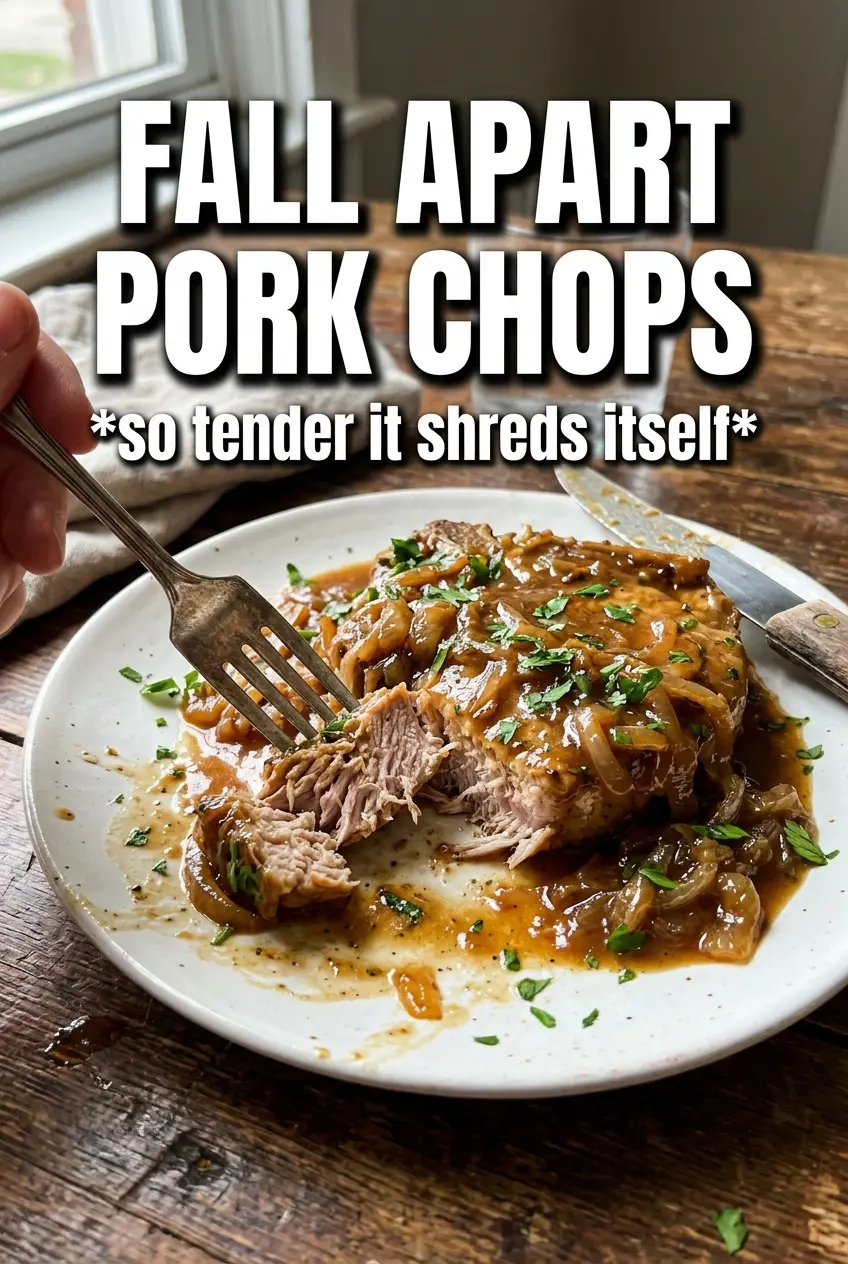
Fall Apart Pork Chops
Ingredients
Equipment
Method
- Preheat oven to 300°F to get ready for long, low braising and rich gravy development.
- Season pork chops with salt, pepper, and garlic powder, then sear in oil over medium-high heat for 3–4 minutes per side until browned, and set aside.
- Cook onion in the same pan for 4 minutes, then add garlic and cook 30 seconds to bloom the flavor without burning.
- Whisk cream of mushroom soup with chicken broth and Worcestershire until smooth, then pour into the pan to create a silky base.
- Nestle pork chops into the liquid, add thyme, cover tightly with foil, and braise in the oven for 1.5–2 hours until fork-tender and collapsing.
- Garnish with fresh parsley and serve over mashed potatoes so the pork and gravy soak in.