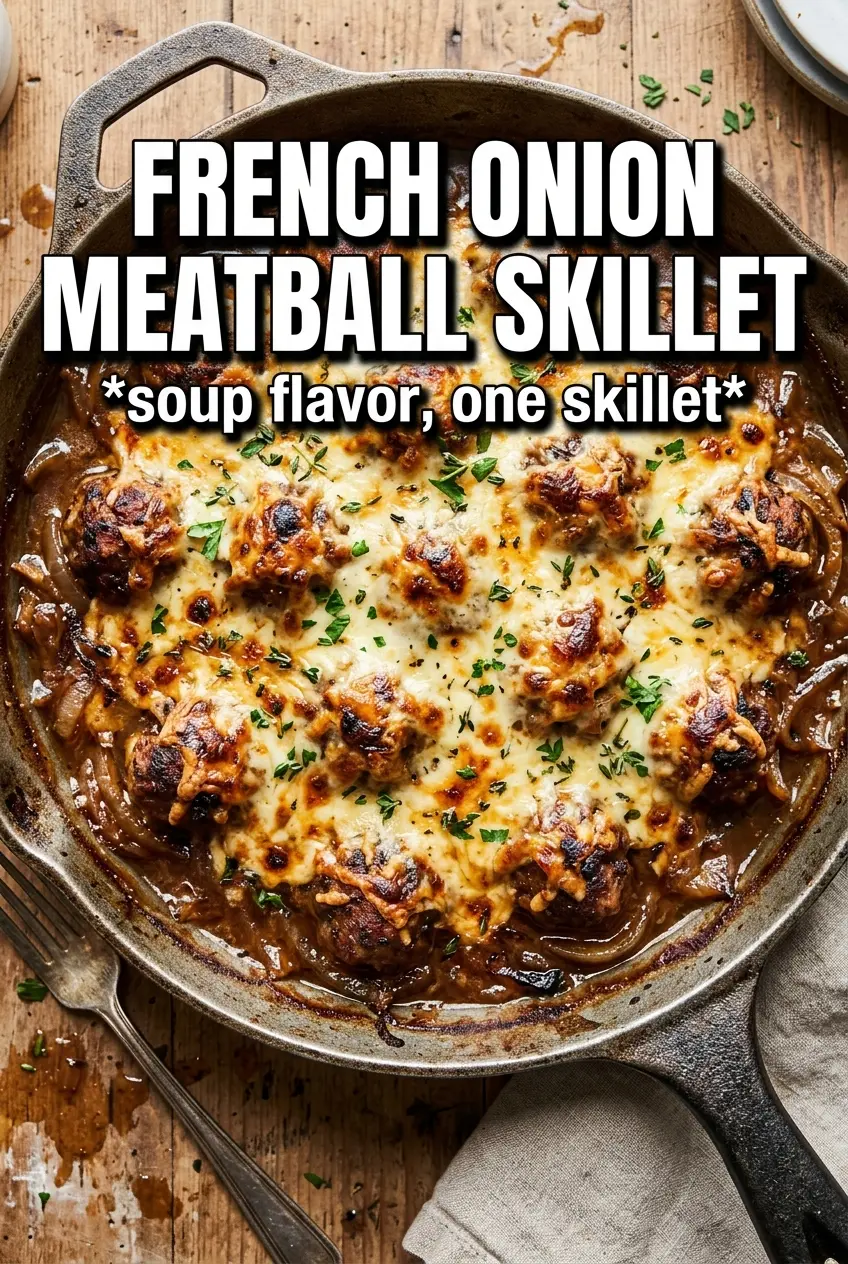
French onion meatball skillet brings all the deep, slow-cooked comfort of classic onion soup into a hearty one-pan dinner. The meatballs stay tender, the onions melt down into a savory broth, and the Gruyere forms that bubbling browned top that makes everyone lean in before the pan even hits the table.
The key is patience with the onions. Let them cook low and slow until they turn jammy and deeply golden, because that sweetness is what gives the skillet its French onion character. Browning the meatballs first adds another layer of flavor, and using the same pan means every browned bit feeds the sauce instead of getting washed down the drain.
Below, I’ll show you how to keep the onions from scorching, how to get the broth balanced, and what to change if you need a version without wine or gluten.
The onions took their time, but it was worth it — the sauce turned glossy and rich, and the meatballs stayed juicy even after the broil. My husband kept going back for the browned cheese edges.
Save this French onion meatball skillet for the nights when you want caramelized onions, juicy meatballs, and melted Gruyere in one pan.
The Part Most People Rush: The Onions Need Time to Turn Sweet
French onion flavor doesn’t come from a sprinkle of onion powder. It comes from onions cooked long enough to collapse, soften, and deepen into something almost jammy. If they’re still pale and sharp, the whole skillet tastes thin, even if the broth and cheese are good. That long onion cook is what gives this dish its backbone.
The other trap is heat. Medium-low is the right place here because high heat will brown the edges before the onions have a chance to soften through. You want steady color, a little fond on the pan, and onions that shrink down by more than half. If the skillet looks dry before the onions are ready, add a small splash of water and keep going instead of turning the burner up.
What Each Ingredient Is Actually Doing in This Recipe

- Primary ingredient (the star) — Quality matters most. Choose the best you can find.
- Cooking medium (oil, butter, or broth) — This carries flavors and prevents dryness.
- Seasonings (salt, pepper, spices, herbs) — Layer flavors so nothing overpowers. Build depth gradually.
- Aromatics (garlic, onion, herbs) — Cook with fat to bloom flavors. Become the foundation.
- Supporting ingredients — Complement the main ingredient without overpowering it.
- Sauce or liquid (if applicable) — Brings flavors together. Balance richness with acid.
- Acid (lemon, vinegar, wine, or other) — Brightens and prevents flat-tasting results.
- Final finish (garnish, glaze, or sauce) — Prevents one-dimensional taste and adds visual appeal.
What Each Ingredient Is Actually Doing in the Skillet
- Ground beef — This gives the dish enough richness to stand up to the onion broth. An 80/20 blend works best because it stays juicy without turning greasy.
- Breadcrumbs and egg — These hold the meatballs together and keep them tender. If you need a gluten-free version, use gluten-free breadcrumbs or crushed rice crackers in the same amount.
- Worcestershire — This adds the savory depth that makes the meatballs taste seasoned all the way through. There isn’t a perfect substitute, but soy sauce or tamari can fill in some of that salty, fermented note.
- Dry white wine — The wine loosens the browned bits and adds brightness to keep the onion base from tasting heavy. If you skip it, use extra broth with a small splash of white wine vinegar at the end.
- Gruyere — Gruyere melts into that stretchy, nutty top you want in a French onion-style dish. Swiss cheese will work, but the flavor is milder and less distinctive.
- Fresh thyme — Fresh thyme is worth using here because it perfumes the onions without taking over. Dried thyme can work in a pinch, but use less since it blooms more aggressively in the sauce.
Building the Skillet So the Sauce Stays Rich, Not Watery
Browning the Meatballs First
Roll the meatballs gently and brown them in butter in an oven-safe skillet until they pick up color on a few sides. You’re not cooking them through yet, just building flavor and giving the pan a base of drippings. If they’re crowded, they’ll steam instead of brown, so work in batches if the pan looks full. Pull them out once they’re browned; they’ll finish later in the onion sauce.
Cooking the Onions All the Way Down
Add the sliced onions to the same skillet and let them cook over medium-low heat, stirring now and then, until they’re soft, deep golden, and a little sticky around the edges. This usually takes the full 30 to 35 minutes, sometimes a bit longer depending on the size of the pan. If they start to scorch, the heat is too high. Stir in the garlic and thyme near the end so they don’t burn and turn bitter.
Deglazing and Finishing Under the Broiler
Pour in the wine and scrape up every browned bit from the pan. That’s where the flavor is. Let the wine cook down before adding the broth and Worcestershire so the sauce doesn’t taste sharp or thin. Nestle the meatballs back in, simmer until they’re cooked through, then scatter the Gruyere over the top and broil just until it melts and browns in spots. Watch it closely; cheese can go from golden to burned in a minute.
Three Ways to Make This Work for Your Kitchen
Gluten-Free Meatballs Without Losing Tenderness
Swap the breadcrumbs for a certified gluten-free breadcrumb blend or crushed gluten-free crackers. Keep the egg the same, since that’s doing the binding work. The texture stays soft and intact, and the skillet still finishes with the same rich onion sauce.
No-Wine Version That Still Tastes Deep and Savory
Use an extra 1/2 cup broth instead of the wine, then finish the sauce with a teaspoon of white wine vinegar or lemon juice. That little hit of acid keeps the onions from tasting flat. Without it, the dish can lean heavy and muddled.
Cheese Swap for a Milder Finish
If Gruyere is hard to find, use Swiss or a blend of mozzarella and Parmesan. Swiss melts cleanly but tastes lighter, while mozzarella gives stretch and Parmesan sharpens the top. You lose some of Gruyere’s nutty depth, but the skillet still turns out comforting and broiled.
Storage and Reheating
- Refrigerator: Store leftovers in an airtight container for up to 3 days. The onions will thicken as they chill, which actually helps the flavor.
- Freezer: Freeze the meatballs and onion base without the cheese topping for up to 2 months. Thaw overnight in the fridge before reheating, then add fresh Gruyere and broil.
- Reheating: Warm gently on the stovetop over low heat or in a 325°F oven until hot. Don’t blast it in the microwave on high, or the meatballs can turn dry and the sauce can separate.