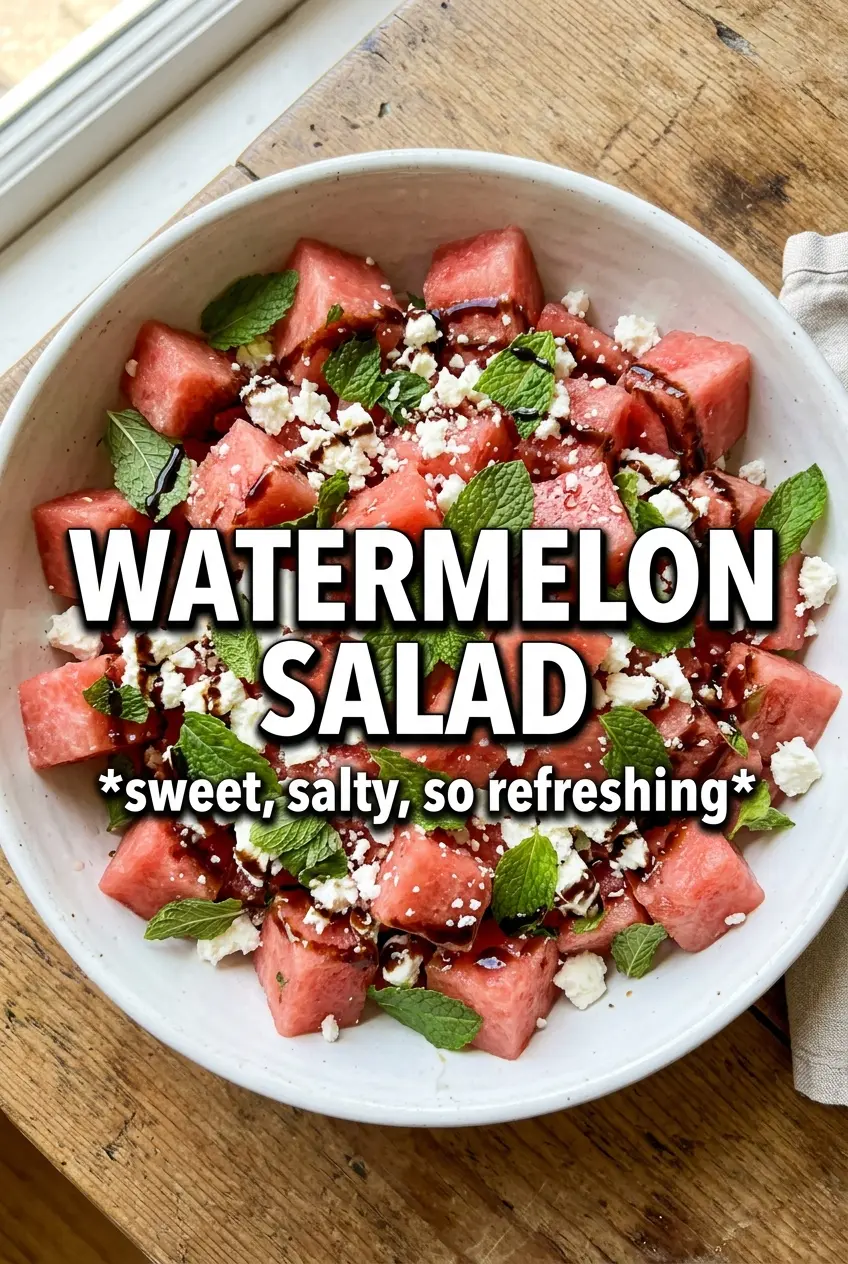
Juicy watermelon, crisp cucumber, and salty feta make this salad land on the table cold, bright, and balanced. The first bite is all crunch and sweetness, then the mint and basil rush in at the end and keep it from tasting flat. It’s the kind of side dish that disappears fast because it eats like something fresh from a market stand, not something tossed together as an afterthought.
The part that makes this version work is restraint. Watermelon brings plenty of juice on its own, so the dressing stays light: lime for sharpness, honey for a soft edge, and just enough olive oil to round it out. I also like a short chill before serving. That fifteen-minute rest gives the fruit time to pick up the dressing without turning the bowl watery. Thin red onion slices add bite, but they need to be cut paper-thin so they don’t bully the melon.
Below, I’ve included the exact texture cues that keep this salad crisp, plus a few swaps if you want to lean it sweeter, saltier, or dairy-free.
The lime dressing kept the watermelon from tasting sugary, and the feta stayed creamy even after chilling. I served it after dinner and the bowl was empty before I even sat back down.
Save this watermelon salad for the days when you want a cold side dish with sweet melon, salty feta, and a bright lime drizzle.
The Trick to Keeping Watermelon Salad Crisp Instead of Watery
Watermelon gives off juice the minute you cut it, and cucumber does the same if it sits too long with salt. That’s the main reason this kind of salad can go from fresh to diluted fast. The fix isn’t complicated: keep the fruit cut into sturdy 1-inch cubes, slice the cucumber just thick enough to hold its shape, and dress the salad close to serving time.
The other thing that matters is surface area. Wide, shallow bowls work better than deep ones because they keep the ingredients from crushing under their own weight. If you toss everything in a small bowl and let it sit, the bottom layer will soften first while the top stays untouched. A short chill helps the flavors settle, but after that the salad wants to be served. It’s best cold, not standing around in a puddle.
What the Feta, Herbs, and Lime Are Doing Here
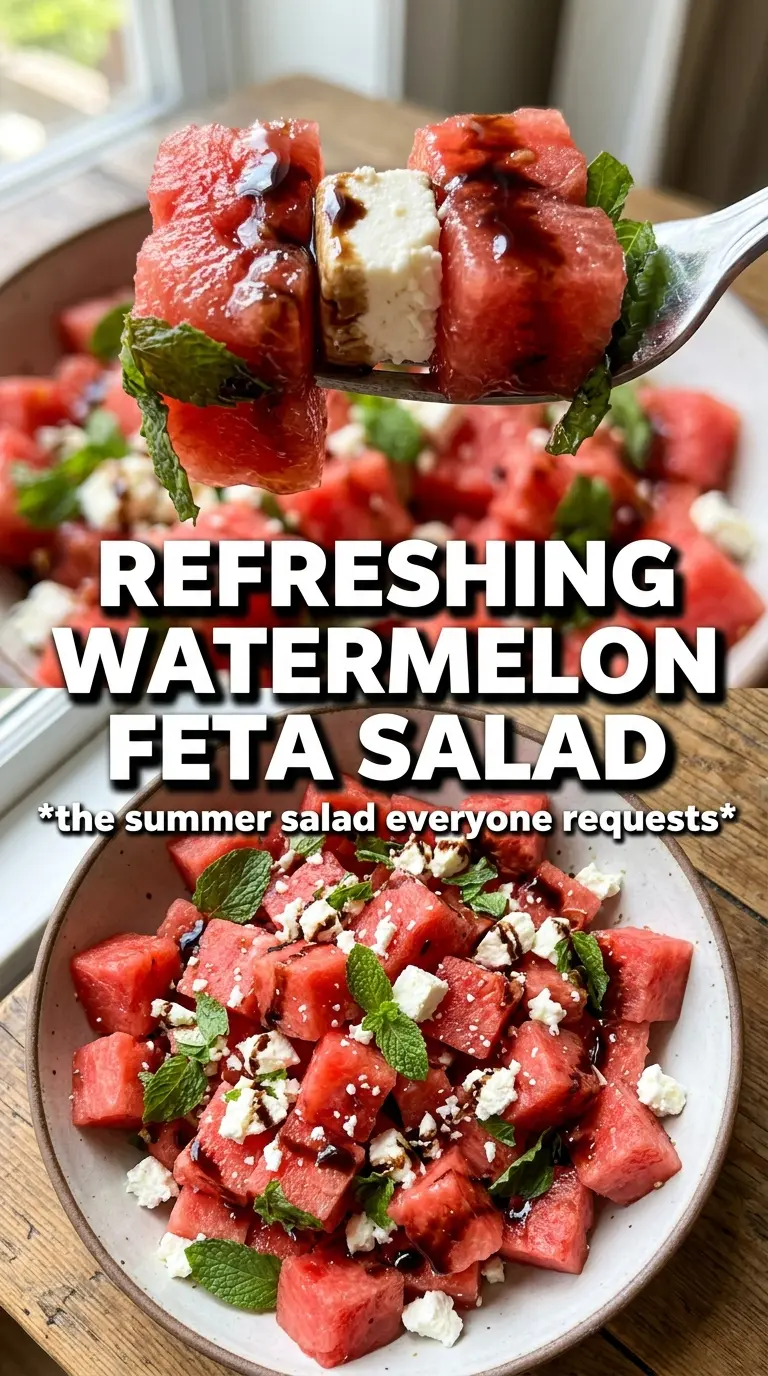
- Watermelon — Use a ripe, seedless melon with deep color and a heavy feel for its size. That’s where the sweetness and juiciness come from. Pale, mealy watermelon won’t hold up here, because the salad depends on the fruit being crisp enough to stay distinct after dressing.
- Cucumber — Cucumber cools the sweetness and gives the salad more structure. English or Persian cucumbers are the easiest choice because they have fewer seeds and thinner skins, so you don’t need to peel them. If you use a standard garden cucumber, scrape out the seeds if they’re large and watery.
- Feta — Buy a block and crumble it yourself if you can. Pre-crumbled feta works in a pinch, but it’s drier and tends to scatter instead of melting into the fruit in little salty pockets. The feta is what keeps this salad from reading like dessert.
- Mint and basil — This pairing gives the salad a brighter, more layered finish than mint alone. Tear the leaves instead of chopping them so they don’t bruise and darken. Add them at the end so they stay fragrant.
- Lime juice and honey — Lime sharpens the sweetness, and honey smooths the edge so the dressing doesn’t taste thin. Whisk them together before adding the oil; if you drizzle them separately, the salad won’t coat evenly.
Building the Bowl So Every Bite Tastes Balanced
Whisking the Dressing First
Start with the lime juice, honey, olive oil, salt, and pepper in a small bowl. Whisk until the honey disappears and the dressing looks glossy, not streaky. If the honey clings to the bottom, the salad ends up unevenly seasoned, with some bites sharp and others bland. The goal is a light dressing that disappears into the fruit instead of pooling underneath it.
Layering Without Crushing the Fruit
Arrange the watermelon and cucumber in a wide bowl or platter before adding the rest. That keeps the cubes intact and gives you a better look at the colors too. Scatter the onion over the top rather than stirring it through first, because aggressive tossing bruises the watermelon and breaks up the feta. A gentle hand keeps the salad pretty and the texture clean.
The Final Chill
Once the dressing and herbs are on, let the salad sit in the fridge for about 15 minutes. That short rest makes the melon taste colder and lets the lime settle into the fruit without drawing out too much liquid. If you leave it much longer, the cucumber softens and the bowl starts collecting juice. Serve it chilled while the mint is still lively and the feta still sits in distinct crumbles.
How to Adapt This Salad Without Losing the Good Parts
Make It Dairy-Free
Skip the feta and add sliced avocado or a handful of toasted pumpkin seeds instead. You lose the salty creaminess, so the salad leans brighter and lighter, but the texture stays interesting. A pinch more salt in the dressing helps replace the seasoning that the cheese would have brought.
Use Only Mint for a Cleaner Herbal Finish
If basil isn’t your thing, use all mint and leave the rest of the recipe alone. The salad tastes cooler and sharper, with less of that peppery-sweet note basil adds. This is the easiest swap when you want the melon to stay the star.
Make It More Savory
Add a few extra slivers of red onion and an extra pinch of black pepper. That pushes the salad away from sweet and closer to a true side dish for grilled food. Don’t overdo the onion, though, or it will take over once it sits in the dressing.
Storage and Reheating
- Refrigerator: Best the day it’s made, but it will keep for about 1 day. The melon softens and releases more liquid after that.
- Freezer: Don’t freeze it. Watermelon and cucumber turn mushy and watery after thawing.
- Reheating: Not applicable. Serve it straight from the fridge after a brief chill; if it sits out too long, the juice loosens and the herbs wilt.